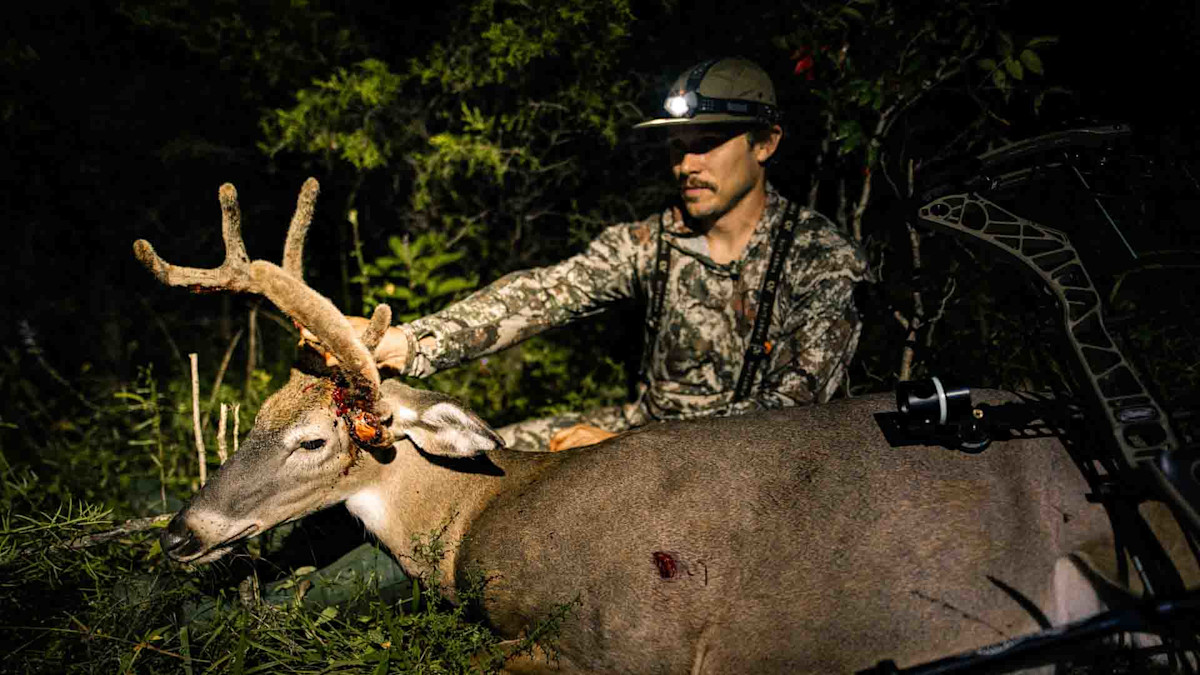

Question: In Hot Weather, How Much Time Do You Have to Process Your Deer?
Answer: Like all good questions, it depends. Generally, the faster you can break down an animal and get it cold, the better. In hot weather, you should prepare ahead of time so you don’t risk meat spoilage. While “hot” might be relative to your geographical location, anything above 40 degrees requires special care. Temps above 70 demand expediency. Anything above 90, every minute counts.
If you can quickly retrieve your deer in a truck, cart, or side-by-side, you don’t have to stress too much, especially if you can get to the processor within the hour. A lot of folks don’t want to process a deer in these conditions. However, if you want the least amount of spoilage, I would suggest field dressing your deer before dropping it at the processor if the temps are above 40 degrees. Also, consider that your processor might not get to your deer right away. They could be backed up or short-staffed, and it could be even longer before they’re able to break down your animal. A good processor will do away with any spoilage. A less thoughtful one will throw it in your grindpile. If you want to avoid either, just take an extra 5 to 10 minutes and gut your deer.
You might not always be a hop and a skip from the processor. In these cases, you definitely want to field dress your deer or even debone it in the field (where legal). Let’s say you don’t have far to drag your deer, but you won’t be able to drop it at the processor for at least a few hours, and the temps are above 70 degrees. First, field dress your deer. If you’re transporting it, buy a bag or two of ice and stuff it in the cavity to help keep it cool. This will give you plenty of time to get your deer to the processor without exposing it to warm, bacteria-forming temps (anything above 40 degrees) for an extended period of time.
On the other hand, you might find yourself miles from the trailhead. In temps above 70 degrees, I’m deboning a deer. One, because it’s just not feasible to drag a deer in some of these scenarios. Second, it’s crucial to start cooling meat when the mercury rises. In hot, humid environments, this is especially important. Besides, there’s nothing better than knowing you don’t have to clean a deer after a long walk back to the truck.
Make sure you have a solid set of game bags and a hunting pack that allows your deer meat to breathe. Contractor bags are a cheap way to go, but they don’t allow your meat to cool adequately. When you make it back to the truck, get your meat in the cooler and ice it fast. The meat will still be dissipating heat, so try to separate it as best you can in your cooler. Don’t just pack it tight.
Still, other factors like the recovery time and whether or not you gut shot your deer also factor into meat spoilage. Rupturing the intestines and exposing the bacteria that live in there to the rest of the deer doesn’t bode well for warm temperatures. If you gut shot a deer and have to leave it overnight in temperatures above 40 degrees, you’ll want to check the deer as you clean it. For instance, if you smell stomach bile on the meat as you’re breaking it down, you’ll have to consider whether or not it’s worth the risk of eating it. I’m not proposing that you flippantly waste meat, but it might help you determine whether or not you should take a questionable shot in warm temps.
Have a whitetail related question? Send it to wiredtohunt@themeateater.com and check back to see if we cover it.
Stay in the loop with The Wired to Hunt Newsletter
Shop
Related
Hunt
Why You Should Deer Hunt Warm Weather Conditions


Scout
Ask Wired to Hunt: Patterning Deer in the Big Woods


Conversation