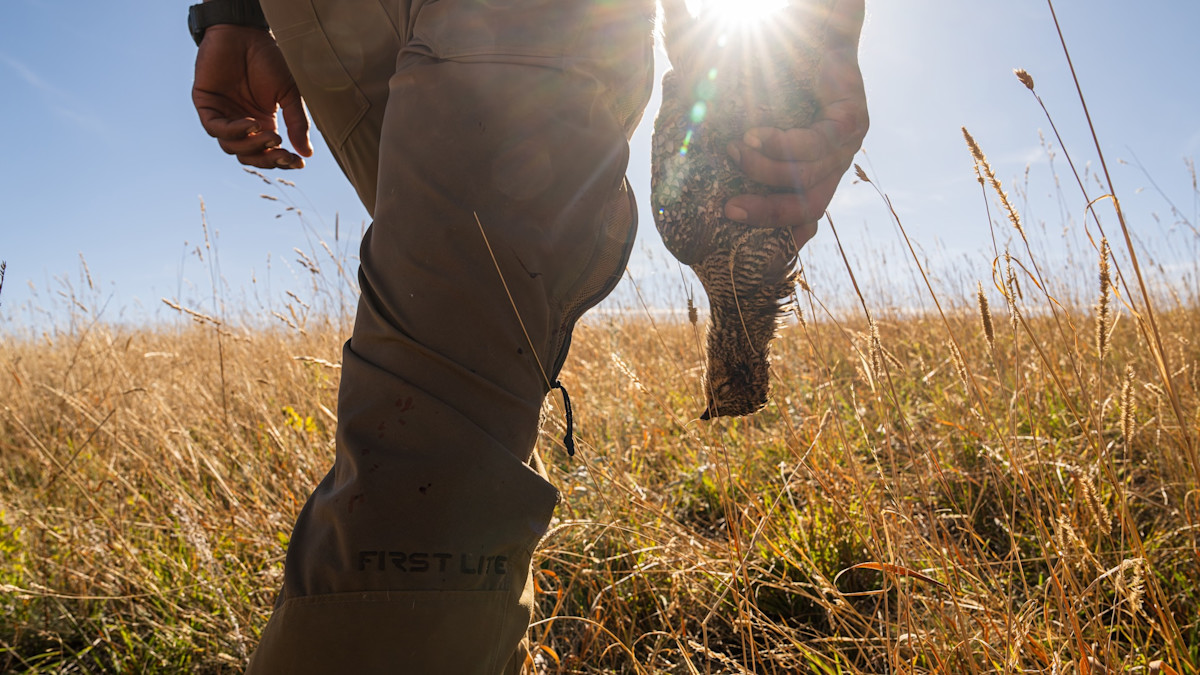

It always seems like you run into grouse when you’re not looking for them. Whether they’re ruffed, dusky, or sharp-tailed, these tasty little birds have a bad habit of showing up in unexpected places at unexpected times. From having ruffed grouse explode beneath your feet during an early morning walk to the tree stand to having your dog flush covey after covey of sharp-tails while you’re hunting for pheasants, sometimes it can feel like grouse are absolutely everywhere—that is, until you start looking for them.
Just like pencils, flashlights, Scotch tape, and hair ties, grouse are one of those things that always seem to be around until you need them. Many are the grouse hunters who've gone back to a spot where they saw a ton of birds when they weren’t hunting, only to find it devoid of grouse with a shotgun in hand.
This isn’t because grouse have some sort of spidey-sense to let them know they’re the target, but usually because most hunters only look for grouse in places where they’ve run into them before. Accordingly, if you’re looking to hunt a limit of grouse instead of just randomly poking through the woods and hoping to run into them, you have to hunt in the right places at the right times.
Walking Gravel Roads
Gravel roads are a unanimous focal point for all grouse species. Like all birds, grouse can’t chew their food and need to swallow pebbles, gravel, and sand, filling their gizzard to help them grind up and eventually digest their food. This makes gravel roads running through grouse country fantastic and relatively easy places to find birds so long as you know where and how to hunt them.
First and foremost, you usually won’t have a lot of luck bagging grouse by simply walking down a gravel road with a shotgun. In fact, in many states it’s actually illegal to shoot from or even too close to roads of any kind. Accordingly, your best bet for success is to find a good-looking road that runs through grouse habitat and hunt parallel to it.
Walk off the road and move into the fringe cover, where thicker brush and clear cuts around the road meet up with denser forest. Pick your way along, paying extra attention to smaller patches of cover between five and 20 yards off the road that will provide the grouse with both easy hiding spots and access to the road itself.
It’s best to hunt gravel road grouse in the first hour after sunrise and the couple of hours before and even after sunset. At these times, grouse that have been roosting and feeding all day will become more active and are more likely to be moving along the road.
After the Storm
Unlike ducks and geese, which generally get more active during stormy weather, grouse hunker down in the rain, snow, or even extremely high winds. They’ll lock themselves into the thickest cover they can find and not move an inch until the storm passes, making hunting for them pretty pointless during any sort of inclement weather. However, once the storm has passed, grouse hunting can be on fire.
As soon as rain, snow, or crazy winds end, grouse that have been holed will strut their way out to the nearest food sources and begin to chow down. You can capitalize on this behavior by heading into your favorite grouse spot and intercepting the birds as they move out of cover.
In timber, concentrate your post-storm grouse efforts by looking for thick clumps of trees, especially pines, junipers, and spruces that are surrounded by berry bushes and mast crops like acorns. During storms, grouse will use the dense branches and needles of these conifers as umbrellas to hide from the weather and then will immediately move into these spots to feed once the weather changes.
If you’re hunting grouse in more open areas during a storm, look for clumps of brambles, brush, and even small conifer trees along the edges of clearings and agricultural fields. As soon as the weather stops being horrible, grouse will move out of these areas and push into more open spots to feed on grains, berries, and even insects that have fallen to the ground during the storm.
Go High in the Later Season
During mid- to late-season outings, you may stop finding grouse in the typical spots. A lot of hunters believe it’s because the birds have been shot out of the area, but the truth is it’s usually because they aren’t looking high enough. When the first couple of frosts begin to hit the ground, forest-dwelling birds will move out of their early-season haunts and push into higher elevations. Once there, the birds will feed heavily on fallen berries, seeds, and other food sources before they’re covered in snow.
To get after these high-mountain birds, you have to go after them where they now live. Start by hunting in areas that are between 1,000 to 2,000 feet higher than you’ve previously found grouse but are still in the same general area. While you can go in blind and hope for the best, I usually e-scout these areas a bit and make sure it’s got the type of terrain I’m after to make the extra elevation gain worth the effort.
Look for areas at higher elevations with a lot of transition edges where new growth forest meets up with older, larger trees. You should also note any open meadow or old burn, especially on south-facing slopes, which get more sunlight and are likely to have more plant life. You can also find high-elevation grouse in places where clumps of spruce, hemlock, and other fir trees meet up with hardwoods like aspens, oaks, and beech trees.
Pulling a Rerun
One of the hardest things about grouse hunting is that they can just suddenly come out of nowhere. This is especially true when you’re hunting without a dog to point them out so that you have no time to prepare for the explosion of wings from the random tree or brush. While a lot of hunters will simply curse their luck and maybe slow down a bit more and hunt with more alertness, very few realize that you can still have a chance at these missed encounters by doubling back.
Once you jump a few grouse out of a certain spot, it doesn’t mean the birds are gone for good. In fact, most of the time, those birds were there for a reason, and if you give it a bit of time, they’re very likely to come back. Accordingly, after flushing grouse in a forest or field, take note of where the birds were and where they headed to. Then continue to hunt in a different area for an hour or two before turning around and heading back to the spot where you jumped earlier in the day. You’ll be surprised how often you’ll get a second opportunity.
Creeking Along
Hunting grouse along creeks and through creek bottoms has always been one of the most consistent ways to find birds. Not only do grouse utilize creeks for the easy access to water, but the riparian corridors along the edges of creeks provide the perfect combination of food and cover to keep grouse fat and happy. However, not all creeks are created equal, and you have to find the right ones in the right places.
The best creeks to find arboreal grouse like ruffed, dusky, and spruce are small, slow-flowing, shallow streams in the center of the woodlands, especially those that drain out of high-elevation areas. More open land grouse like sharp-tailed and even sage grouse tend to favor small, damp seeps and tiny, faster streams that flow through fields and brushy flats, creating an abundance of cover and plant life. Grouse will utilize the thicker areas along these creeks, usually roosting and feeding in the brush between 10 yards and 50 yards away from the water.
When you’re hunting grouse along creeks and creek bottoms, covering ground is key. Generally, the birds will all be roosting and gathering in one or two areas along long expanses of water, so you have to be on the move and paying attention. I’ve always compared it to still hunting for whitetail or other big game in thick timber.
As you move slowly along the edge of the creek, you don’t look for the grouse themselves, but for grouse-like shapes in the surrounding foliage and brush. Take three or four steps and pick apart any likely looking cover with your eyes, trying to spot the shape of a bird, the fluttering of a wing, or the glow of sunlight on feathers, before the birds spot you.
It up your odds of success if you only push small chunks of the creek at a time, concentrating your efforts in areas with a lot of obvious food sources. Look for berry bushes, rosehips, and delicate green vegetation that’s immediately adjacent to thickets of high stem density such as willows or young alder and dogwood, and you’re sure to start finding some birds.
Playing the Grouse Game
There’s something endlessly endearing about being surprised by grouse in the woods. That explosive fluttering of wings that makes your heart jump is almost reassuring in a weird sort of way. It’s a sound of the wild that lets you know you’re once again in one of those beautiful, untouched places that these amazing birds survive and thrive.
Whether you’re walking through the quiet silence of the timber or the open air and swishing grass of a glowing field, when you’re surprised by the pounding of wings blasting off into the air, it’s always better to keep your eyes on the sky and a shotgun at your shoulder.
Stay in the loop with The MeatEater Newsletter
Shop
Related
Upland Birds
How to Hunt Grouse Without a Dog

Upland Birds
Top Strategies for Hunting Ruffed Grouse