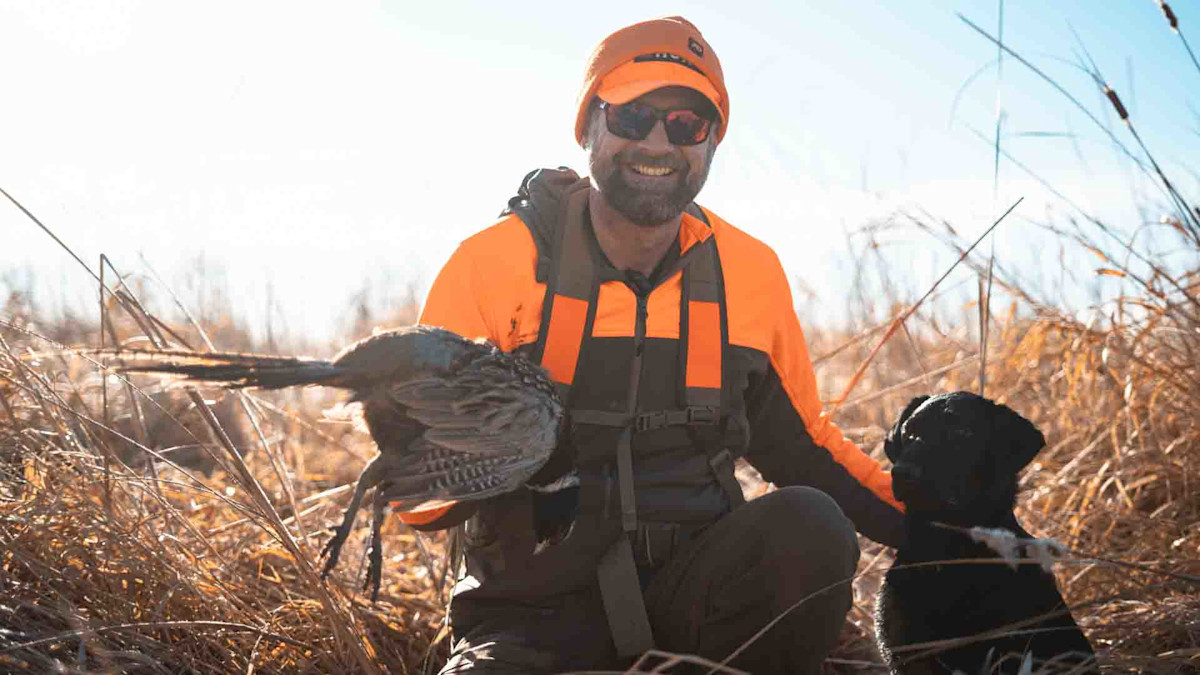

If I had to make a list of the most addicting type of game animals, pheasants would land near the top. There’s just something endlessly fun about hiking through hip-high brush with a shotgun as pheasants suddenly explode into the sky. It’s an old-world type of hunting that makes you think of aristocratic gentlemen decked out in tweed, crisp mornings, pointing and pouncing dogs, and the echoing call of “rooster!” reverberating through the autumn air.
The only real problem with pheasant hunting is that it often feels like you can’t get on birds until cold weather and winter’s snow flatten out brush and get the birds moving. Finding roosters in the early season can feel like trying to find a needle in the proverbial haystack, or in this case, an entire hay field. But there are certain methods to early-season pheasant hunting that can help you get a limit of birds as soon as opening morning. You just need to know where to look.
Take It Slow
Most pheasant hunters find success by busting through the brush like a giant kaiju plowing through the center of Tokyo. They stomp through brush, kick at bushes, and motor through the grass in an attempt to get roosters into the air as quickly as possible. While this may be an effective strategy later in the season when pressured birds are hiding in the thickest cover, you’ll have more luck taking it slow.
I’ve always approached early-season pheasant hunting like I’m still-hunting for whitetails. With the birds holding tight to small patches of cover in relatively open areas, going too fast can cause them to flush well outside of shotgun range. So instead of marching across a field like it owes me money, I meticulously pick my way through the brush and grass like a teenager trying to sneak out of the house without waking my parents.
As you approach potential pheasant cover, look over your intended route carefully and plan your steps. Then, pick your feet up as high as you can, take slow, heel-to-toe steps that allow you to feel the ground and avoid stepping on any sticks or dried leaves that will alert roosters to your presence.
If you’re hunting with a dog, try to keep it as close to you as possible and really slow down and try to get eyes on any birds it points out before making your approach. While hunting this way may be a bit frustrating, if you’re patient and pick your way along, your persistence will be rewarded with more shots at close birds.
Hunt Crop Fringes
While the natural pheasant hunter instinct is to plunge headlong into the thickest cover, you’ll usually have better luck sticking to the edges of crop fields in the early season. During the early season, pheasants are very rarely in the thick stuff. Rather, the birds will be transitioning from late summer brood cover, which consists of thicker grasses and weeds, into more open areas where they can feed heavily. This makes the fringes of crop fields great areas to find early-season birds.
Whether it’s a standing field of corn, wheat, sorghum, or sunflowers, or even the stubble of an already harvested area, these areas will draw pheasants. The birds will flock to them in the early morning to feed heavily before hunkering down in nearby grasses or brush to roost. Hunting the fringes of these crop fields can be incredibly productive, as you’ll often flush birds that are heading into or out of the fields.
When you’re hunting the edges of crop fields, concentrate your efforts on brush lines where different crop fields intersect or on patches of grass with any flowering plants on the edges of the field. These are ideal areas for roosters with a bellyful of corn or wheat to settle down to digest. Often, they’ll hold tight to this cover until you’re practically on top of them, so make sure you and/or your dog cover every inch of the spot before moving on.
Another great area to find birds around the fringes of crop fields are tree rows between fields, especially pines or hardwoods that haven’t dropped their leaves yet. These areas provide excellent overhead cover for pheasants, as they can feel safe from predators beneath the canopy of branches and leaves. It should be noted that pheasants in these areas can be extremely jumpy and will likely flush early, so make sure to have your gun right on your shoulder as you approach.
Walk the Water on Warm Days
I remember going pheasant hunting with a couple buddies a few years ago, where we spent the entire morning hunting a spot that was chock-full of pheasants without seeing a bird. It was a hot day, and we decided to head down to a shady creek to water the dogs before heading back to the truck. That’s when the brush exploded, and it seemed like every pheasant on the property was hanging out next to the creek. That experience taught me something—pheasants like water.
Whether it’s a creek, pond, or even a nearby lake, pushing the brush around water can be extremely effective on hot days, especially in the late morning or early afternoon. Not only do these areas provide an easy spot for roosters to rehydrate, but they are also generally cooler and provide a lot of cover where overheated pheasants can roost and rest before evening. On warmer days, look for areas along the edges of waterways with a lot of swale grass, standing brush and bushes, or even dense clumps of timber. You’ll likely find a bird or two.
When hunting cover around water, it’s important that you get right into the thick of it. Pheasants hiding in these spots generally lock themselves down and hold tight until you’re practically stepping on them. Push right into the heart of the cover along the water, even if it means getting your feet wet, and then keep your gun up and ready.
Focus your attention on any small gaps in the brush or overhead canopy where pheasants have an easy escape route.
Hitting Your Limit Early
Early-season pheasant hunting may look and feel a lot different than the hunt you planned in your head. Generally, the days are a lot warmer, and the birds are a lot harder to find. But when done right, it can create some of your best days in the field with piles of unpressured birds flushing right into your gunsights.
Stay in the loop with The MeatEater Newsletter
Shop
Related
Upland Birds
How to Kill a Limit of Late-Season Pheasants


Pheasant
3 Ways to Kill More Early-Season Pheasants