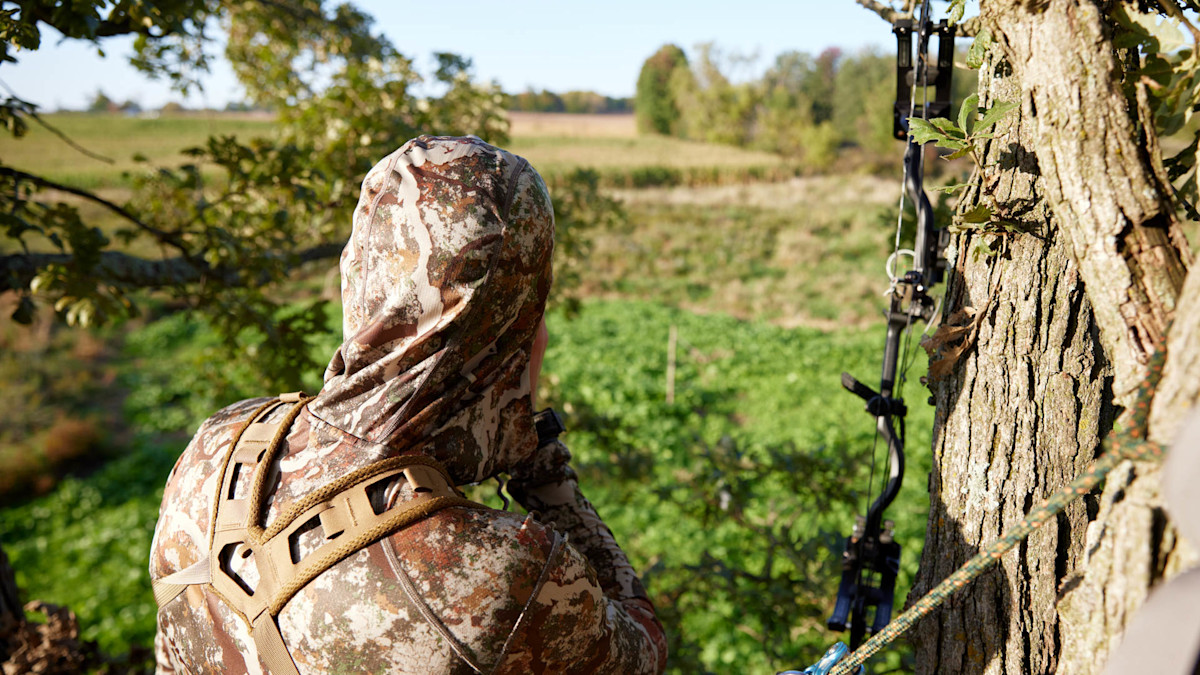

A few Novembers ago, I set out for a hang-and-hunt on my favorite piece of public land in North Carolina. After over an hour of wandering, I stumbled across a hot white oak that was surrounded by fresh deer sign. Shortly after I set up, a young buck limped up to the acorns and stood perfectly for a shot.
I couldn’t have been more excited as I walked up to that scrappy six-point. But reality started tugging on my sleeve as I field dressed him. My wandering led me nearly two miles from my truck, and I was totally unprepared to pack a deer out that far. I looked up at the lights from a small rural community nearby—so close I could hear car doors slamming—and decided to give it a shot.
One phone call later, I had permission from the nearest homeowner to drag my buck out through his backyard. The following season—after requesting to drag out another deer—he gave me standing permission to access public land through his property. Soon after, he offered me permission to archery hunt on his property. It’s been five years since then, and I live more than 1000 miles from that spot now, but my dad still enjoys open access to that property every season.
Private land permission can be a game changer for any hunter, but it’s hard to get and can be easy to lose. With that in mind, here are a few things to consider before you try door knocking this spring.
The Proposal
Permission is a tricky proposition. In my time as a hunter, trapper, and wildlife research technician, I’ve interacted with hundreds of landowners to negotiate access. I can say with certainty that most landowners would rather not allow a stranger to set foot on their property at all, let alone to engage in a potentially dangerous activity where the goal is to harvest a desirable resource.
Some are definite no’s. Many teeter somewhere in the middle, and your approach can sway them in your favor.
On initial contact with a landowner, I always ask if it’s a good time and offer to call or stop by later if not. I want to make it abundantly clear from the start that I respect their time. Next, I explain what they really want to know: who I am and why I landed on their porch or phone line.
In my experience, landowners like to see that you’re putting in the effort to be successful and aren’t just trolling for easy pickings. Before popping the question for hunting or trapping permission, I always mention that I’ve been making good use of public land in the area but would love to hunt new ground or have a more accessible option when I’m crunched for time.
I’ve faced plenty of denials. Most of them were due to existing leases or company policies prohibiting hunting. But I’ve also scored access to some incredible land, and I’ve never had a door slammed in my face. The key is to speak as if you’re asking a favor from someone who owes you nothing, because that’s exactly what you’re doing.
Still, the game isn’t over when you get a “yes.” If you want to hold on to that access, you have to prove to the landowner that you’re not a liability. That’s a long-term commitment.
Play for Keeps
Your relationship with a landowner is an invaluable thing, but it can be incredibly fragile. One rule broken, one whiff of a bad attitude, and you might land permanently on their shit list. Remember, the landowner is taking a risk and doing you an enormous favor in letting you hunt. Show your appreciation by respecting their boundaries and behaving responsibly.
I also always offer venison or a helping hand with grunt work on any permitted property. In the case of the landowner who let me drag my buck out through his property, he declined my offer of venison but gladly accepted a case of his favorite beer. My dad carries on that tradition, dropping by the house with a case of beer at the start of each season and a few times during.
MeatEater's own Tony Peterson explained to me how he's maintained access to a farm in southeast Minnesota for over 30 years.
"I was in eighth grade when a fellow classmate mentioned I could hunt their family place, but he cautioned me against pissing his dad off," he said. "I knew of his dad from football games and figured the best way to go about things was to try to stay off of his radar as much as possible and follow the rules."
While that might seem like common sense, it’s important to consider what “following the rules” looks like for individual landowners.
"Over the years, I've watched dozens of hunters get booted from that property for parking in field drives, leaving gates open, calling the landowner during spring planting or fall harvest, and just generally inconveniencing the landowner. Hunters forget that farmers are running a business, and it's best to leave them to it," Tony said.
Tony said that farm “changed (him) forever,” and he’s maintained that relationship even now.
"I'm super grateful to not only get to grow up and learn there, but also to be able to now take my daughters there. I call him up every year in March to ask permission, and every year he says yes. It's honestly just a gift."
Tony’s takes a long-term approach, and it’s been fundamental to maintaining access. You have to follow the rules a landowner sets for you, no matter how unreasonable or arbitrary you might think they are. Ignoring them is the fastest way to lose permission and gain a bad reputation in the neighborhood.
Read Between the Lines
Landowners might not communicate all the rules directly, and that’s dangerous territory. They might not outright want to tell you they’re uncomfortable with you hunting in the woodlot behind the house or that they want you to stay out during the youth deer season when their grandkids will be out.
But often, if you’re a good listener, you can pick up on cues. The key is to pay attention and always err on the side of caution. This is the best way to prove your worth to the landowner, which can expand your access and opportunities over the years. Basically, if you show your appreciation and don’t become an inconvenience, the glide path to multiple seasons is easy enough to follow.
Stay in the loop with The Wired to Hunt Newsletter
Shop

Related
Manage
Video: How to Score a Whitetail Buck

Scout
How to Score and Keep Hunting Permissions