Popular searches
Articles
Series
Topics
Shop
Recipes
Cal Of The Wild
Ep. 467: Cocaine Salmon, Legislative Scorecard, and Oh My God It's Dry in the West
Play Episode
25m
This week, Cal breaks down recent research on the effects of hard drugs on Atlantic Salmon, western drought, and the wins-and-losses of all our legislative calls to action so far this year.
To learn more and get involved with any Cal to Action, click here.
MeatEater on Instagram, Facebook, Twitter, Youtube, and Youtube Clips
Subscribe to The MeatEater Podcast Network on YouTube
00:00:10
Speaker 1: From Meat Eaters World News headquarters in Bozeman, Montana. This is Col's Week in Review with Ryan col Calahan. Here's CAP. A new study looked at coked up Atlantic salmon. Yes you heard that right. Researchers in Sweden completed a research project that assessed the effects of cocaine and its metabolite benzil ech john in ech jonen benzelec jinen. Well, it's a mouthful on fish. To do this, they fed hatchery Smoltz slow released drug capsules before releasing them into a lake, and then studied their behavior and survival rates. The high salmon swam about twenty percent faster and twice as far as their sober counterparts. Surprisingly enough, they also survived significantly longer in the wild. Might think that this would cause scientists to celebrate and start doping up fish in our rivers and lakes everywhere, but that's far from the case. Instead, the authors of the study concluded that the drugs disruption of the usual behavior of fish could stress populations already facing other environmental challenges, and the unintended contamination of waterways from both illicit drugs and normal pharmaceuticals is a serious and little understood issue right now, which is why all jokes aside, more research like this is still needed. This is not about experimenting with cocaine and salmon. This is if you're familiar with maybe listening to the show, you'll understand that a lot of pharmaceutical remnant and byproducts make it into our water treatment facilities, and downstream of these and major city centers there can be recognizable amounts of a bunch of different drugs picked up in our potential food sources. These fish. It is no wonder that fresh water muscles in the United States are the top of our endangered species list. This week we've got the oh my God, it's dry in the West Report, Turkey Talk, and a legislative update. But first I'm going to tell you about my week. And my week has been packed as his life right now. For those of you who got to chat with at the tune in our last night there in DC, wonderful, lovely pleasure to meet everybody. That old bar is like a DC staple, and it's got a bunch of you know, cute little white tails, but two pretty darn respectable mule deer in there, which is nice. Walking off Capitol Hill and checking that out. Everybody who came out to the first ever BHA DC reception, thank you so much. Thank you for taking pictures and checking out our corner crossing floor, corner crossing to get to the bar was what we were aiming for. A couple of tweaks there, but fun night, great relaxed, had staff from both sides of the hill. Representative Gave Vasquez, who is one of the founders of the Public Lands Caucus in the House, showed up, gave a nice little talk, and Sean Johnson out of New Jersey and Charlie Mooney out of West Virginia busted their absolute tales on making a bunch of really, really fantastic white tailed treats for everybody. We even had some bear sausage to circulate. Shockingly enough, most folks there had never eaten bear or white tail. So that's why we call it Venison diplomacy. Gang get to talk about public lands, celebrate public lands, smell it and eat it. It's a big impact. We made it into the Turkey Woods as fast as expeditiously as possible. On the back end of that DC trip, atlanted in Bozeman at two pm and we were packed up on the road four, firing up the diesel and heading out for public land adventure is exactly what I want to do. But my goodness, diesel fuel here in Montana is regularly over five bucks a gallon and projected to go past six. That dampens the mood a bit. We aren't spending freely in the small town restaurants and grocery stores and markets as we typically would. We're packing it with us and firing up the jet boil or reactor for my critical coffee routine. And I'm just a weekend recreator. Think of how our agriculture community is doing right now, not a lot of options for cash return on crops and planting sucks up a lot of diesel, not to mention fertilizer prices and drought conditions. Point being, when and if you are knocking on doors during your outings, be extra generous with your time and your thank yous. Show your appreciation, even if it's a no hunting permission is not a transaction, it's relationship, and you are an ambassador not just for those in your truck, but every hunter. I'd also be ready to state you're happy and willing to park on the county road and walk for fire purposes and noxious weeds. Speaking for this Montana kid, I am shocked at how fast our April snowstorms have been absorbed by the ground. We've barely seen mud this spring. Some good news on the AAG front. We are eking towards the possibility of a new farm bill. We just got authorization of some funding for CRP and VPA HIP. The NRCS Natural Resources Conservations serve US just announced fifty two million dollars for the Voluntary Public Access and Habitat Incentive Program, which is vpa HIP. It's the only federal program dedicated to enhancing recreational opportunities on private lands. This represents the largest single investment in VPA HIP since its creation in two thousand and eight, and the first opportunity for new funding since two nineteen. This is an incredibly important moment for anyone who depends on access to private land for opportunities to hunt and fish, and these producers out there need as many little streams of income as they can get. I'm focusing on this right now, Gang, because we got to think a whole ecosystem health, not just focus on one side of the fence or the other. We can make public lands as big and bad ass as you could ever imagine. But if the private side of the fence were to deteriorate in habitat quality and habitat fragmentation, as in these places getting chopped up and subdivided not just for housing but for energy or even smaller operations egg or grazing, we are going to see that effect on the public land side of the fence too. Not to mention all the things that we typically talk about, right so aquafer health, water table, the fight on noxious weeds, green glacier juniper encroachment, as well as drought tolerant landscapes. So always expanding our worldview, aren't we. Our friends over at Pheasants Forever had this to say on that program. Expanding voluntary public access on private lands is one of the most effective ways to strengthen our nation's upland hunting tradition while supporting private land owners. That's from Andrew Schmidt, Director of Government Affairs over at PF and QF. Increasing access for hunting it and incentivizing voluntary conservation on private lands are both key priorities for the make America Beautiful again. Two fifty initiative that's America's two fifty. More than seventy percent of the lower forty eight is in private ownership. Sportsmen and women are reliant on private lands for hunting and outdoorrect opportunities. VPA hip helps address this by opening a significant number of access opportunities on private farm, ranch and private forest land, while also contributing to have attack conservation efforts. The application period will be opened through June eighth, with an estimated grant start date of September thirty. Moving on to more drought talk, things have been looking very very dry out here in the last where a below average snowpack was followed by a period of unusually early spring warmth and a lot of snow that we did have melted off very early. This has left many mountains brown and bleak when they're normally still white. The poor snowpack conditions are remarkably widespread throughout the region and have many experts banding around terms like historic and abysmal. The implications of the situation will be felt not just by utilities and irrigators. It is almost certainly going to impact hunters and anglers, but the effects that the dry conditions will impact different types of wildlife in different ways, and there will also be some localized variation. We've got a big feature article about the issue over on the meat eater dot com, but here are some of the big takeaways. For big game such as elk and mule deer, the mild winter led to great overwinter survival rates, meaning there are a lot of animals on the landscape right now. On the flip side, the forage will dry out early and the habitat quality might not be very good for them this summer. This could stunt antler growth on bucks and bowls and hinder this year's fawn production. There's also the potential that wildlife managers will want to increase hunter harvest this fall to knock down numbers so that the landscape isn't harmed by an over abundance of ungulates compared to the current carrying capacity. Quote, we drop populations a little bit in the short term, then when conditions improve, we would allow them to come back up to objectives. We do this to hopefully save habitats from long term damage, said Kent Hersey, big game research coordinator for the Utah Division of Wildlife Resources. Unsurprisingly, fish, particularly cold weather. Fish such as trout, steelhead, and salmon will be hit especially hard by the lack of snowpack, which feeds rivers and streams across the West. Less snow means a shorter and earlier runoff, and then the rivers will heat up faster than normal, which stresses fish, as will angling pressure. Wherever those fish are then concentrated, spawning habitat will also be seriously limited. While the worst is yet to come, anglers are already feeling the impacts, particularly in Colorado, where Denver Water announced it it is completely draining and Tarot Reservoir in the name of water efficiency if you haven't heard of it, and Taro is well soon to be a was one of Colorado's best trophy trout fisheries. It's a brutal development for anglers in the state, and reservoirs and rivers elsewhere will also feel negative impacts. Waterfowl and upland bird populations won't escape unscathed, either, says Patrick Donnelly, a research scientist for Ducks Unlimited Quote. Snowpack is an ecosystem driver of water in the West. It keeps places like riparian corridors green late in the summer. If you don't have that water, you don't have those little grocery stores that birds rely on. Late in the summer, soil moisture also dries up, there's not as much grass, and there aren't the invertebrates that feed birds and chicks. This will likely impact both waterfowl and upland bird reproduction, and is especially concerning for imperiled sage grouse populations, as well as sharpies and other native birds. Keep in mind that upland birds have cyclical populations which rise and fall over the years, so this will likely cause down cycles, but is not the end of the road. What's particularly worrying, however, is that while this year is especially bad, there have been a consistent trend of dryer and dryer weather in the West, which, to put it simply, isn't good for fish and wildlife populations out here. Quick side note we did catch about a half dozen sharp tails on a lek doing their spring mating dance. Sage grouse get a lot of credit, lesser prairie chicken get a lot of credit. Sharp tails are an absolute treat to watch those birds dance as well, so if you ever get the opportunity even if you did what we had to do, which was sacrifice little turkey, time to watch that show, you better do it. One final note on the subject, Spring moisture and summer monsoons could offset some of the worst impacts of the low snowpack in some areas, So if you're planning to hunt and fish out here, keep your eye on those factors and don't lose hope yet. Just be prepared to adapt your expectations, tactics, and put in a little extra legwork if needed. Local outfitters and biologists are a great resource for finding places to recreate, and also one thing we can control is working together on conservation projects to improve habitat to give our fish and wildlife the best chances at success, even during periods of challenging climactic conditions like right now. Moving over to the Cowboys state, this season will be the last year it's legal to use a rifle to kill a gobbler on public ground during the spring in Wyoming. I know exactly one guy who's going to be heartbroken about this. While most folks hunt old toms with a scattergun or bo, there are some Western states where rifle hunting is a legal method of take two and as of twenty twenty five, about twelve percent of birds killed in Wyoming during the spring we're taken with rifles, but that number will likely change soon. The Wyoming Fishing Game Department is changing its rigs, citing a hunter feedback survey that showed public support for the action in the interest of safety. Rifles will still be a legal method of take on private land in the spring, where safety considerations are different, and everywhere during the fall. So if you still want to tag a Wyoming turkey from a long distance, you can just stick to those rules right, identify your target, and beyond. Moving on to the legislate lative roundup here. Almost every week here on the Weekend Review, we ask you to call your elected officials and we tell you to make difference. So this week we're running a scorecard of the CTAs calls to action for this year, the wins, the losses, and the ones that still need a push. In Oregon, Senate Bill fifteen forty five establishing an affirmative right to corner cross died in committee after opposition from property owners and ranchers who said maps of property lines were too unclear to prevent trust passing, but Oregon Senate Republican communications Director Ashley Quinsey issued a statement that the bill sponsors are now planning building greater clarity and consensus ahead of the twenty twenty seven session. Don't count this one out yet. There was a lot of early support from landowners and ranchers, and we got to make a durable solution here, gang. We don't want a litigation football going back and forth. Similarly, Wyoming's own corner crossing legislation HB nineteen passed in the House but was defeated in the Senate. Cowboys, staters, take a look at how your reps voted on this one and either call to thank them and urge them to keep trying next session, or let them know that this is something that you want clarified and you will support them finding a better bill in the future. In Old Mississippi SB two four three six, which would have established a black bear season, passed in the Senate but failed in the House. Even though we lost this battle, time is on our side of Mississippi's bears keep thriving the way they have been, and all signs point to the fact that they will. Two pieces of bad news from Idaho Senate Bill thirteen to twenty six passed and was signed into law, ending the open fields doctrine in the state. I'll repeat a statement I've made many times. If the open fields doctrine is not the right tool, what is by removing it? You do not provide a solution. You've just switched problems. Public wildlife, especially in a state like Idaho, spends a lot of time on the public side of the fence. It remains public when it jumps onto the private side of the fence. How do we properly regulate a public resource that does not adhere to man made boundaries? Idaho also passed SB thirteen hundred and therefore the Director of Idaho Fishing Game will now be directly appointed by the governor rather than by the seven member Fishing Game Commission. This disrupts a system that has worked since nineteen thirty eight and places most of the control of wildlife policy into the hands of one person. One other bit of collateral damage here. In nineteen seventy seven, the Harriman family transferred the eleven thousand acre Harriman Park to Idaho under the condition that the state establish a parks agency whose staff are appointed quote on the basis of merit alone unquote. Making the director of fishing game a direct political appointee could constitute a violation of that condition, and the gift included a reversion clause that allows the family to take the land back, which they are now considering. We'll keep you posted with this one. Idaho back in the nineteens the early nineteen odds said we need an independent fishing game in order to properly take care of wildlife and wildlife habitat. I think they were right back then. As we see these pushes to bring independent fishing games under control of whoever, it makes it hard to be optimistic that those agencies are going to be able to follow through with their mission statements unbiased and to the letter. In Kentucky, we had a House Bill one two which expanded the deer depredation permits that landowners and their families could get. Our listener Ethan Pugh suggested that expanding incentives to give access to hunters would be a better idea. HB one forty one was vetoed by Governor Andy Basheer, but passed by the super majority in both chambers over his veto, but to Ethan and other Kentucky listeners. There's no reason there can't be improvements to hunter access as well, So keep talking with your reps to advance that agenda two. Finally, in the loss column, Alabama passed SB seventy one, which prohibits state agencies from establishing environmental protections more stringent than existing federal protections. This passed long party lines, and Republicans, who often advocate for states rights, voted to hand over control of their environment to the Feds, who may not be always looking at the particular circumstances affecting Alabama. Why you would want to take this tool out of your toolbox as a state is beyond me over to the winds, and we've got a lot of them. Most recently, we told you about Oklahoma House Bill three two seven zero, which would have removed the Department of Wildlife Conservation from any oversight role in the state's very misguided Chronic Wasting Disease Genetic Improvement program. As a reminder, that program is supposed to improve wild deer genetics by introducing captive deer that, according to captive deer breeders have a resistance to CWD, but that is biologically unproven, mathematically impossible, and a great way to spread CWD. Oh and it might disqualify the deer herd of Oklahoma and surrounding states from the Boone, Crockett, and Pope and Young record books because neither organization allows genetically modified animals. You may not care about that at all, but should one state have the right to take that away from you whether you like it or not. Good news is that HB three two seven zero died in committee, meaning the ODWC can still act as a break on the program. This development also signals that state legislators might be having second thoughts about the program generally sooners, this will be a great time to call your reps, let them know what you think about how they've voted so far, and urge them to cancel the cwd's genetic program. Maybe we can undo that era before it causes too much more trouble. In Massachusetts, we told you about mass Wildlife listening sessions where you could voice your support for Sunday hunting, and a few weeks later, Governor Healy announced her endorsement of the measure now House Bill ten sixteen to implement Sunday hunting is before the Environment and Natural Resources Committee, and its future looks bright. Now's the time where I rile up the listeners from Maine. Unless you get going, looks like you'll be in last place among your New England rivals when it comes to going afield on the Lord's Day over In Wyoming, Senate File twenty seven passed, so you are now allowed to use tracking dogs to recover black bears in the Cowboy State. For another win, we'll jump up to the federal level, where US Congress was considering a rollback of the Endangered Species Act. The bill HR eighteen ninety seven would have required economic impacts to be considered when listing a species, limited projections about a species future, and would have rescinded protections for species listed as threatened. This one looked like it had the votes, but then six Florida Republicans and a few other GOP members came out in opposition, and the bill has now been shelved and likely won't come back to a vote again. I'm all for overhauling the ESA, just not in this way. Big one from Indiana House Bill one zero zero three would have eliminated the state's Natural Resources Commission, the body made up of citizen, state agency staff and a member of the Indiana Academy of Science, which acts as the people's voice on public lands and wildlife policy. Well, HB one zero zero three did pass and was signed into law. However, after an outcry from citizens and organized lobbying by several conservation groups including Indiana backcountry Hunters and anglers, the language eliminating the NRC was stripped out of the bill before it came to a final vote. So despite the bill's passage, the commission lives on. That's how political pressure from involved citizens works big. Thanks to all the Hoosiers who called their reps, and again to Indiana BHA for coordinating the effort. Finally, we'll close out with a couple that could still use more pressure. In Michigan, HB four four four five would legalize baiting for deer. That bill has now passed the House and sits before the Senate Committee on Natural Resources. Farmers have lobbied for the bill, but those worried about CWD, including the state DNR, have opposed it. Even though Governor Whitmer vetoed the last version of this bill in twenty nineteen, that was a long time ago. Some Michiganders. Call your senators and let them know your position on HB four four four five in Virginia, House Bill thirteen ninety six, which would establish a permit system for people who hunt with the aid of dogs, passed the House and is now with the Senate Finances and Appropriations Committee. Virginians, put pressure on your senators to keep this one moving. And finally, let's go back to where we started. The Great State of Oregon Initiative Petition twenty eight, the so called Peace Act, has been gathering more signatures on the way to getting on the ballot. The Act would remove exceptions for hunters and anglers and animal cruelty laws, which would criminalize any act that injures or kills an animal. Would also remove various exceptions for farmers and ranchers, which would pretty much outlaw raising livestock for meat. In other words, complete insanity, But lord knows, we've all learned that insane things come to pass each and every day. In twenty twenty six, now, this initiative needs to reach one hundred and seventeen thousand, one hundred and seventy three total signatures by June tewod and as of March thirtieth, it had gathered one hundred and five thy fifteen signatures. The petition has been adding around twenty five hundred signatures per month, but will likely see an uptick as the deadline approaches. So this one is going to be a real close call. Or agonians, Let you're not hunting friends know that this is a bad deal and ask them to spread the word to their buddies who might be tempted to sign something like this without looking into the details. People who go out and get signatures for petitions are often paid by the signature. It behooves them to say whatever they want to get those signatures. I've had a lot of grueling encounters with these folks. We're trying to pry out the actual facts. Is just that it's brutal. They want you to listen to their story, not the policy. All right, that's the rundown. There's tons more gang and just remember if your state wasn't read, that doesn't mean something's not going on, and more than likely is be engaged. Sign up for these newsletters backcountry hunters and anglers. Obviously we have our legislative tracker over there. It's a great way to stay informed. We mentioned PFQF. Their government affairs team is fantastic. They will keep you up to date on this stuff, just like our friends over at TRCP and WTF. You know what the drill. More often than not, you don't have to be a member. You can. You can dirt bag it and be informed. I'd much rather have that, but become a member. We need you. That's all I got for you this week. Thank you so much for listening. Remember to write into a s K C A L. That's Askhaal at the meeteater dot com. Let me know what's going on in your neck of the woods. We appreciate it. That's all I got. Talk to you next week.
Presented By
Featured Gear
While you're listening
Public Lands & Waters
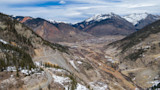
What the Record-Low Snowpacks Mean for Fish and Wildlife in the West

A mild winter and warm spring across much of the West have contributed to extremely below-average snowpacks and widespread drought conditions, prompting experts to use terms such as “historic” and “abysmal” when describing the current outlook. According to Climate Matters, the western U.S. snowpack...
Sage Marshall
Apr 27, 2026
Read More
Play Now

Policy & Legislation
What's the Future of Trail Cameras in the West?

Big changes are on the horizon for trail camera use in the state of Utah, following similar, recent bans in Arizona and Nevada.
In an early January decision that divided the state’s hunting community, the Utah Wildlife Board voted to prohibit the use of all trail cameras during fall big game seasons...
Travis Hall
Jan 20, 2022
Read More
Play Now
Public Lands & Waters
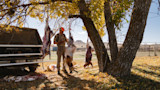
Hunter-Landowner Access Agreements Struggle in the West

The huntable acreage enrolled in public-private access agreements continues to slip in some western states, new numbers show. As hunters see increased crowding on public lands, they’re turning to alternative avenues for access, including private rangeland and agricultural lands enrolled in state...
Eli Fournier
Nov 20, 2025
Read More
Play Now
Save this episode
Conversation