What the Record-Low Snowpacks Mean for Fish and Wildlife in the West
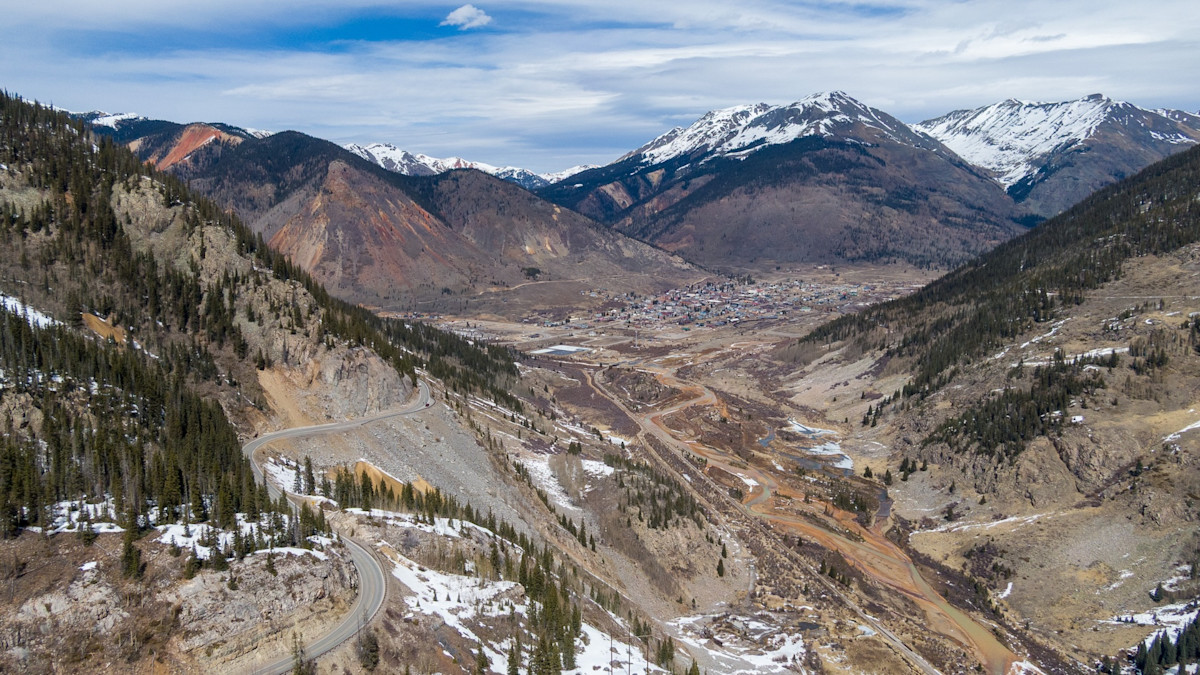

A mild winter and warm spring across much of the West have contributed to extremely below-average snowpacks and widespread drought conditions, prompting experts to use terms such as “historic” and “abysmal” when describing the current outlook. According to Climate Matters, the western U.S. snowpack was 65% below the 1991-2020 average as of March 30, marking the worst snowpack on record since 1981. Conditions vary depending on the subregion, but as of April 22, every region in the Westwide SNOTEL data provided by the U.S. Department of Agriculture is below average.

The dismal snowpack has worrying implications not just for irrigators and water managers but for fish and wildlife populations across the West. But not all is lost—at least, not yet—for hunters and anglers who care about western wildlife populations and related recreational opportunities.
We spoke to leading experts for the major fish and wildlife groups impacted by the low snowpack about what to make of the conditions, potential conservation initiatives, and what you need to consider if you’re still planning western hunting and fishing adventures.
The Impact on Big Game is Good and Bad
When it comes to the mild winter conditions, the low snowpack is a two-sided coin for elk, mule deer, and other native ungulates, according to Kent Hersey, big game research coordinator for the Utah Division of Wildlife Resources (UDWR). On one hand, the mild weather likely led to good overwinter survival rates.
“Most of our [mule deer] mortality tends to occur during the winter, largely due to malnutrition with deep snow and things of that nature,” Hersey told MeatEater. “This year, we didn’t have that, and deer didn’t have to burn their fat reserves. We’re coming out of the winter with really high adult and fawn survival rates.”
Similarly, elk benefited from better feeding opportunities due to the lack of snowpack. The flip side of the coin, though, is that dry conditions may have negative impacts going forward. “There’s probably not going to be as much vegetation produced because of the faster-than-usual melting period,” he said. “This means there’s going to be increased competition for food, and it could impact milk production.”
Another negative impact could be stunted antler growth for some mature bucks, bulls, and rams, not to mention the potential for impacts from catastrophic wildfire and altered predator behavior. That said, while drought conditions are currently widespread, Hersey says it’s too soon to say for sure how bad the impacts will be; spring precipitation and monsoonal moisture could offset the worst effects.
“We’re not pressing the panic button now,” Hersey said. “There are still a lot of unknowns, and we are in a wait-and-see mode.”
Should the dry conditions persist, he says that it’s likely that hunters will have plentiful opportunities—though perhaps not for trophy animals—this fall as wildlife managers seek to reduce wildlife populations to prevent habitat damage from overfeeding.
“We drop populations a little bit in the short term. Then, when conditions improve, we would allow them to come back up to objectives,” he said. “We do this to hopefully save habitats from long-term damage.”

Coldwater Fish Will Almost Certainly Struggle
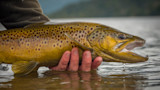
Unsurprisingly, some of the most significant impacts from the “historic” low snowpack are likely to be seen in the West’s trout populations, according to Chrysten Rivard, VP Pacific Conservation for Trout Unlimited. Low snowpack conditions lead to cascading impacts to coldwater fisheries, while warmwater fisheries will largely record less serious impacts.
“When there's less water, the water warms up more quickly, and so you have too warm of temperatures for fish,” Rivard told MeatEater. “Over time, this decreases their fitness levels. And then warmer water temps also lead to other water quality problems like hazardous algal blooms and excess nutrient concentrations, as well as excessive aquatic vegetation growth.”
Additionally, the low water levels will concentrate fish in both rivers and lakes, potentially leading to increased angling pressure and related mortality for them. Poor spawning conditions are likely to be widespread, too. The negative impacts will also extend beyond inland trout to anadromous stocks such as steelhead and salmon reproduction.
“When peak flows happen at different [than usual] times, it disrupts their normal migratory cycles,” she said. “In addition, when we have really low flows in the summer and early fall, migratory fish are unable to go upstream [to spawn] where they want to.”
Rivard says this year’s brutal water conditions are likely to be particularly widespread. That said, there will be pockets of less-impacted cold-water fisheries, such as some alpine lakes and rivers and certain tailwaters. That said, not all tailwaters, which can buffer poor conditions because of water released from beneath dams, will escape unscathed. For instance, Colorado has already announced it’s fully draining a famed fishery, Antero Reservoir, and a significant drawdown is also on the horizon for the Flaming Gorge Reservoir.
An important way to mitigate the impact of dry years like this one, Rivard said, is meadow restoration in the headwaters of river systems, which raise stream levels, replenish groundwater, and provide shallow-water storage. She said that for folks still planning trout fishing trips in the West, it will be important to consult local shops to figure out where and when to fish.
“Understanding the local conditions of where you're planning to go is really important,” she said, adding that local guides and biologists can “direct folks to places that are still appropriate and good to fish and have a wonderful trip this year.”
Bird Populations Could See Variable Results
Patrick Donnelly, currently a research scientist for Ducks Unlimited, is a specialist in spatial ecology for both waterfowl and upland birds. The outlook is poor for birds in the Mountain West.
“Snowpack is an ecosystem driver of water in the West,” he said. “It keeps places like riparian corridors green late in the summer. If you don’t have that water, you don’t have those little grocery stores that birds rely on late in the summer. Soil moisture also dries up, there’s not as much grass, and there aren’t the invertebrates that feed birds and chicks.”
Donnelly said that waterfowl won’t be as impacted in the same way as upland species because they are able to fly to find better habitat conditions. That said, local waterfowl production is likely to be down in some areas, and there is the potential for significant disease outbreaks such as avian botulism if birds are concentrated in limited wetland areas later in the year. In terms of major wintering grounds, the impacts on Pacific Flyway birds are likely to be felt strongest in the Klamath Basin and Great Salt Lake, while California’s Central Valley has a better outlook.
For upland species, the mild winter may have led to good overwinter survival, like ungulates, but those positives are likely to be more than offset by poor summer habitat conditions, especially for birds such as chukar, pheasant, sage grouse, Hungarian partridge, and sharptail grouse in systems that rely on snowpack moisture. Quail species in the desert Southwest are also being impacted by persistent drought conditions.
Donnelly said this year’s dry outlook is particularly widespread, though conditions will have local variation due to spring and summer precipitation. Negative effects on habitat can be compounded in localized areas by wildfire, which, in sage brush ecosystems, can facilitate the spread of invasive cheatgrass, among other issues.
Donnelly also notes that upland birds have cyclic population fluctuations, meaning they’re likely to bounce back in future years. That said, while this year appears to be exceptionally dry, it’s part of a broader trend, which is particularly bad for imperiled sage grouse. “I think of sage grouse populations as a pogo stick that goes up and down with weather,” he said. “But we’re going down an escalator instead of staying on flat ground.”
Come fall, bird hunters can adapt to the variable conditions by concentrating on pockets with good spring and summer precipitation, as well as parts of the western U.S. that aren’t as dependent on snowpack.
“You want to find a place that’s less impacted by some of the drought conditions covering the entire region,” he said. “For upland hunters, I’d particularly look at parts of the Great Plains that get precipitation as rainfall and aren’t dependent on snowpack levels.”
Feature image via Mitch Tobin/The Water Desk.
Stay in the loop with The MeatEater Newsletter
Shop
Related
Wildlife Management
Montana Warns of Increased Bear Conflict, Citing One of the ‘Worst Natural Food Failures’ on Record
Public Lands & Waters
What the Record-Low Snowpacks Mean for Fish and Wildlife in the West