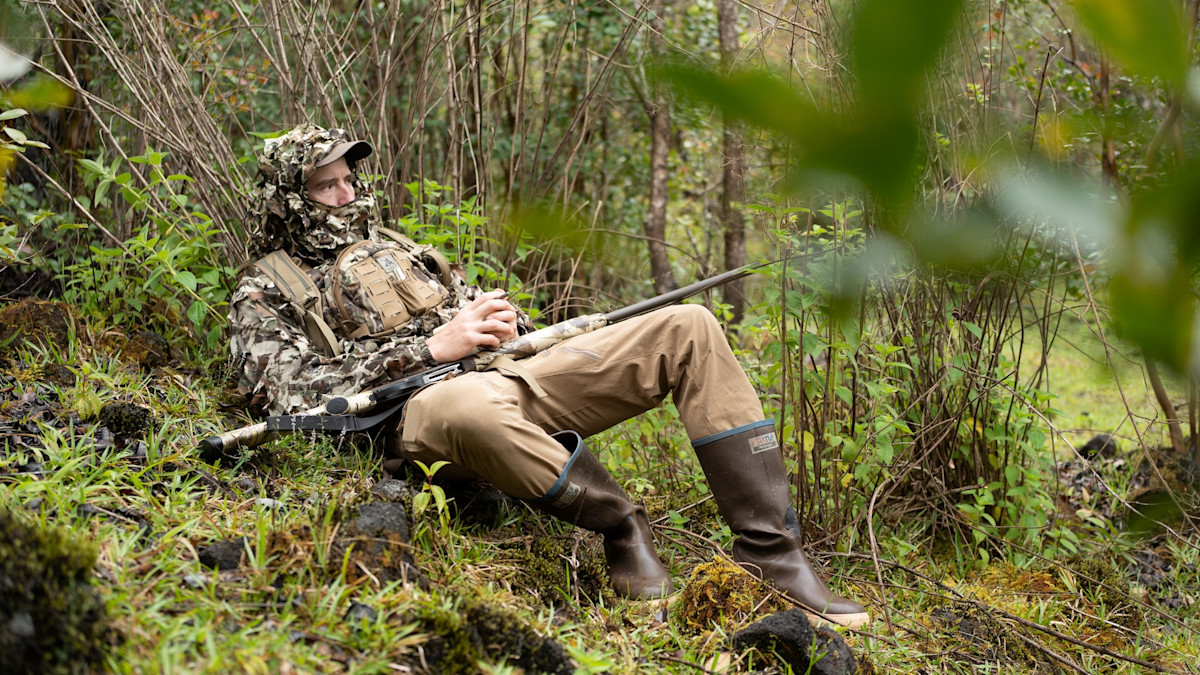

Spring evenings are supposed to make turkey hunting easy. A tom flies to the roost, rattles the woods with a few last gobbles, and gives you everything but an onX pin on where to start in the morning. But it doesn’t always work that way. Sometimes the sun sets, and the woods go quiet, leaving you with nothing but a fresh collection of mosquito bites and the uneasy feeling of “what do I do now?”
When that happens, a 4:00 a.m. wake-up call is less appealing. But don’t give up just yet. My friend and hunting guide Walker Davidson of Alabama has a plan for any turkey hunter to go in cold and come out with a gobbler over their shoulder. I called him because he’s chased turkeys all over the country and hardly ever hunts roosted birds. Instead of spending his evenings in the woods, Davidson rests up, and come morning, he usually tags out. Here’s how he does it.
Know the Ground
When you don’t have a bird pinned to a tree at daylight, you need to fall back on what you’ve learned about where turkeys want to be. Before the season starts, gather a list of likely places. “I like to scout areas where it makes sense for a hen to be, and I like to mark spots with fresh sign during the season,” Davidson told MeatEater.
He spends the preseason building a mental map of where turkeys live based on sign like tracks in the road, droppings, and scratching under hardwoods, and he tries to connect them with terrain features like creeks, bottoms, and ridges.
Instead of focusing on a single bird, Davidson focuses on a bird’s entire home range. “Easterns usually have a small bubble that they live, breed, and feed in,” he said. “You need to get into that bubble.”
Plot the Perfect Walk-In
Davidson has a list of places to go before daylight, but he usually has it more narrowed down a few days into the season. “I always hunt based on where I’ve heard the most recent gobbling activity,” he said. “If I was on a bird the day before, I’m going back there. But I always have a few backup spots ready if things don’t work out.”
From there, the plan is simple: Walk into the woods, listen for gobbles, and use the terrain to your advantage. To be successful, though, he suggests staying as quiet as possible and not calling to a bird until you’re within his bubble. “I barely ever owl hoot in the woods,” Davidson said. “A turkey is going to know that’s a person.” Even worse is making a bunch of noise while trying to locate a bird.
“If you owl hooted, broke three limbs to get in, he’s going to respond to your yelps because he can’t help it,” he said. “But he’s not going to come to you because he knows something is off.”
Instead of forcing a turkey to gobble, wait until you hear a turkey sound off, then slip in quietly and move to a good spot within earshot of the bird. “Don’t call to him right when you hear him. Get yourself in the right position, then call to him. If they’re alone, they’re predisposed to work their way uphill to gobble. Get uphill of the bird if you can.”
Assess the Situation
At this point, if you’ve done your part and the gobbler you’re after is alone, there’s a good chance you're going to kill him before the rest of the world wakes up and eats breakfast. But things can go sideways quickly. Your bird could be surrounded by hens, or he might just not be feeling it today. It’s important to read the situation and adapt.
“He might gobble from the roost, then fly down, shut up, and hang out with hens till 10 o’clock,” Davidson said. “Just sit down, eat a sandwich, and hang out. Eventually he’ll sound off again, and you’ll be back in the game.”
Depending on where that next gobble comes from, you might need to move and find a likely spot where a lone hen might peck around within earshot of that tom. This is where scouting and knowing the terrain is a big help.
At this point the hunt also becomes a matter of reading his mood. “If he’s gobbling at every crow, woodpecker, and log truck going down the highway, I’m going to call more aggressively,” he said. “If he’s more subdued, I’ll match that tone with softer yelps and clucks.”
When the Woods Go Quiet
Of course, sometimes you don’t hear a gobble all morning. When that happens, Davidson shifts into a slow, deliberate search. He’ll either use an assembly yelp to locate a bird or pick a spot and call softly for set intervals of time. If you know turkeys live in the area, you don’t need constant gobbling to stay confident.
“Pick an area with fresh sign, and soft call every 15 to 20 minutes. You’re not trying to win the fly-down cackle world championship, just paint a realistic picture.” Davidson stressed that the idea isn’t to fire up a gobbler from half a mile away. It’s to create the illusion of a hen quietly going about her morning. Stay still, and stay patient, even if nothing answers your calling.
“My grandfather used to sit down, yelp three notes, and put his call out of arm's reach for 30 minutes,” he said. “That way, if he got tempted to call again, he knew he’d have to make a big movement to get his call, so he’d look and scan the woods before reaching for it.”
Know When to Get Out of There
Patience is important, but so is having a backup plan. Davidson rarely sits longer than an hour if a bird isn’t responding. Instead of wandering aimlessly, he heads to the next likely spot on his map. He might hit a crow call as a last-ditch effort, but without a response, he’ll repeat trying to locate a bird at a new spot with an assembly yelp or see if he can spot a bird in a field from the road.
Davidson is more reluctant to leave if he’s already heard a gobbler in the area, even when that turkey goes quiet. “When I decide to leave a spot has a lot to do with how the bird reacted to my calls before he stopped responding,” he said. If the bird seemed interested—gobbling hard then shutting up to work slowly through thick cover—Davidson might give him more time.
“Easterns don’t gobble when they walk. So if you’ve been gobbling back and forth with a tom and he goes quiet, there’s a chance he’s coming. When you’ve heard a bird and you hit the point where you can’t wait anymore, always give it 15 more minutes. You will almost always kill that bird 15 minutes after you decide to leave.”
Stay in the loop with The MeatEater Newsletter
Shop
Related

Turkey
What Turkeys Can Teach You About Calling

Turkey
So You Didn’t Roost a Turkey, Now What?

