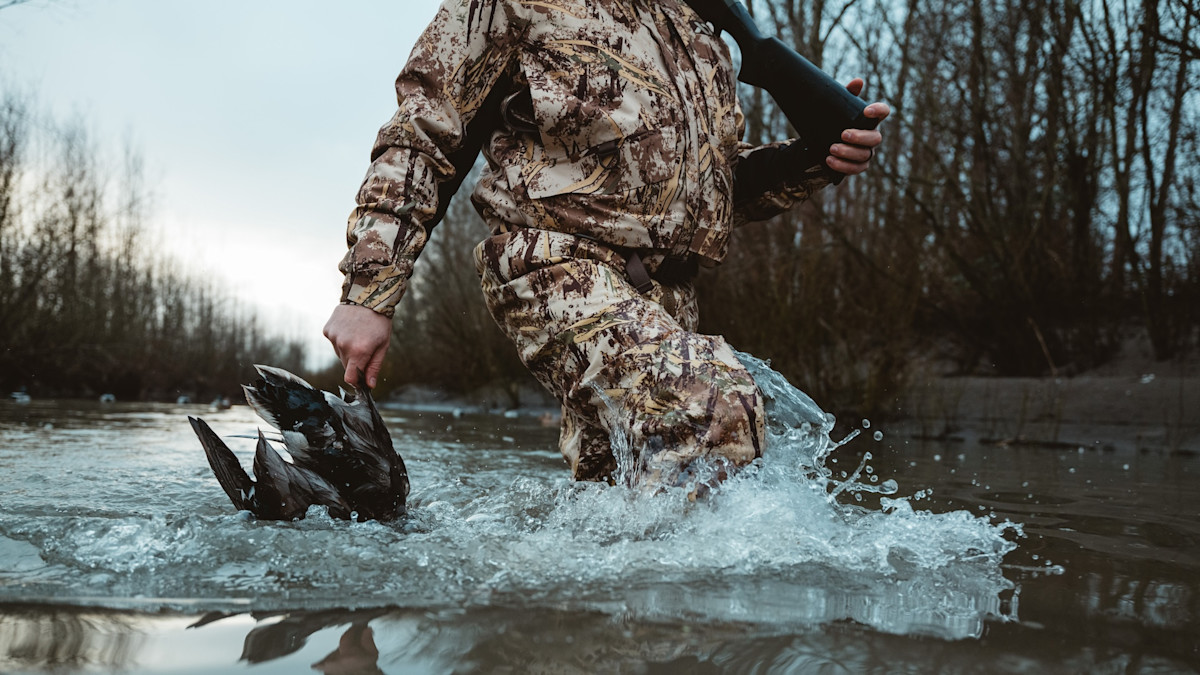

Most duck hunters I know don’t get serious about it until later in the season, but I’ve never been one of those guys. As soon as the summer ends, my brain immediately goes into waterfowl mode. I start gathering my gear, practicing my calling, shooting, and running my dog through his paces. On opening day eve, I’ll lie in bed and reset my alarm half a dozen times to make sure I wake up early enough. Then, I snatch a few fidgety hours of sleep that leave me feeling as rested as an insomniac with restless leg syndrome before rolling out the door and heading to the blind long before dawn.
I don’t put myself through all this out of pure love of the hunt, nor do I disagree with my duck-loving friends about the hunting getting better as the season goes along. No, I suffer through all this early-season rigmarole because I know that it offers a special opportunity. I get a chance to hunt unpressured birds that haven’t been shot at for months, filling my freezer and starting my duck season off with a bang, so long as I hunt in the right places with the right strategies.
Aim For A Mixed Bag
The best thing you can do when you’re hunting in the early season is to forget about mallards. While there may be a few local greenheads around, the vast majority of mallards will still be protein-packing up north as they prepare for their long migration later in the season. There are still plenty of options for early-season hunts, so long as you’re willing to mix things up a bit.
Both blue wing and cinnamon teal are some of the first birds to head south. These small but extremely tasty birds will fly in tight, fast-moving flocks that sound like passing jets as they rocket through the air, aiming for rice fields in the south and small marshes and ponds in the East and West. Other puddle ducks like gadwall, widgeon, pintail, and wood ducks can also arrive in small groups and be mixed among these teal flocks, offering opportunities for some bigger birds before the mallards arrive.
Outside of puddle ducks, there is also ample opportunity during the early season to fill up your limit with a variety of divers. Tasty divers like redheads, scaups, and canvasbacks are all known for arriving on US waterways as early as mid-August. While not as popular as puddle ducks, divers like these can still make for some great shooting and surprisingly great eating, especially when you’re willing to get creative with your duck recipes.
Hunt Small Water
Your classic duck hunting destinations like lakes, massive wetlands, and flooded agricultural fields may hold a few birds in the early season, but I’ve had better luck hunting small water. This includes tiny ponds, beaver bogs, potholes, and chunks of flat shallow marsh where both localized and early-migrating birds flock to roost and feed. However, not all small waters are created equal, so you’ll want to search and scout around a bit to make sure you’re hunting in the right waters at the right times.
Before you choose an early-season small water spot, check it out on a map and then give it a once-over with binoculars to see how close it is to areas where ducks like to feed. Look for ponds and potholes around agriculture and even those that are adjacent to larger water bodies where food like wild rice, grasses, and pond weed are prevalent. Pockets of deeper water near swamps where ducks can find beetles, insect nymphs, and other aquatic invertebrates are also a good bet.
Remember, while these larger feeding areas will certainly attract ducks in the late season, early-season ducks will only quickly hit these spots. They’ll usually continuously dash back and forth between food sources before moving back onto nearby small water to roost. So, as long as you’re patient and stick to the small water, you can set yourself up for all-day success.
Fewer Decoys Equals More Shots
While massive spreads of floating, spinning, and churning decoys are a vital part of success during the late season, in the early part of duck season, less is more. With birds being few and far between, smaller spreads of two to ten strategically placed decoys will be much more effective at bringing birds into range. That is, so long as you know where and how to place them.
Setting your spread up in a U shape is a classic and very effective spread. It works because, as ducks approach from downwind, they’ll usually land among or between the most downwind group of decoys. Accordingly, if you spread the birds in a U shape, with two arms of decoys on either side of your blind, you give yourself a wide open area for birds to land and/or flare, creating cleaner shots.
Another effective decoy setup for early-season birds is a loose spread. Set up two or three decoys out on either side of your blind without any specific rhyme or reason, and then toss out one or two more about 10 to 15 yards directly in front of your blind. These inline decoys should have some sort of motion to them, such as a churn or vibration, or you can set them up on a jerk string. The idea is to get incoming birds to focus on the moving decoys directly in front of you while giving them both reassurance and plenty of room to land on either side, where they will offer easy shots.
Keep Calling Simple
A lot of hunters will say that early-season ducks are easy to call in because they haven’t experienced much hunting pressure yet. This may be true, but unless they’re traveling or gathering in large flocks, early-season birds don’t really make a lot of noise. Accordingly, the idea of calling to passing birds until you’re blue in the face will probably do more harm than good. Regardless of how much hunting pressure the birds have experienced, it’s usually more effective to keep calls sparse and simple.
Instead of filling the air with blasting hailing calls and comeback calls when you see birds, hold your tongue and stick with basic quack and feeding calls. Quacks in two and three call bursts are great when you have low-flying birds that are passing within a few hundred feet. For circling or high-flying birds, throwing out a quick series of staccato feeding calls is a great way to get them to turn and commit during the early season.
Stick and Move Spots
One of the biggest things you have to remember when hunting the early season is not to lock yourself down on just one spot. With ducks coming in sporadically and in a variety of different places, you need to scout out and have several spots in your back pocket so you can hunt where you’ll be most effective. However, this is usually easier said than done.
Before duck season opens, spend some time glassing and looking over chunks of water. Take note of how many and where ducks come into these areas and pay attention to what time they arrive and what the weather conditions are when they do. If you can, try to find a spot where ducks gather on still, calm days and a spot where they go on windy, rainy days. Find areas where birds are prevalent in the early morning and then look around for places where they gather in the afternoon.
Once you’ve got a good idea where to find ducks under different conditions, you have to be able to move into and out of these areas as the day wears on and as weather changes. This makes having a portable blind and light decoy bag almost an essential part of early-season hunting, as it allows you to change spots and quickly get set up when one spot isn’t producing. It can even allow you to move and get re-setup between incoming flights.
Being the Early Bird
There’s something special about early-season duck hunting. While there may be a few shots being thrown into the air, it’s generally a quiet time when you don’t have the cavalcade of gunfire from other hunters. This is especially true when you stay away from popular spots.
What is more, hunting the early season allows you the freedom to make mistakes like missing shots or setting up in the wrong areas without fear of running out of future opportunities. Because there’s plenty of time to get the kinks out and get into your ducky groove while getting a few birds to boot—for there’s a whole duck season in front of you and you’re only just getting started.
Stay in the loop with The MeatEater Newsletter
Shop
Related
Waterfowl
5 Ways to Bag More Ducks

Waterfowl
3 Things That Will Help You Hit More Ducks This Season