
Hunting rifles of the last century often earned praise for their utility across multiple hunting seasons or big game pursuits. The same rifle a hunter might use in sheep country would have served him just as well in the big woods back East. Would it have been perfect for either scenario? No, but that type of utility would have earned it a spot at deer camp and in the corner of the family room.
The general hunting rifle has been supplanted by niche, ultra-specific rigs that have more specialization than tenured professors. Need a 6-pound mountain rifle? How about a heavy-barrel varmint gun? Want something you can use in an NRL match? Not many hunters will complain about needing another rifle for a specific pursuit, but there’s something to be said about the rifle that wears many hats.
The Franchi MULE might not excel at one particular category, but that’s not what it tries to accomplish. Even if it doesn’t meet all the scout rifle criteria, there’s no denying the MULE can trace its lineage to Cooper’s design. Since it’s a descendant of scout rifles, I tried to evaluate the MULE as such. Here are the results.
Specs and Features
Cartridge Offerings: .223 Rem., .308 Win. Barrel: Free floated chrome-molybdenum Barrel Length: 16” Overall Length: 38.25” Weight: 7.08 lbs. Bolt: Fluted, chrome 3-lug with 60-degree throw Muzzle Threads: 5/8” x 24 Trigger: Adjustable from 2 to 4 lbs. One Piece, Extended Pic Rail Integrated QD Sling/Bipod Mount 3 M-LOK attachment points on stock Flip-Up Rear and Front Sights Adjustable Comb TSA Recoil Pads AICS Magazine Magazine Capacity: 8 (.308), 10 (.223) Price: $1,599
Testing the Franchi MULE .308
Franchi’s MULE (Momentum Utility Light Elite), builds on the previous Momentum line of rifles but with more general purpose. It features a fluted, 3-lug bolt with a 60-degree throw that’s ideal for quickly cycling. The 16” barrel is free-floated, includes ⅝” x 24 threads (capped), and comes with a 1-in-11 twist for the .308, which strikes a good balance for bullet weight options. The MULE also comes with a slick graphite black cerakote finish on the barrel and receiver.
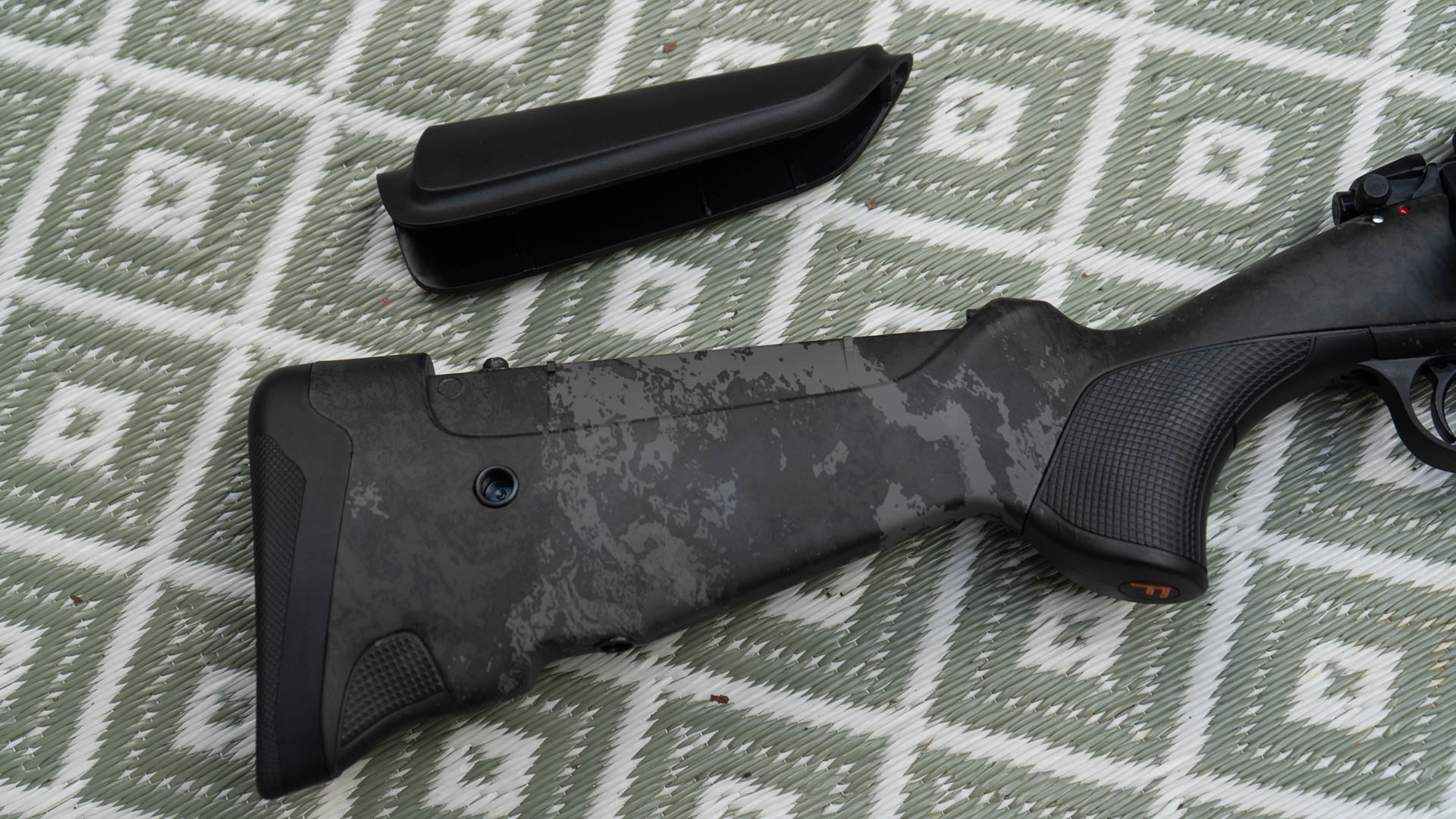
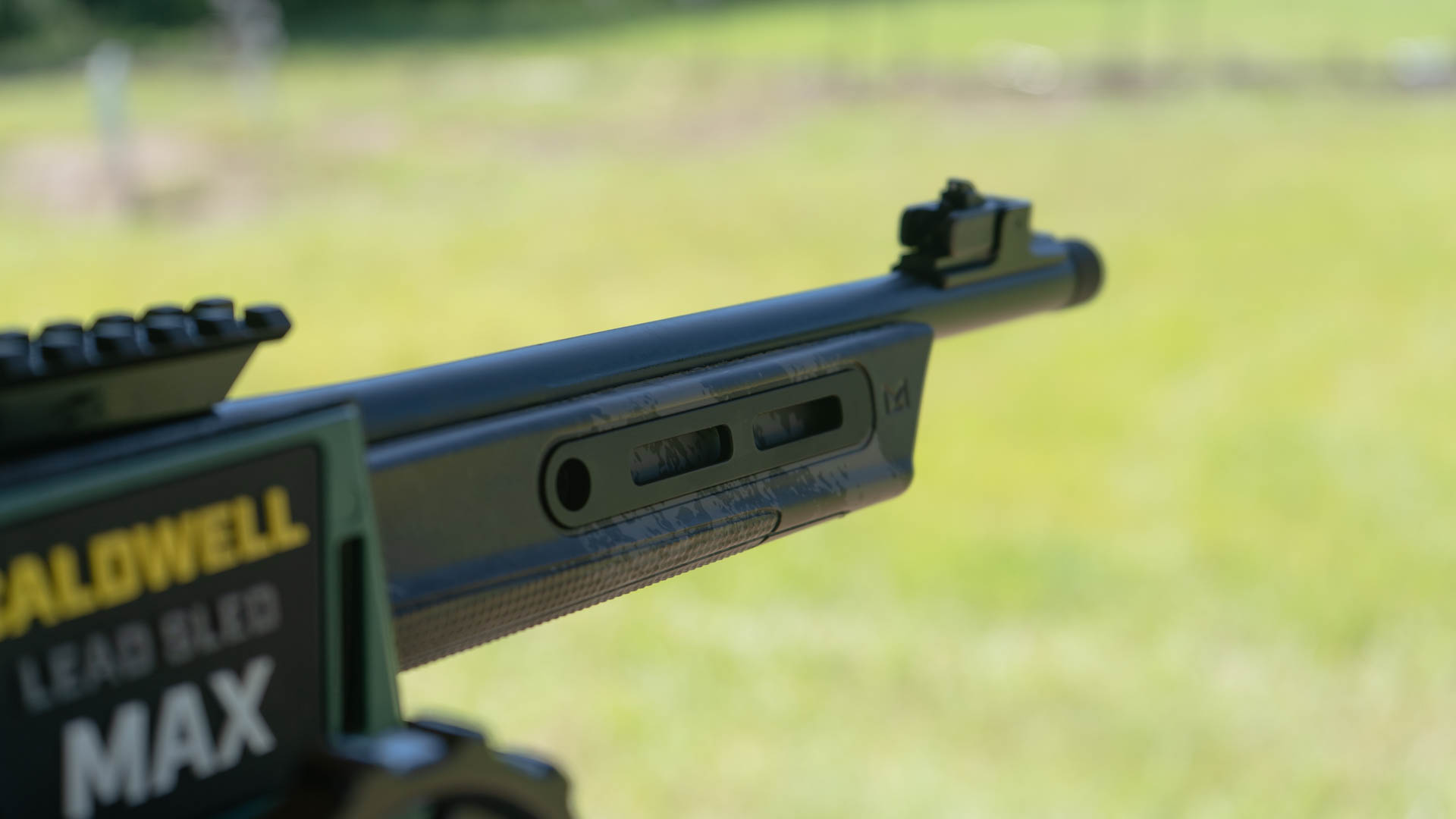
The stock forend also features three M-LOK rails, one on either side and the bottom. These three rails allow you to mount a bipod, light/laser combo, or other accessories. You also have plenty of sling options, because the MULE has six QD points along the stock. Speaking of the stock, it comes with two interchangeable comb heights that you can quickly remove
I also appreciate the checkering along the palm swell and forend, which provides good texture and grip. The checkering above the magwell is a nice touch if you prefer to anchor your grip around the magazine. I had no problem gripping and running the rifle while dripping sweat in sub-100-degree heat. These modern or “tacticool” features offer a fresh take on the scout rifle.
Scout Rifle Features
In 1983, Colonel Jeff Cooper coined the term “scout rifle” and created a set of criteria by which rifles under that label should follow: Scout rifles should be no longer than 39.4”, weigh no more than 6.6 pounds, feature a forward-mounted scope with magnification no greater than 3x, and have a set of iron sights should a scope malfunction occur. They should also be chambered in .308 Win., though he made exceptions, have a 3-pound trigger, and a two-lug 90-degree bolt.
The MULE checks most of Jeff Cooper’s scout rifle boxes except for its weight, barrel length, and three-lug bolt, which features a 60-degree throw. According to the author of The Art of the Rifle, the MULE misses the 6.6 pound cutoff at 7.08 pounds (I weighed my test model at 6.8 pounds unloaded). Its weight technically disqualifies it from earning the scout rifle badge, but unlike boxers and weightlifters, no one’s losing a payday over those 0.2 pounds.
Aside from the weight, the Mule sports a 16-inch threaded barrel, an extended Pic rail, which allows you to mount a traditional scout scope, two sets of reserve iron sights, and a detachable AICS-compatible magazine.

Reserve Sights
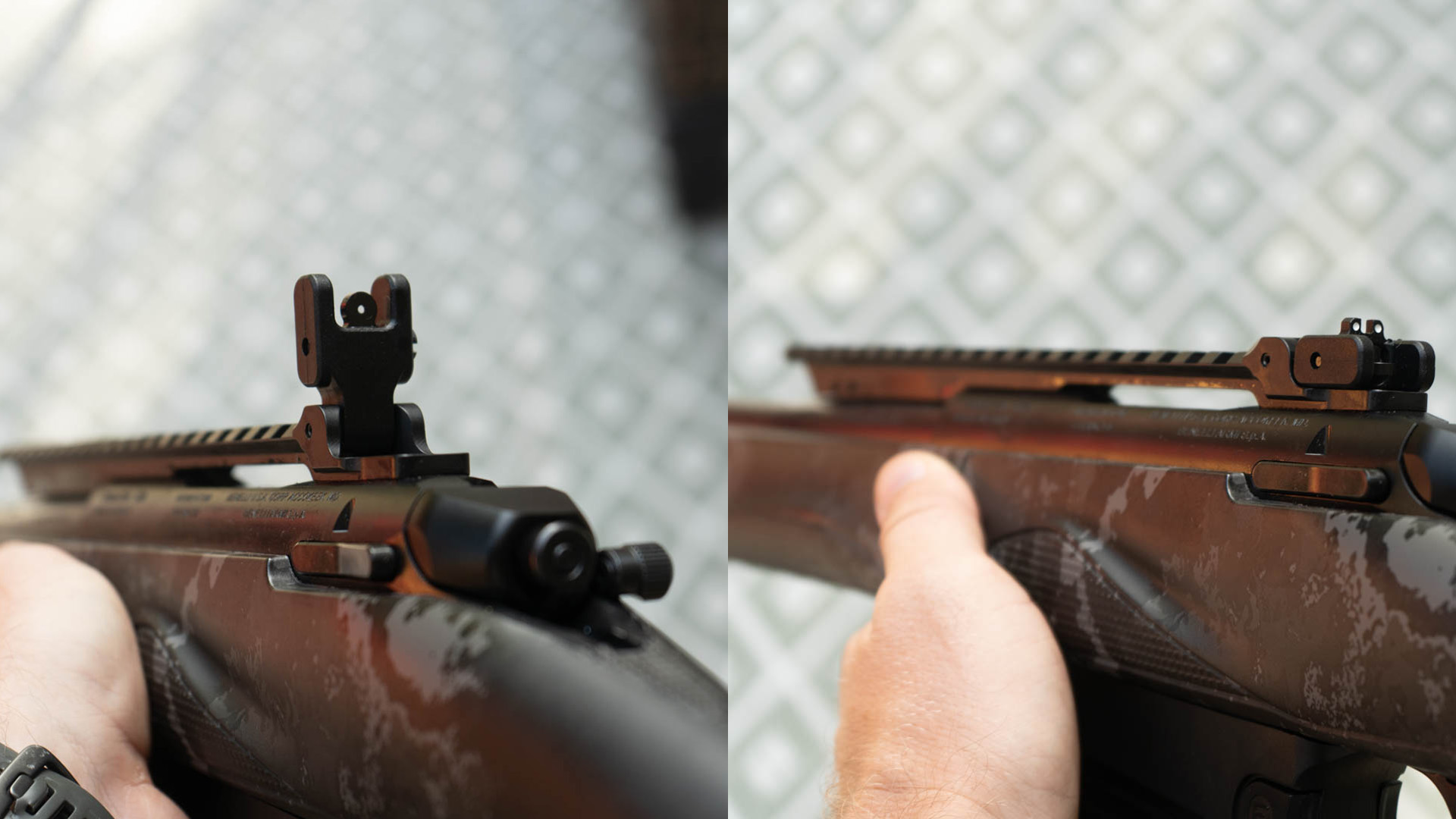
The low-profile slot and post iron sights offer little utility beyond close-quarter shooting, but the flip-up rear peep and front post work well for targets beyond 50 yards. In fact, I was able to ring steel at 100 yards out of the box with the flip-up sights without having to utilize the windage adjustment. The sights are also easy to flip up with one hand for intuitive, speedy field use, and they’re especially helpful if you want to run them with a red dot/reflex sight.
Magazine
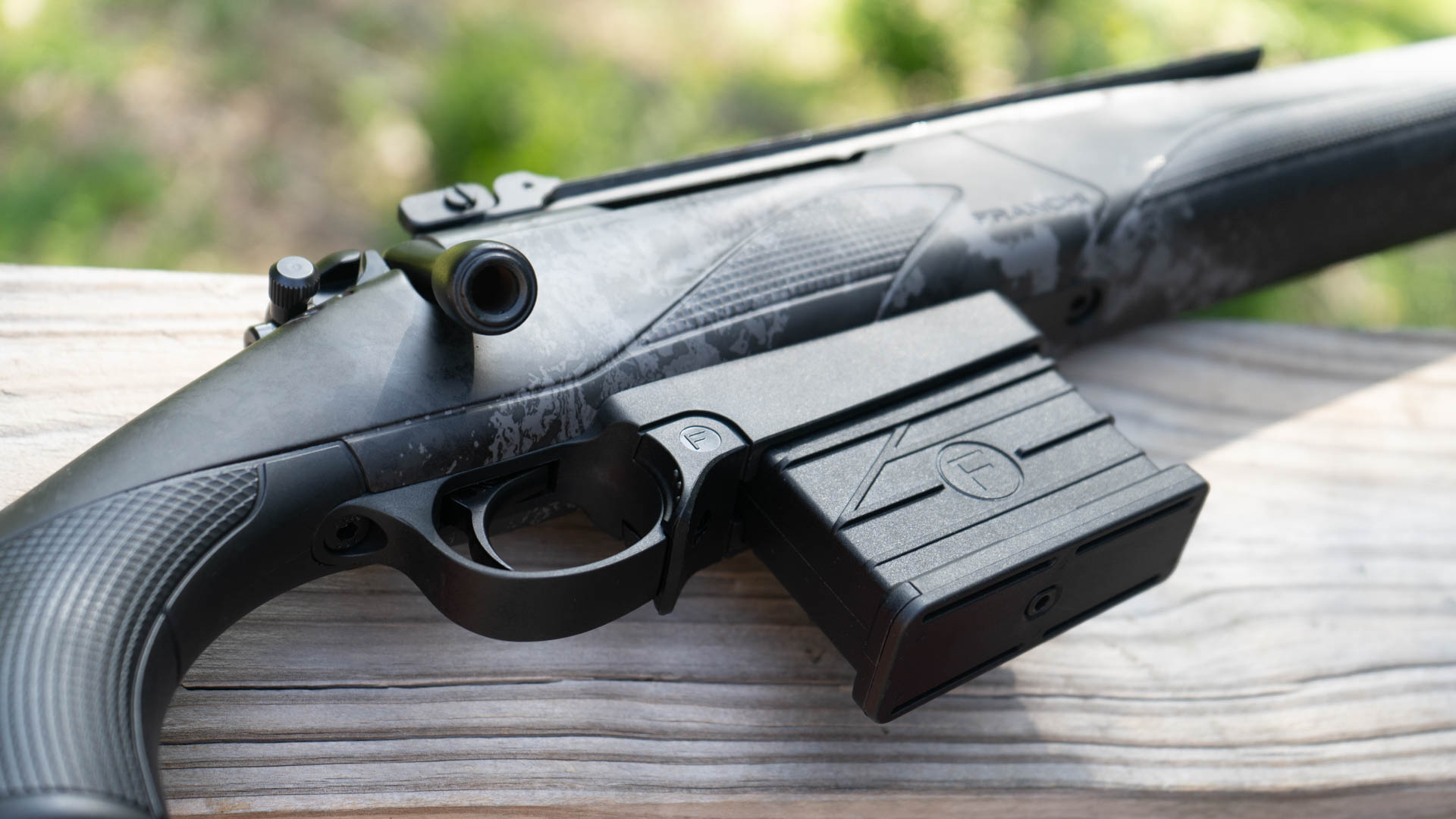
If you already run AICS mags, then you can run them in the MULE. The ambidextrous release takes some convincing to drop the mag, and it’s also not very responsive. That snug fit is great for field purposes; otherwise, this MULE can be a bit stubborn in this regard.
Extended Pic Rail
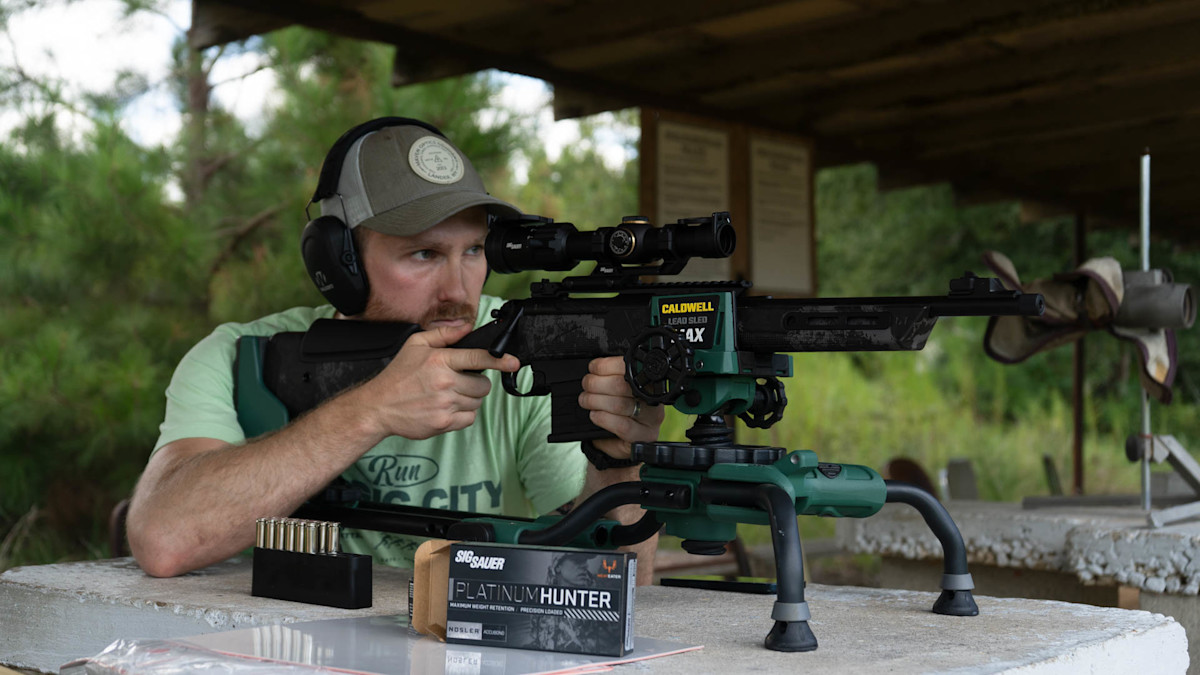
The MULE’s 8.5-inch Pic rail offers 21 slots, enough to mount a traditional scout scope. While it extends over the barrel, the rail is only directly mounted to the receiver. For the purposes of this review, I went with a Sig Sauer TANGO-MSR LPVO 1-6x24. Instead of a classic scout scope, I chose a variable power LPVO. Cooper originally opted for the scout scopes over 40 years ago when many variable power scopes were unreliable and heavier than fixed power or scout scopes.
At the Range
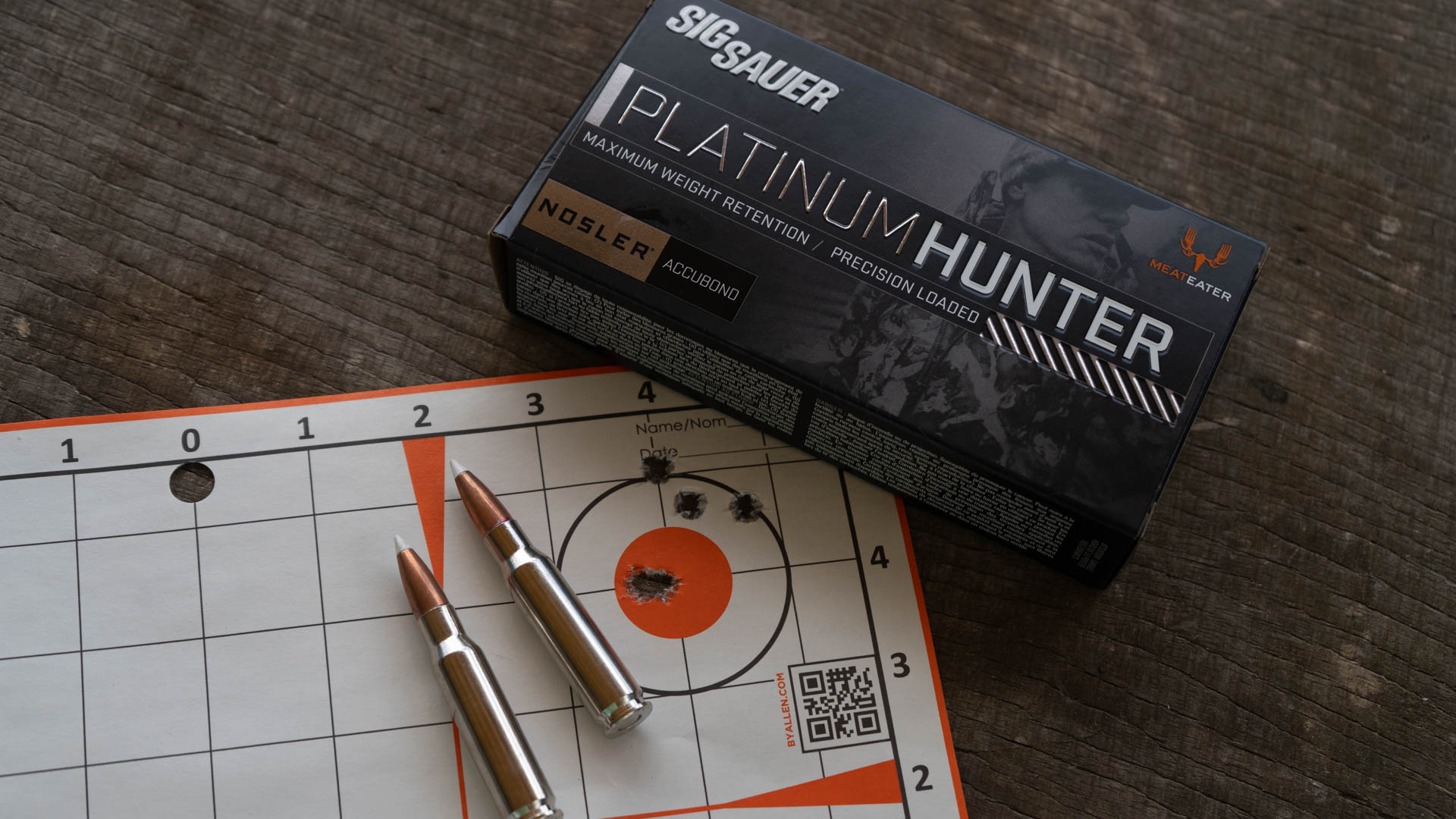
I tested the MULE from both the bench and the field. As you can see from the chart below, the MULE heats up after three shots. It averaged a 0.71-inch three-shot group with Sig Sauer’s 165-grain Platinum Hunter, while that average jumped to 1.32 inch with five, five-shot groups. Those numbers are decent for a generalist rifle, but certainly not head-turning. Since it was a balmy 97 degrees with 45% humidity, I allowed plenty of cooling time between groups. Still, the last two shots of each group consistently strayed from the first three.
165g Platinum Hunter
| 3 Shot Group | 5 Shot Group | |
|---|---|---|
| Best Group | 0.30" | 0.95" |
| Average | 0.71" | 1.32" |
For field positions, I shot the MULE from standing and kneeling positions with the flip-up sights at 25, 50, and 100 yards. The bolt cycled without any noticeable drag, and, overall, the rifle handled well. Even though it’s not a lightweight rifle, it handles better than its robust stock might lead you to believe, and I was able to quickly and intuitively cycle the bolt for followup shots. In other words, it’s a fun rifle to run exactly as it’s intended.
The 16-inch barrel makes it ideal for a truck gun and easy to swing if you hunt from a tree stand or shooting house. Groups in that shorter barrel might peter out beyond 300 yards, but if you’re shooting further than that with this setup, you’re kind of missing the point. While this rifle might not adhere to all the scout rules, it nails the 200-yard memo.
The TSA recoil pads make a noticeable difference for felt recoil. I had no way of measuring this during the test, but after the first shot I noticed how minimal it felt for a .308. That recoil (or lack thereof) bodes well for a rifle that’s made for quick, offhand, and subsequent shots. Even after running multiple boxes of ammo through the MULE, I had no inclination of flinching when it came time to shoot from field positions.

Final Thoughts
At $1,599, the Franchi MULE offers a good value for its versatility. I can easily see this rifle excelling as a bear, pig, deer, or varmint rig with little or no change in a single setup.
It’s like the saying, "You have to know the rules to break them.” And this MULE bucks a few scout rifle rules to make room for a fresh take on Cooper’s classic do-it-all gun.
In fact, if rifle manufacturers didn’t try to adapt their guns in meaningful ways, there might be little to get excited about each year. A few of the MULE’s more modern, “tacticool” features adapt to current hunting and shooting gear, making this rifle more intuitive to carry and operate even at the cost of a few extra ounces. Luckily, this MULE can handle the weight.
Stay in the loop with The MeatEater Newsletter
Shop
Related
Gun Reviews
Franchi .308 MULE Review: A Workhorse Rifle That Breaks the Rules
Gun Reviews
Beretta A300 Ultima Turkey Review: The Best 20 Gauge Turkey Gun