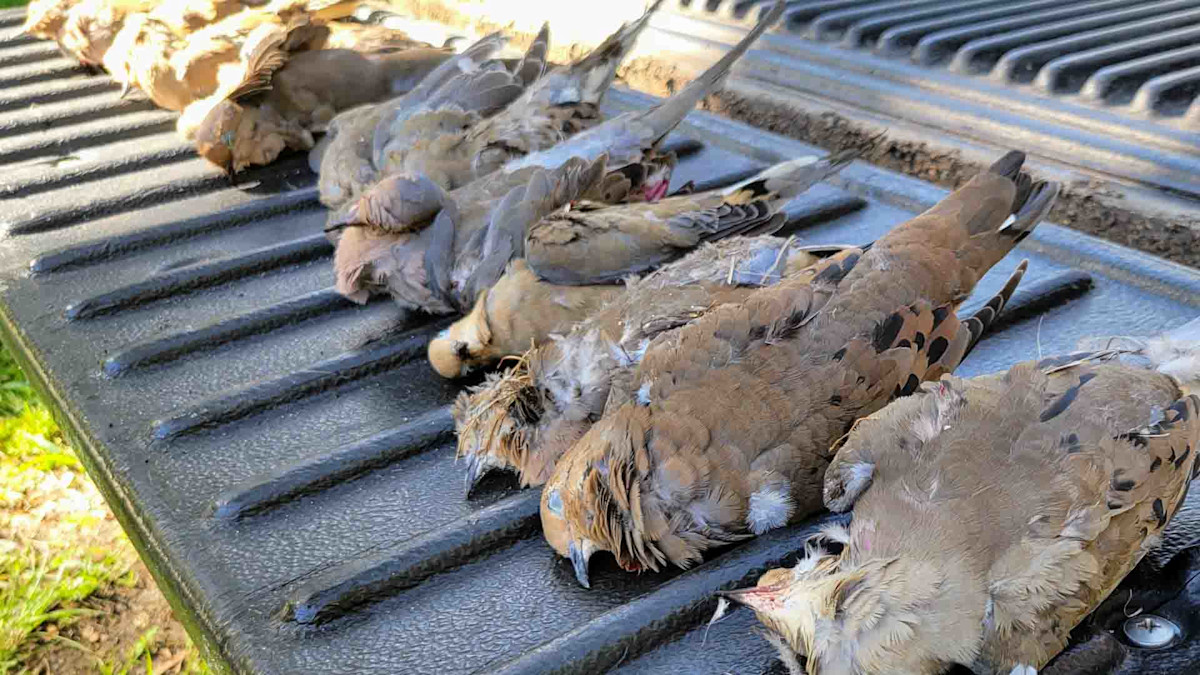

My birthday falls at the beginning of September, which just so happens to coincide with the dove season opener in North Carolina. As a kid, I assumed dove season was just part of celebrating my birthday. As an adult, I have fully embraced the start of hunting season as a pretty good way to celebrate making another trip around the sun.
There’s something special about dove season (even if your birthday doesn’t happen to fall in September). In most areas, it’s the first real hunting day on the calendar after a long summer and an even longer off-season. Deer season is weeks away, and waterfowl season still feels more like a rumor. Dove season gives you a reason to pull out the shotgun, sit in a field with your buddies, and get back to doing what you love.
Unless you plant your own dove fields, you probably don’t think about preparing for dove season like you do for other wild game. But unless you want to be that hunter who just shows up and blanks, you’ll need to put in a little effort.
Dust Off Your Dove Gun
If you’re anything like me, your shotgun has probably been taking a vacation since the end of turkey season. If so, don’t wait until opening morning to dust it off. Now is a good time to give it a cleaning and make sure everything works as it should.
If your turkey gun will be pulling double duty during dove season, make sure you remember to swap your turkey choke for a modified or improved cylinder choke. Otherwise, you’ll either miss or obliterate your target. Just make sure you pattern your shotgun with your choke of choice before opening day.
For dove hunting, that means checking your pattern to see how the pellets distribute and where the center of that pattern relates to your point of aim. That way, you know where you need to aim when you’re leading a dove. If you’re using a double barrel, you’ll want to pattern both barrels, especially if they have two different chokes.
Once you’re satisfied with the way a load patterns with your choke, stock up on that load so you don’t run out during a hunt. Dove hunting is a high-volume sport, so carry more than you think you’ll need. Luckily, dove loads are relatively inexpensive.
Practice, Practice, Practice
Doves are fast-moving, acrobatic fliers capable of some impressive in-flight maneuvers. They are unforgiving targets, so you’ll want to knock the rust off your wing-shooting skills. It’s a good idea to spend some time with a clay thrower before opening day. You don’t have to burn through a hundred clays before September, but you should feel comfortable with your shotgun. Think of practice as a way to get reacquainted with it.
When it’s feasible, practice with the same shotgun, choke, and load combo you plan to use in the dove field. Focus on smoothing your mount, keeping your eyes on the target, and moving your gun with the clay instead of snatching your shot. Crossing and quartering clay shots are your money shots. They mimic the types of scenarios you’re most likely to see in a dove field.
Find the Birds
While you can just sit in a random cornfield on opening morning and still see birds, you’ll increase your chances of success with a little pre-season scouting. A field full of food is a no-brainer, so if you live in ag country, you’re in luck. But doves don’t treat all fields with equal favor. Sunflowers are a mourning dove’s delight. The high fat content makes them one of the bird’s favorite meals. Millet, wheat, corn, and sorghum also draw plenty of birds.
Federal law prohibits hunting doves and other migratory birds over bait. Hunting over legitimate agricultural fields is legal, but there are specific rules about when that field might be considered bait. Don’t assume hunting over a field is legal just because it’s a crop field. Make sure you check current federal and state regulations before hunting season.
Some crops work better than others based on timing. For example, doves love soybeans, but those crops are usually harvested in October or later, so they don’t do much for hunters trying to find birds in September.
Doves don’t do much scratching or digging with their feet to get at buried grains, so crops that have recently been mowed or drop grains naturally on bare soil tend to attract more birds. You should also pay attention to nearby water sources and roosting areas that might hold or draw doves from nearby.
Once you find a promising field, spend some time watching it before you pick a spot to post up. Note where the birds enter, where they head, and which flight patterns they prefer. That way, you can sit in a place that offers a solid shot line-up when the birds fly by. The goal is to find a position that puts you in the birds’ path, not just a random spot.
Know Before You Go
Check the rules before you load all your gear in the truck and head for the dove field. Season dates, shooting hours, bag limits, and license requirements vary from state to state and change from year to year. Don’t rely on what you remember from three seasons ago.
If you’re hunting public land or a managed dove field, you should also check for any additional rules that apply to that particular property.
Dove hunting regs don’t typically require blaze orange, so pay attention to the location of other hunters and work out safe shooting angles before the hunt. The birds don’t respect carefully planned shooting lanes, and they’re liable to fly in unpredictable directions, especially when pellets start flying. Don’t let the excitement override good judgment.
Final Thoughts
Dove season can be a low-stakes affair to scratch that itch before other hunting seasons open up. You don’t have to dedicate a whole off-season’s worth of chores to prepping it for it, but a few intentional days at the range can set you up for some fun dove hunts. And I can’t think of a better way to kick off the fall.
Stay in the loop with The MeatEater Newsletter
Shop
Related
Upland Birds
3 Overlooked Dove Hunting Hotspots

Dove
How to Prep for Dove Season

