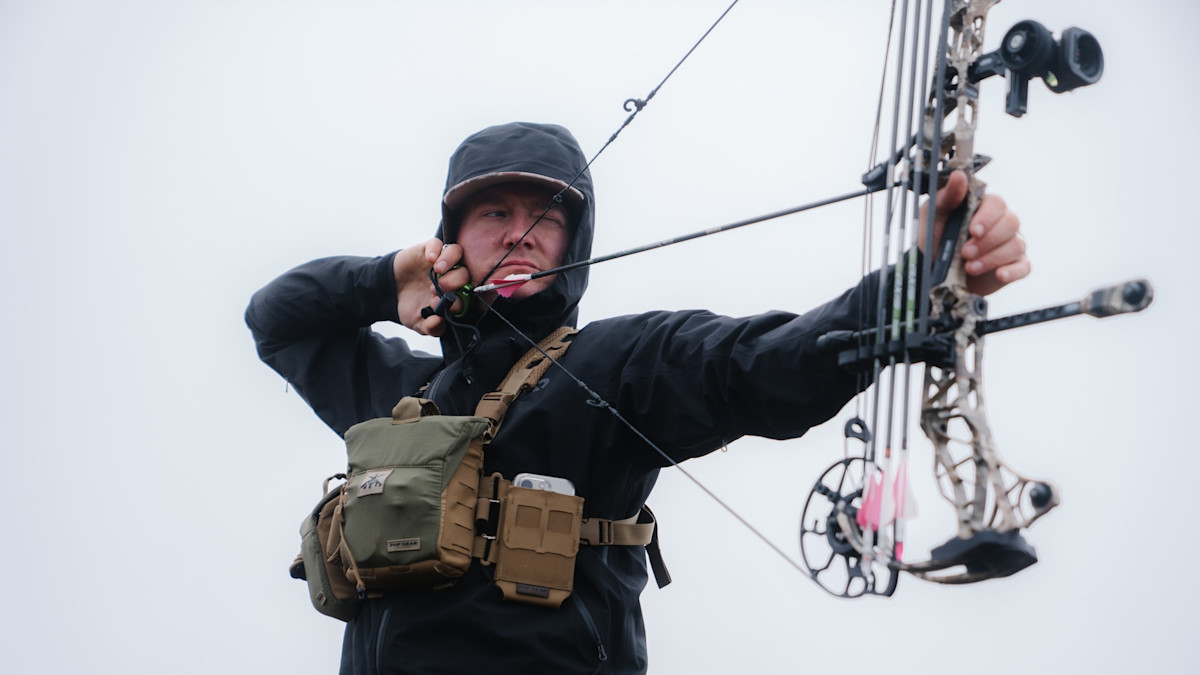

Anecdotes have been both the savior and curse of hunting cartridges, rifles, and, especially, broadheads. This personal data, circulated in hunting camps, diners, and chat forums, has created an Iron Curtain between mechanical die-hards and fixed-blade fanatics.
Rather than acknowledge both their strengths and shortcomings, most folks take a hard stance against one or the other. Of course, the staunchest defenders in these camps often overlook proper tuning and practice that plays a huge role no matter what you have on the end of your arrow, and here at MeatEater we’ve flung more than a few.
We shoot anything from stone points to mechanicals and everything in between, but these are some of the best broadheads that we use for hunting.
Jump to: The Products We Tested and Reviewed
What We Look for in a Good Hunting Broadhead
Before you pick up the flashiest pack of broadheads that catches your eye, just remember that people kill deer every year with stone points. The point: No broadhead will make up for your lack of tuning, preparation, and practice. Once you feel confident enough with your bow, here are a few criteria you’ll want to consider before you buy some of the best broadheads for hunting.
Accuracy
Almost all broadheads require some amount of tuning. Paper tuning your bow can help with this on the front end. A lot of the best mechanicals might require minimal adjustments, depending on your setup, while fixed-blades generally require more tuning. If you can, designate one of your broadheads for practice. Assuming your bow is properly tuned, you should expect consistent accuracy when shooting.
Sharpness
Sharp blades lead to pass-throughs, heavy blood trails, and short tracking jobs. Some broadheads come razor sharp out of the package. Others, like some fixed blades, require sharpening. Most mechanicals require blade replacement after each use, while the best fixed blade broadheads might only require a touch-up and last for several kills.
Durability
A good broadhead should have durable materials. Depending on the type of broadhead you shoot, durability might mean a few things. For a good mechanical, you should expect the blades to deploy and cut as advertised. Expect to replace the blades after a pass through. Sometimes, you might have to ditch the whole thing. For one-piece fixed blades, you should expect several kills out of some of the best broadheads. After all, you’ll want to get the most out of the price they command.
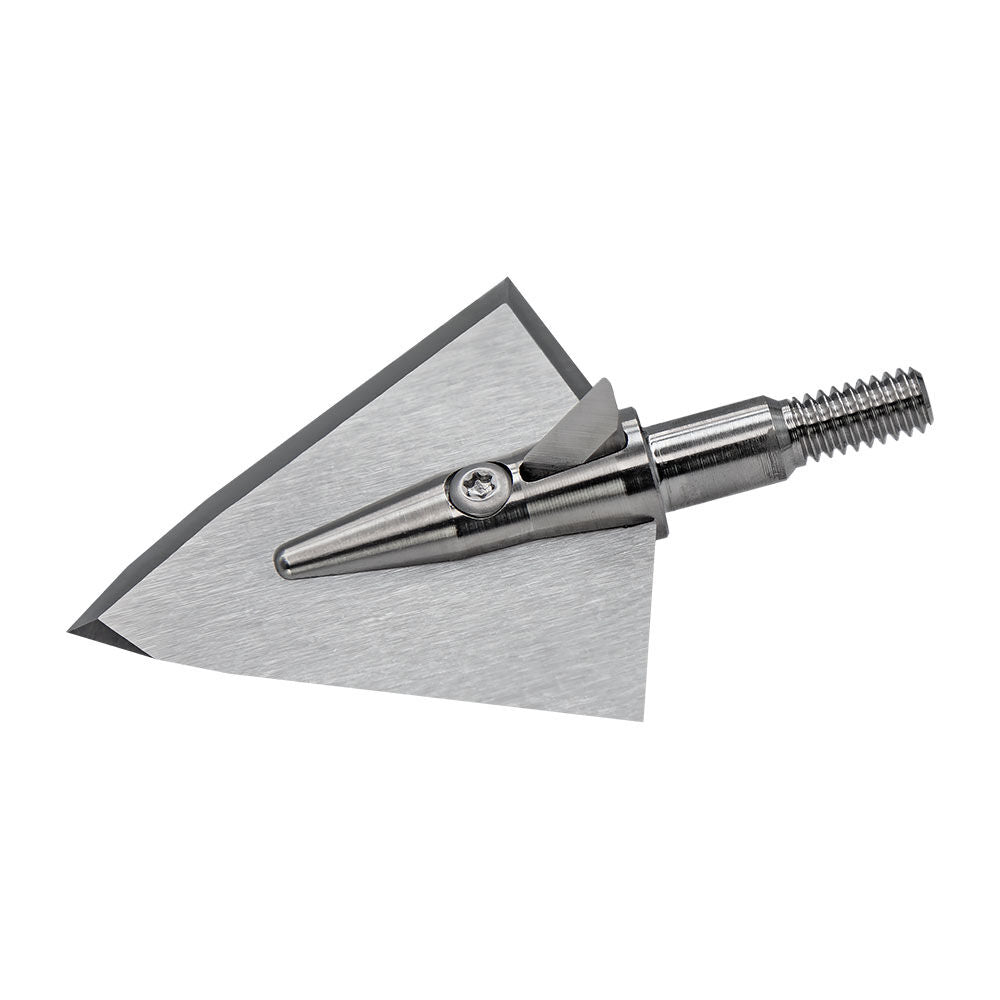 Iron Will Wide
Mark’s & Janis’s Pick
|
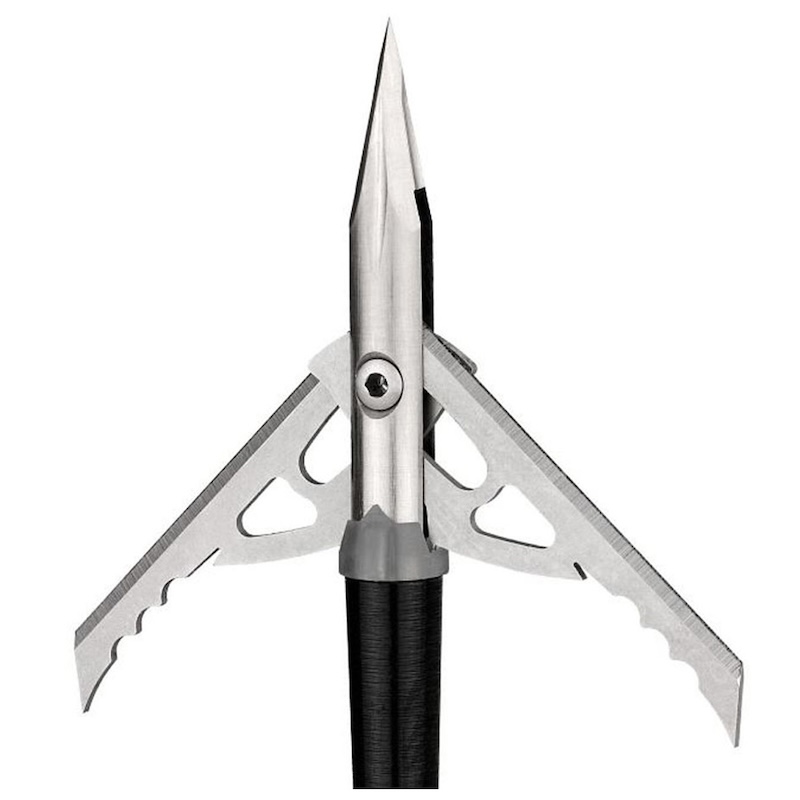 Rage Trypan
Tony’s Pick
|
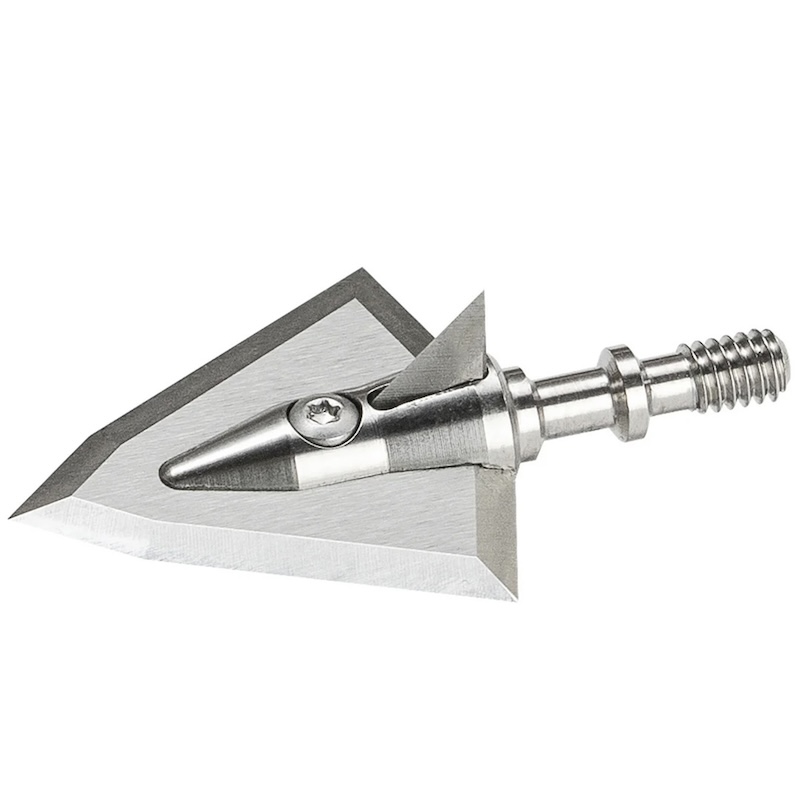 Iron Will S Series
Steve’s Pick
|
 G5 Megameat
K.C.’s Pick
|
 Swhacker Levi Morgan
Adam’s Pick
|
 G5 Montec
Emily’s Pick
|
 Contact Archery VBS
Honorable Mention
|
|
|---|---|---|---|---|---|---|---|
| Highlight | Best Fixed Blade | Best for Blood Trailing | Best for Elk | Best Mechanical for Whitetails | Best Budget Mechanical | Best Budget Fixed Blade | Best Tuning Fixed Blade |
| Material | A2 Steel | Titanium ferrule, stainless | A2 Steel | Stainless Steel | Stainless | Stainless | Titanium and hardened stainless steel |
| Cutting Diameter | 2.125 in. | 2 in. | 1.0625 in. | 2 in. | 2 in. | 1 in. | 1.25 in. (main blade) |
| Weight | 100-250 gr | 100 gr | 100-250 gr | 100, 125 gr | 100, 125 gr | 85, 100, 125 gr | 100, 125, 150 gr |
| Price for 3-Pack | $130 | $55 | $140 | $60 | $39-$49 | $47 | $80 |
| Field Notes | Field Notes | Field Notes | Field Notes | Field Notes | Field Notes | Field Notes |
Mark’s & Janis’s Pick
Best Fixed Blade
No matter where you fall in the fixed vs. mechanical debate, you can’t ignore the upside of shooting a big, tough fixed-blade like the Iron Will Wides. While it’s no guarantee, they can offer a better chance of providing a lethal shot if they hit bone. That’s one reason Mark Kenyon and Janis Putelis have both switched to the Iron Will Wides.
“With a heavy-duty fixed blade like the Iron Will, I feel confident that even if I hit bone—the shoulder blade in particular—I still have a strong chance of hitting the vitals,” Mark said. Janis runs the Iron Will Wides for the same reason but noted that he prefers the single bevel version.
“This year alone, I’ve killed a black bear, caribou, and elk with that broadhead,” he said.
The sticker price might shock you, but both Mark and Janis mentioned the durability of Iron Wills, which, according to Janis, “take some effort” to sharpen after a few uses. However, they stay sharp longer. It’s also worth noting that the price on the front end probably isn’t that far off from mechanicals or other hybrid-blade broadheads that require replacement blades after every shot.
Pros
- Excellent penetration
- Super durable
- More forgiving than most mechanicals
Cons
- Expensive at over $40 each
Tony’s Pick
Best for Blood Trailing
Tony’s been in the hunting industry for decades, so he’s had plenty of opportunities to try out some of the best broadheads over the years. Recently, he’s settled on the Rage Trypans as his go-to for deer hunting.
“When mechanical broadheads first hit the hunting scene, I had some bad experiences with them. But, that was a long time ago, and the designs are way better now,” he said. “In fact, they are all I shoot for whitetails now.”
Tony prefers the Rage Trypan (100-gr) because they leave a massive wound channel and simplify the tracking process.
“I hunt a lot of small properties, so I want my broadheads to do as much damage as possible, because I don’t want my deer to die in someone’s yard or on someone else’s property if I can prevent it. The best way I’ve found to do that is to put a really big hole in them (usually two). That’s easy to do with the Trypans.”
Mechanical broadheads are known for creating massive wound channels. For urban hunters or folks on small properties, the Rage Trypan can help eliminate a long night of tracking, as long as you make a good shot.
Pros
- Huge wound channels
- Solid arrow flight
- Great overall design
Cons
- Two-inch cutting diameter isn’t ideal for low draw weight shooters
Steve’s Pick
Best for Elk
When Steve was on the hunt for a new elk broadhead, he turned to Jason Phelps, who he trusts “implicitly when it comes to elk gear.” Phelps turned him on to Iron Will, so Steve spent some time with Bill Vanderheyden, the mechanical engineer who founded Iron Will.
He recommends Iron Will’s S Series broadheads, which minimize wind effects and maximize big game penetration.
“They shot beautifully from my rig,” Steve said. “The first thing I killed with them was a bull elk, taken with a full frontal shot. It took a few steps and died.”
And the sharp, durable heads continue to live up to the hype for other species too.
“A couple of weeks ago, I ran one through the thick portions of a wild boar’s skull, both front and back. The broadhead looked as good as new when I pulled it out.”
Pros
- Durable
- Easy to sharpen
- Great penetration
Cons
- Expensive
- Some might prefer larger cutting diameter
K.C.’s Pick
Best Mechanical for Whitetails
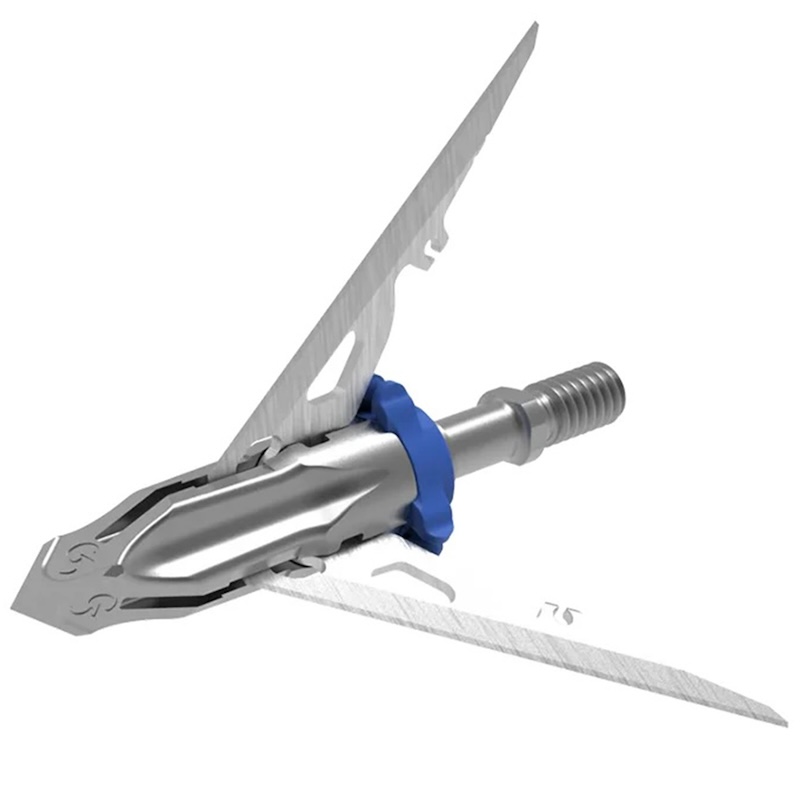
Choosing the best broadheads can send you down an ever-winding rabbit hole. You can calculate FOC, read plenty of archery forums, or debate the penetration levels of various broadheads in relation to draw weight. In reality, it doesn’t have to be that complicated. There are plenty of great broadheads that are widely available. That’s why K.C. Smith prefers the G5 Megameats.
“I like broadheads that are shot by a lot of people,” he said. “It just means there’s a ton of anecdotal evidence for them.”
Just because a broadhead, or any piece of gear, is popular or trendy, doesn’t mean you should write it off. After all, if it works, and it works for a ton of people, it’s probably living up to its expectation. In that case, you can let that evidence inform your decision.
K.C. used a ton of broadheads over the years. He also hunts to pay the bills, so he can’t waste time with subpar gear. He noted that the three big rear-deploy blades sold him on this broadhead.
“I love that they have three huge blades,” he said. “They just leave devastating wound channels, and I think the rear deploy gives them a bit more penetration than front deploy.”
Not to mention, the Megameats are reasonably priced (about $60 for 3), and they’re readily available, so you can find them at just about any sporting goods store.
Pros
- Available at most sporting goods stores
- Reasonably priced
- Rear deploy offers great penetration
Cons
- Rear deploy sometimes makes them open when putting into quiver
- Not a fan of the plastic collar
Adam’s Pick
Best Budget Mechanical
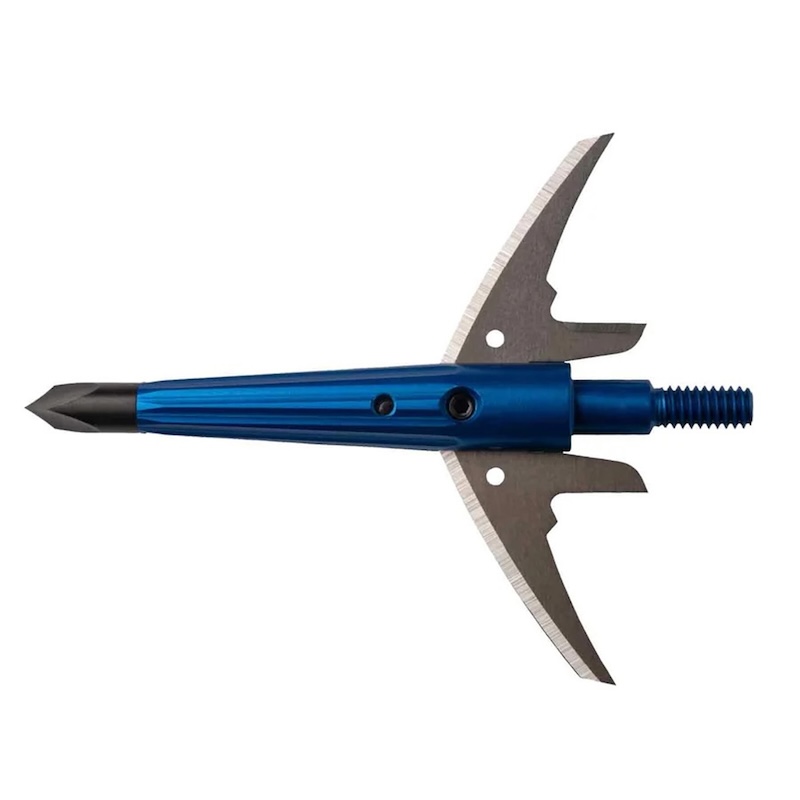
I like finding what works and sticking with it. That’s why I’m still shooting the Swhacker Levi Morgan broadheads. They’re accurate out of the box and reasonably priced. To be honest, that’s what most hunters expect from a broadhead.
The Levi Morgan Swhacker broadheads come in 100 and 125-gr, while I’ve seen them listed as high as $50, most of the time you can find this 3-pack for $39. Compared to a lot of other broadheads, that’s more than reasonably priced. Because they’re so budget-friendly, I typically buy multiple packs at a time. You can even place the practice pin in the broadhead, which locks the blades and prevents them from opening. That way, you can practice during the season without having to retune or swap heads.
They’re not the most durable mechanical broadheads out there, and replacing the blades isn’t cheap. I actually had to ditch a few after last season, but this issue isn’t exclusive to Swhacker broadheads. As long as you put in the reps at the archery range, you can put this broadhead wherever you want, and that’s what counts.
Pros
- Large wound channel
- Requires minimal tuning
- At about $13 each, they won’t break the bank
- Accurate out of the box
Cons
- Not the most durable
- Unforgiving on deflections
Emily’s Pick
Best Budget Fixed Blade
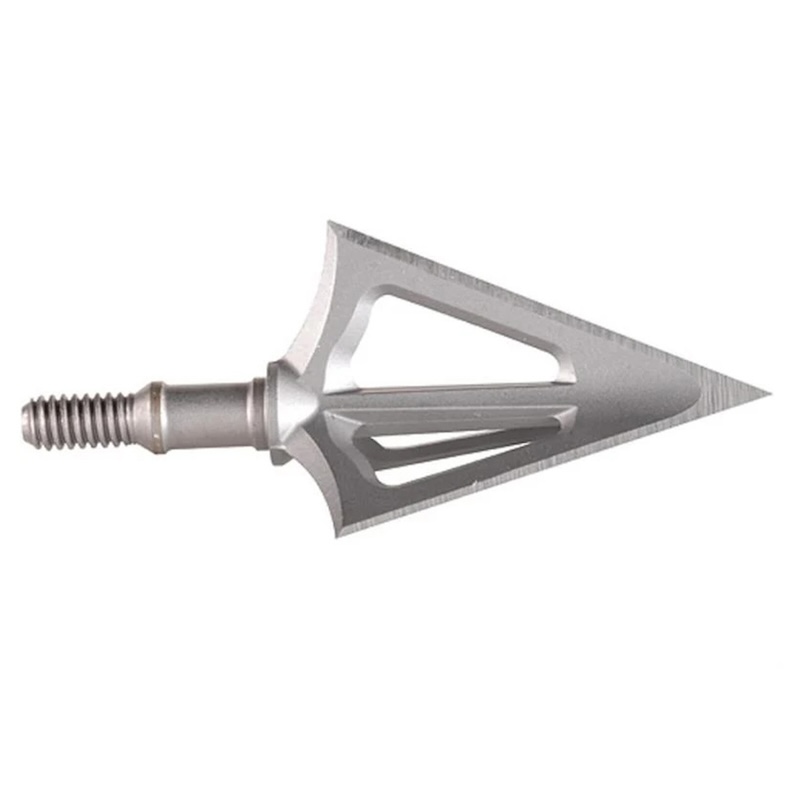
"My hunting rigs are set around 50 pounds with a 26-inch draw length, so I typically prefer fixed broadheads to maximize penetration," Emily said. "And the G5 Montecs are some of the best out there. These affordable heads are low-maintenance, dependable, and deadly."
The one-piece construction means no moving parts to tinker with, and the spin-tested heads cut on contact with diamond-cut sharpness. Similar to the Megameat, the Montec comes in both pre-season heads with rounded points and BMP practice points so you can save the real thing for the field.
"G5 Montecs are the most budget-friendly broadheads on this list, plus you can resharpen the blades to extend their life and get even more bang for your buck," Emily said.
Pros
- Affordable
- One-piece design
- Durable
Cons
- Some might prefer heavier options
Honorable Mention
Best Tuning Fixed Blade
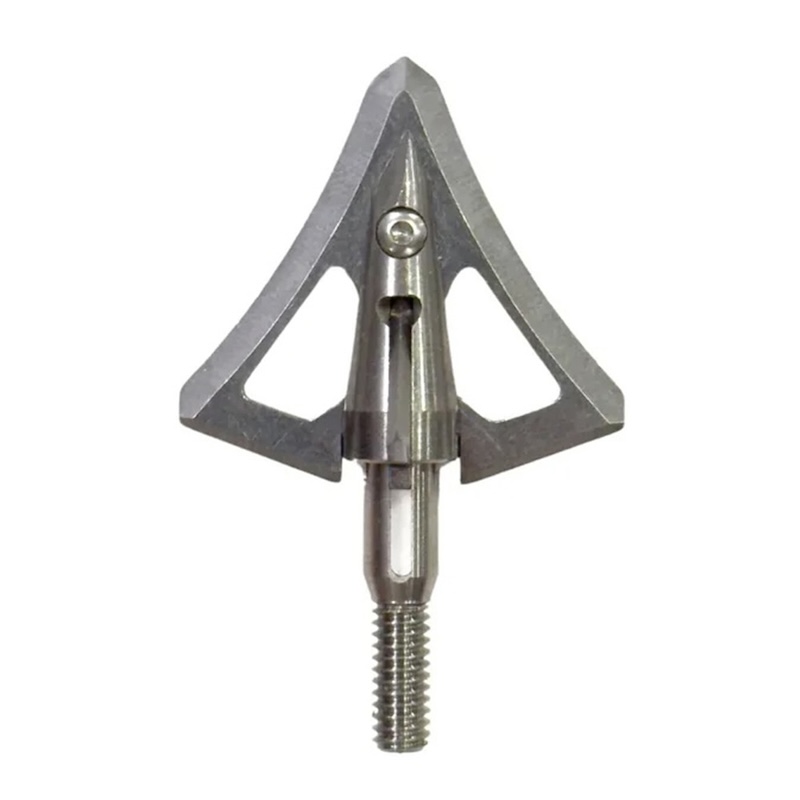
Contact Archery VBS
- Material: Titanium and hardened stainless steel
- Cutting Diameter: 1.25 in. (main blade)
- Weight: 100, 125, 150 gr
All broadheads require some amount of tuning. Fixed blades generally require more adjustments than mechanicals, because they have historically created more drag. However, more modern designs like vented or concave broadheads help reduce the amount of drag during flight. Contact Archery’s VBS (Variable Blade System) broadhead is one such example.
Last fall, I got both the vented and solid versions to test and shoot, and I’m running them this year. Contact Archery advertises that the VBS broadheads require minimal tuning, and so far, that’s been my experience. With the vented 100 gr VBS, I made a few minor adjustments to my rest before they were dialed in.
If you’re looking to make a quick broadhead change during the season, the VBS broadheads make a great option that won’t force you to start from zero. They’re also reasonably priced at $80 for a 3-pack, considering the materials and durability.
While the cutting diameter (1.25 in.) is pretty standard, you can also get either ⅞ or 1 ⅛-inch bleeder blades that come with the broadheads. Contact Archery is a small company, so the only downside is that sometimes the specific option you want might be out of stock. Otherwise, they’re worth the wait.
Pros
- Easy to sharpen
- Requires minimal tuning
- Easy to replace bleeders
Cons
- Limited stock sometimes
Mechanical VS. Fixed-Blade Broadheads
Bowhunters love to argue about what type of broadhead is best. The truth is, they’re both great options. Depending on your hunting setup and scenario, one might be more advantageous than the other.
Mechanical broadheads typically offer larger cutting diameters and fly more like field points. But they also have more moving pieces and less room for error. Fixed-blade broadheads have smaller cutting diameters but offer excellent penetration and durability.
Bowhunters with lower-poundage rigs should probably consider fixed-blade broadheads, especially if you’re targeting game larger than whitetails. For most modern bows and typical whitetail hunters, mechanical broadheads will work just fine. Again, it’s less about what type of broadhead you shoot and more about how much practice you log.
Stay in the loop with The MeatEater Newsletter
Shop


Related
Gear
Ask Wired to Hunt: Mechanical or Fixed Blade Broadheads?

Gear
Ask MeatEater: What’s the Best Broadhead for Deer?


Conversation