
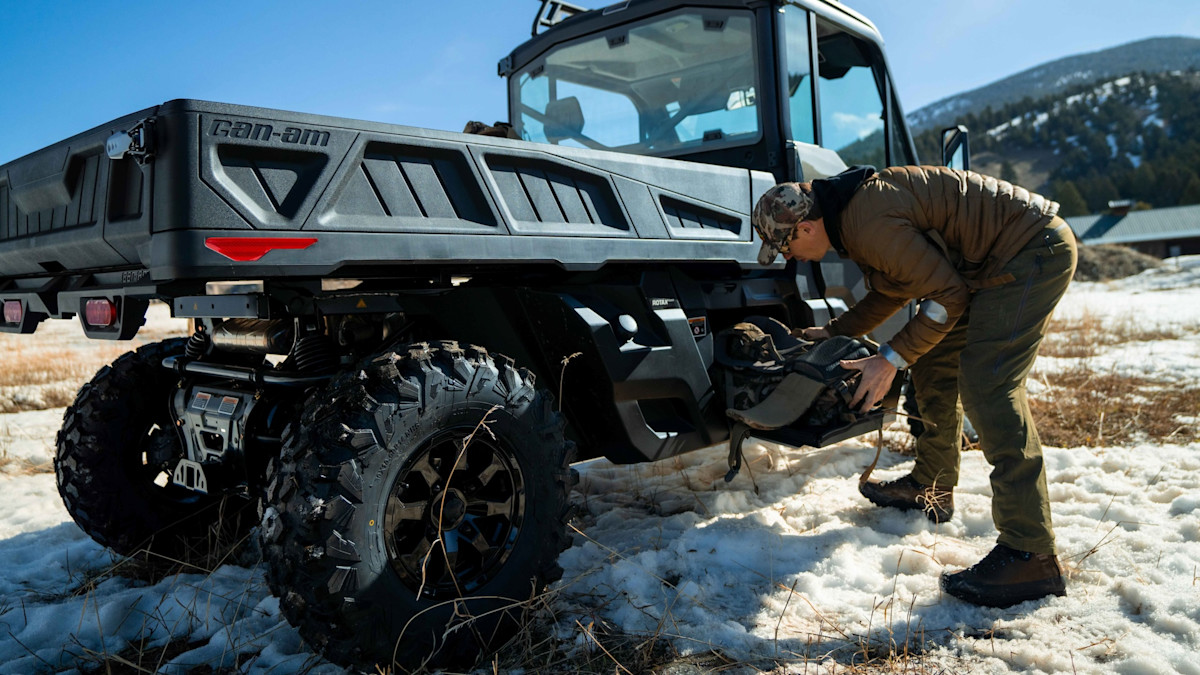

Some hunters love disappearing into the wilderness and hoofing it miles. Others don’t mind a little motorization to help them punch their tags. Last fall, a Can-Am Defender saved my flatlander legs and lungs while I tagged a bull elk in Idaho, especially when it came time for the pack out. Back home in eastern North Carolina, I’ve been known to use a UTV for all kinds of pre-season prep, from hanging treestands to schlepping corn.
Things can go sideways fast, whether you’re running an ATV or side-by-side in the backcountry or even your own back forty. Flat tires, dead batteries, broken belts, or leaky fluids can ruin an otherwise fine hunt. That’s why having a solid emergency kit should be a non-negotiable.
“When traveling off-road, it's crucial to be prepared for whatever the trail might throw at you. From inclement weather to changing trail conditions or even a dreaded mechanical issue, countless scenarios can play out on an ATV or UTV ride,” Eric Storz, with Can-Am Off-Road, told MeatEater. “As the old saying goes, ‘It's better to have it and not need it, than to need it and not have it.’”
You don’t need to haul the whole garage with you into the woods. But a handful of practical stuff can keep a minor hiccup from turning into a full-blown disaster.

Putting Together Your UTV/ATV Emergency Kit
Storz recommends a kit stocked with jumper cables, an air compressor, a tire repair kit, ratchet tie-downs, duct tape, tow straps, zip ties, and a few cloth rags. That’s a solid foundation for handling most trail troubles.
Not up for piecing it together yourself? Can-Am sells a pre-assembled emergency kit with all the basics. It’s not everything you might ever need, but it’s a great place to start. From there, you can add whatever suits your rig, your trails, or your hunting style.
Here’s a closer look at what I keep in my ATV and UTV emergency kit and why each item earns its spot.
Tire Repair Gear
Flat tires happen. An ATV or UTV has an uncanny way of finding rocks, roots, and old fenceposts. Most of the time, they can handle them without breaking a sweat, but when they don’t, a basic tire repair kit can get you rolling again without you having to hoof it back to the nearest blacktop.
Pack a few plugs, a couple of patches, and the tools to install them. Throw in some gloves to keep your hands clean. A mini air compressor or hand pump is nice to have so you can inflate a patched tire without limping your way back to a full compressor.
Tow Straps and Recovery Gear
Getting stuck happens. Especially when you cross questionable terrain. That’s why you should always keep a few heavy-duty tow straps and ratchet straps in your kit.
They don’t have to be glamorous, they just need to get the job done. Something that can drag a rig out of a rut, up a slope, or out of a mud wallow, or help a friend who got hung up. Can muscle get you and your ATV out of a mucky situation? Maybe. But having the right recovery gear means less sweating and more riding.
First-Aid Kit
Having a basic first aid kit in your side-by-side should be a no-brainer. Cuts, scrapes, and bruises are a natural part of being outdoors. But when you add an ATV/UTV to the mix (and the fact that you may be miles away from the nearest ambulance), you probably need to up your game.
On top of the standard Band-Aids and antiseptic wipes, you should also add supplies to help you handle more serious emergencies. Bonus points for tossing a tourniquet, gauze pads, an Ace wrap, a SAM splint, and an emergency blanket into your kit. Even for short, easy trips, you should keep one of these on hand.
Water and Snacks
“Hydration and basic sustenance are often overlooked when it comes to ATV and UTV rides,” Storz pointed out. “Packing more water and snacks than you think you'll need is always a good idea.”
He’s right. An unexpected mechanical issue or one bad decision in a sticky mudhole can turn what should’ve been an hour-long ride into an all-day ordeal. Maybe longer.
It’s hard to make good decisions when you’re dehydrated and hungry. A couple bottles of water and some trail mix or jerky might not seem like much, but they can steady you and help you regain focus. And if you’re truly stuck, that small stash can bridge the gap until help shows up.
Fix-It Gear
Some of the most useful stuff in your emergency kit is the least glamorous. Zip ties, duct tape, WD-40, and shop rags don’t exactly turn heads, but they earn their keep in pure utility.
Zip ties can secure a busted fender or tie up loose wiring. They’re also great for keeping gear from rattling around on bumpy trails. Duct tape is a true fix-all. It can patch a torn seat, double as a makeshift bandage, and hold just about anything together long enough to get you home.
Shop rags aren’t fancy, but they’re invaluable for sopping up grease, blood, mud, or engine fluid. And if you need to loosen something stubborn, a can of WD-40 can feel like a small miracle.
None of this gear is expensive. None of it is flashy. But these are the real heroes of redneck engineering.
Final Thoughts
An ATV or UTV can be one of the hardest-working tools in your hunting lineup. It’ll haul corn, stands, cameras, and sometimes a whole elk. But if things go south and you aren’t prepared, it can leave you stranded.
An emergency kit won’t take up a ton of real estate in your rig. And there’s a good chance you won’t have to touch it all season. But luck favors the prepared, and you’ll be glad it’s been collecting dust for all those months if a tire goes flat, a strap snaps, or a trail turns into a mud pit.
Because the goal isn’t to test your survival skills. It’s to get in, get out, and get back to hunting.
Stay in the loop with The MeatEater Newsletter
Shop

Related
Gear
5 Things to Keep in Your UTV Emergency Kit During Hunting Season

Hunting with Dogs
How To Keep Your New Puppy From Needing An Emergency Vet Visit


Conversation