

Ham is a wonderful thing: beautiful as the centerpiece of a holiday meal, fantastic in sandwiches, or perfect when crisped up and sprinkled on top of a baked potato. It completely changes the character of the meat, transforms tough cuts into tender morsels, and is a great way to truly celebrate your harvest.
When it comes to curing meat (the first step in making wild game ham), there are two general approaches: excess-salt curing and equilibrium curing.
Excess-Salt Curing: You bury the meat in salt or in an extra-salty brine and pull it out after a specific time. It’s faster but risky; leave it in too long, and it becomes a salt lick. This is a great approach for brining a whole turkey or a standard-size ham if you’ve got the timing down right. The thickness of the meat matters most in determining how long you should leave it in.
Equilibrium curing (EQ): This is essentially the "low and slow" method of curing. Unlike the excess-salt method, EQ curing uses a precise amount of salt based on the weight of meat and water and then takes as long as necessary for that salt to distribute evenly through the meat. It takes longer but is impossible to over-salt, as the final state is where the salt has reached an equilibrium throughout—it can’t get any saltier.
When curing smaller or non-standard cuts of meat, I prefer the equilibrium cure method over the excess-salt method. While the excess salt method is faster, it’s easy to over-cure your meat and end up destroying the meat you worked so hard to harvest, butcher, cure, and smoke. If you want an idiot-proof ham that’s guaranteed to taste good and don’t mind waiting a bit longer, this recipe is for you.
This recipe is for a simple, basic ham using the equilibrium cure method. Start with that, and then feel free to tweak the ratio of salt to sugar, the glaze, and add other flavor elements to find what you prefer.
A Note on Trichinosis: Wild hogs and bear meat can contain the larval form of Trichinella spiralis. When ingested by humans, these larvae can cause the disease trichinosis. It’s very important that you cook all bear and wild pig meat to an internal temperature of at least 160°F.
Ingredients
Meat
- Any cut of meat works. Large cuts from a rear leg are ideal, but a front shoulder works too. You can even ham a small steak if you want to cut down on curing time. Bone-in presents nicely but will require a much longer curing time. Wild hog and bear are classic cuts for ham preparation, but cured turkey breast makes for fantastic lunch meat, and it’s worth doing with venison as well.
Brine
- 2% Salt
- 1% Sugar
- 0.25% Pink Curing Salt (also known as Prague Powder #1)
Glaze
- Brown Sugar
- Optional: Black Pepper, Cayenne, or Other Flavors
Also works with
Special equipment
Preparation
Making the Brine To prepare this recipe, you need a kitchen scale. Digital kitchen scales are cheap and well worth it to make a fantastic ham (especially when you figure all the time and effort you put into harvesting the meat).
- Place your container on the scale and zero it out.
- Put your meat in the container, and fill the container so the water just covers the meat. Make a note of the weight of the combined water and meat (but not the container!)
- Take out your trusty calculator and calculate the proper weight of salt, sugar, and pink curing salt. For example, if your meat and water combined weigh 1000 grams, you’ll need 20 grams of salt, 10 grams of sugar, and 2.5 grams of pink curing salt.
- Important: don’t eyeball the curing salt. Use that digital scale to ensure you stay within safe limits.
- Remove the meat from your container, stir in the ingredients, and ensure they are fully dissolved.
- Put the meat back in, cover the container, put it in the fridge, and wait.
Curing Time The beauty of the equilibrium cure is that it’s almost impossible to mess this up assuming you did the math right above. The curing time is a function of the meat thickness, as it will take longer for the salt to penetrate a thick cut than a thin one.
Too short curing time? You’ll end up with smoked meat, not a ham, but still tasty. Too long curing time? Completely fine, still a ham. As a general rule of thumb, see the following table for curing times. For a standard de-boned bear, pig, or deer hind muscle or shoulder, plan for around 14 days of curing.

Smoking the Ham
- Once your meat is cured, take it out of the brine, give it a good rinse with clean water, and pat dry.
- Coat your meat liberally with brown sugar if you like a sweeter ham, but feel free to experiment with other options too: maple syrup, black pepper, or even cayenne are great in a glaze as well.
- Heat up your smoker to between 180°F and 200°F. After a couple hours you can let the heat climb to 250°F, but don’t go beyond that.
- Smoke until an instant-read thermometer reads 160°F all over. It’s very important that you test in different spots to be sure it’s safe to eat.
- Total smoke time should take between 3 to 5 hours, but it depends on the thickness of the meat and isn’t done until you get to 160°F.
- Remove the ham from the smoker, serve hot or cold, slice thinly, and serve with mustard. For an extra bonus, you can put those thin slices under the broiler to make them crispy.
Sign In or Create a Free Account
Related

Recipes
Wild Game Bún Chả
(0)

Recipes
All-Purpose Garlicky Wild Game Meatballs
(2)
Recipes
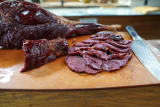
Smoked Wild Game Ham
(3)
Ham is a wonderful thing: beautiful as the centerpiece of a holiday meal, fantastic in sandwiches, or perfect when crisped up and sprinkled on top of a baked potato. It completely changes the character of the meat, transforms tough cuts into tender morsels, and is a great way to truly celebrate your harvest.
When it comes to curing meat (the first step in making wild game ham), there are two general approaches: excess-salt curing and equilibrium curing.
Excess-Salt Curing: You bury the meat in salt or in an extra-salty brine and pull it out after a specific time. It’s faster but risky; leave it in too long, and it becomes a salt lick. This is a great approach for brining a whole turkey or a standard-size ham if you’ve got the timing down right. The thickness of the meat matters most in determining how long you should leave it in.
Equilibrium curing (EQ): This is essentially the "low and slow" method of curing. Unlike the excess-salt method, EQ curing uses a precise amount of salt based on the weight of meat and water and then takes as long as necessary for that salt to distribute evenly through the meat. It takes longer but is impossible to over-salt, as the final state is where the salt has reached an equilibrium throughout—it can’t get any saltier.
When curing smaller or non-standard cuts of meat, I prefer the equilibrium cure method over the excess-salt method. While the excess salt method is faster, it’s easy to over-cure your meat and end up destroying the meat you worked so hard to harvest, butcher, cure, and smoke. If you want an idiot-proof ham that’s guaranteed to taste good and don’t mind waiting a bit longer, this recipe is for you.
This recipe is for a simple, basic ham using the equilibrium cure method. Start with that, and then feel free to tweak the ratio of salt to sugar, the glaze, and add other flavor elements to find what you prefer.
A Note on Trichinosis: Wild hogs and bear meat can contain the larval form of Trichinella spiralis. When ingested by humans, these larvae can cause the disease trichinosis. It’s very important that you cook all bear and wild pig meat to an internal temperature of at least 160°F.
Ingredients
Meat
- Any cut of meat works. Large cuts from a rear leg are ideal, but a front shoulder works too. You can even ham a small steak if you want to cut down on curing time. Bone-in presents nicely but will require a much longer curing time. Wild hog and bear are classic cuts for ham preparation, but cured turkey breast makes for fantastic lunch meat, and it’s worth doing with venison as well.
Brine
- 2% Salt
- 1% Sugar
- 0.25% Pink Curing Salt (also known as Prague Powder #1)
Glaze
- Brown Sugar
- Optional: Black Pepper, Cayenne, or Other Flavors
Also works with
Special equipment
Preparation
Making the Brine To prepare this recipe, you need a kitchen scale. Digital kitchen scales are cheap and well worth it to make a fantastic ham (especially when you figure all the time and effort you put into harvesting the meat).
- Place your container on the scale and zero it out.
- Put your meat in the container, and fill the container so the water just covers the meat. Make a note of the weight of the combined water and meat (but not the container!)
- Take out your trusty calculator and calculate the proper weight of salt, sugar, and pink curing salt. For example, if your meat and water combined weigh 1000 grams, you’ll need 20 grams of salt, 10 grams of sugar, and 2.5 grams of pink curing salt.
- Important: don’t eyeball the curing salt. Use that digital scale to ensure you stay within safe limits.
- Remove the meat from your container, stir in the ingredients, and ensure they are fully dissolved.
- Put the meat back in, cover the container, put it in the fridge, and wait.
Curing Time The beauty of the equilibrium cure is that it’s almost impossible to mess this up assuming you did the math right above. The curing time is a function of the meat thickness, as it will take longer for the salt to penetrate a thick cut than a thin one.
Too short curing time? You’ll end up with smoked meat, not a ham, but still tasty. Too long curing time? Completely fine, still a ham. As a general rule of thumb, see the following table for curing times. For a standard de-boned bear, pig, or deer hind muscle or shoulder, plan for around 14 days of curing.
Smoking the Ham
- Once your meat is cured, take it out of the brine, give it a good rinse with clean water, and pat dry.
- Coat your meat liberally with brown sugar if you like a sweeter ham, but feel free to experiment with other options too: maple syrup, black pepper, or even cayenne are great in a glaze as well.
- Heat up your smoker to between 180°F and 200°F. After a couple hours you can let the heat climb to 250°F, but don’t go beyond that.
- Smoke until an instant-read thermometer reads 160°F all over. It’s very important that you test in different spots to be sure it’s safe to eat.
- Total smoke time should take between 3 to 5 hours, but it depends on the thickness of the meat and isn’t done until you get to 160°F.
- Remove the ham from the smoker, serve hot or cold, slice thinly, and serve with mustard. For an extra bonus, you can put those thin slices under the broiler to make them crispy.
Reviews