
Louisiana waterfowl hunters will have a new opportunity in the marsh this fall after the Louisiana Wildlife and Fisheries Commission approved the state's first-ever experimental black-bellied whistling duck season. Announced by the Louisiana Department of Wildlife and Fisheries, the new nine-day season will run October 3 to 11 and give hunters an opportunity to pursue one of the state's fastest-growing waterfowl species before the regular duck season opens in November.
The experimental season will come with a few regulations that differ from Louisiana's traditional duck seasons. Shooting hours will run from sunrise to sunset, rather than the standard one-half hour before sunrise until sunset. Hunters will be limited to four black-bellied whistling ducks per day with a possession limit of 12 birds.
To participate, hunters must obtain a free Black-bellied Whistling Duck hunting permit from the Louisiana Department of Wildlife and Fisheries before heading afield. Participants will also be required to report their hunting effort and harvest within 15 days of the season's closure, allowing wildlife biologists to collect data as they evaluate the experimental season.
Black-bellied whistling ducks have long been common throughout Mexico, Central America, and parts of South Texas, but over the past few decades they have steadily expanded their range across the Gulf Coast, becoming an increasingly common sight in Louisiana.
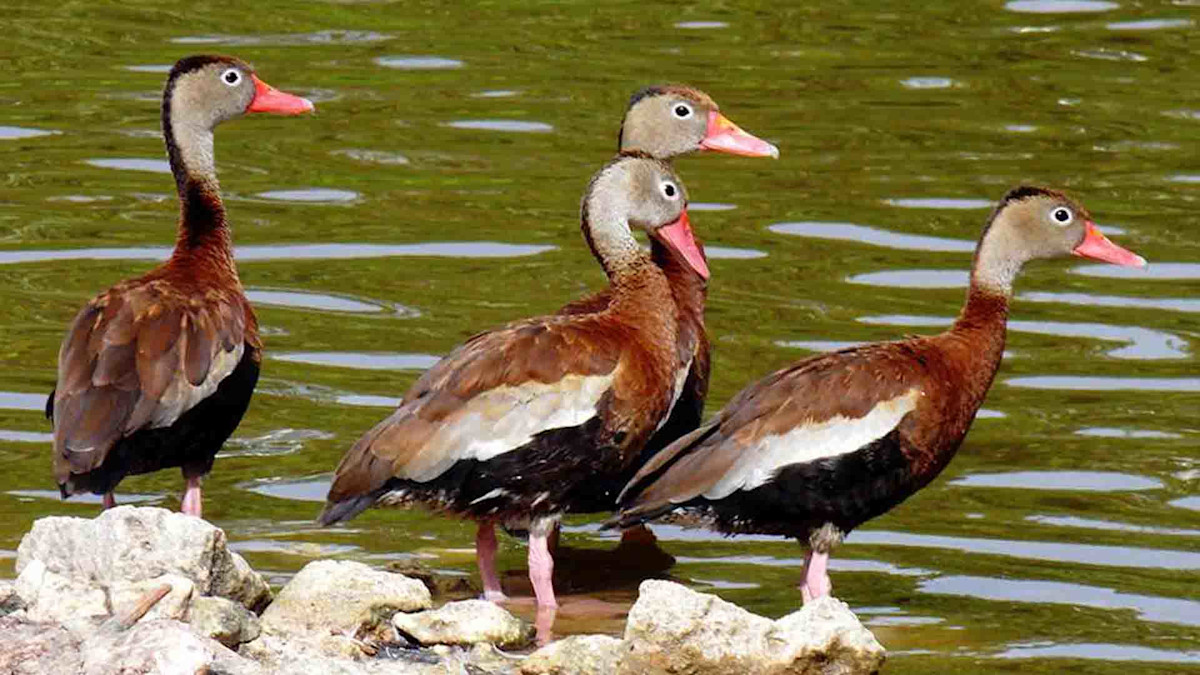
The birds are hard to mistake. According to the U.S. Fish and Wildlife Service, they stand taller than most dabbling ducks thanks to their long necks and pink legs. They also sport a bright pink bill, chestnut-colored body, black belly, and bold white wing patch that's especially noticeable in flight.
Unlike many duck species, black-bellied whistling ducks lack sexual dimorphism, meaning males and females look nearly identical. Another defining characteristic is the high-pitched whistling noise they use to communicate. If you’re unfamiliar, you can check out some of their sounds here.
So why create an entirely new season for black-bellied whistling ducks?
The answer comes down to timing. According to Ducks Unlimited, black-bellied whistling ducks are abundant across much of Louisiana in the spring and summer during their breeding season, but they depart the grounds between August and October. By the time Louisiana's regular duck season opens in November, many have already dispersed or migrated south, limiting hunting opportunities even though the species is legal to harvest during the regular season.
Unlike mallards, pintails, and other highly sought-after waterfowl, black-bellied whistling ducks have never been a primary target for most duck hunters looking to fill their bag limits, despite being considered good table fare. Wildlife officials believe the new October season will provide sportsmen with another quality hunting opportunity while also giving biologists valuable harvest and participation data to help evaluate future management of the species.
For now, Louisiana hunters will have a unique opportunity to pursue a species that has become an increasingly common part of the state's waterfowl landscape. The experimental season not only fills a gap in the hunting calendar but also provides wildlife managers with valuable information to guide future decisions. Whether it becomes a permanent addition remains to be seen, but this fall marks the beginning of a new chapter in Louisiana waterfowl management.
Feature Image via Ducks Unlimited
Stay in the loop with The MeatEater Newsletter
Shop
Related
Wildlife Management
Louisiana Approves Limited Black Bear Season

Wildlife Management
Following 2018 Ban, New Jersey Reopens Black Bear Season