Utah Delegation Uses Unprecedented Tactic to Go After National Monument Plan
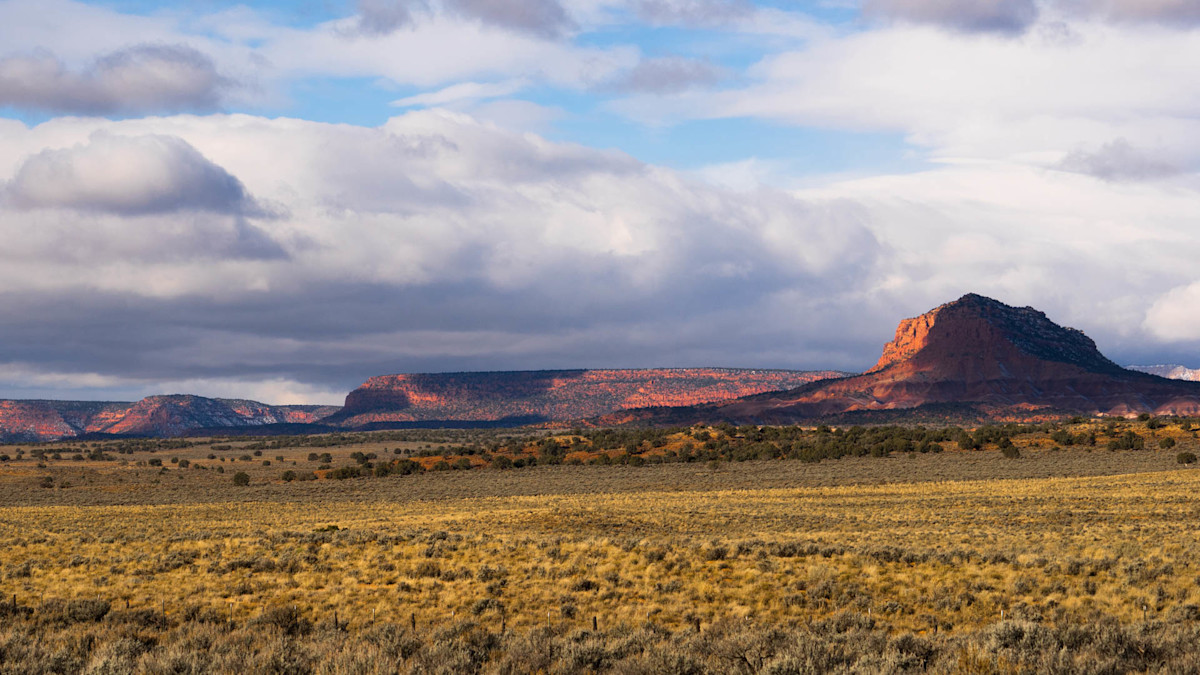

Utah legislators are using the Congressional Review Act (CRA) to go after the management plan for Grand Staircase-Escalante National Monument. Earlier this month, Senator Mike Lee and Utah’s congressional delegation introduced a joint resolution of approval seeking to overturn the 1.9 million-acre monument’s Resource Management Plan, which was instituted in January 2025.
Grand Staircase-Escalante National Monument, which is located in Southern Utah and encompasses striking red-rock canyons and Native American art and ruins, has long been a spark point in the debate over public land management. The monument was first designated by President Clinton in 1996 under the Antiquities Act of 1906, which gives presidents the ability to designate national monuments “to provide general legal protection of cultural and natural resources of historic or scientific interest on federal lands.”
Utah politicians, however, have long said that the designation was too large and that its restrictions on resource development were an unnecessary imposition on the local community, prompting the Trump Administration to halve the size of the monument in 2017. The Biden Administration restored its size in 2021, and that decision was upheld in court.
Now, though, Grand Staircase-Escalante is again at the heart of the debate over how to best manage our public lands. “The Antiquities Act was written to protect specific objects and to reserve only the smallest area compatible with their protection,” said Lee in a press release. “Instead, we have a 1.9 million acre, sweeping land-use regime finalized in the last days of a failed president, with generational consequences for rural Utah communities.”
Meanwhile, environmental advocates are slamming the move as an attempt to degrade public land management despite the current management plan being developed with feedback from diverse community members and stakeholders.
“I would argue the plan could not be improved when it comes to outdoor access and the years of local input behind it,” Axie Navas, Director of Designation Campaigns for The Wilderness Society, told MeatEater. “Hunting is allowed in almost the entire monument. Recreational target shooting is allowed in 91% of the monument. Most of the monument is open to grazing, and grazing levels have remained steady since 1996…This plan protects our freedom to explore this special place.”
Jay Banta, a former refuge manager for the Fish and Wildlife Service and a BHA life member, says hunting and fishing opportunities are plentiful within the monument, with opportunities to target species including brown trout, bighorn sheep, mule deer, elk, turkey, and small game.
“There are some really unique hunting opportunities,” Banta said, who’s primarily hunted spring turkey in the designation. “I’ve hunted turkeys in seven or eight states, but there’s no place I’ve been where there are petroglyphs and rock arches and bridges in the middle of a red rock canyon—and really fun and challenging turkey hunting.”
It’s not clear what, exactly, the Utah designation would like to overturn in the current management plan, considering its emphasis on preserving grazing and mixed-use recreational access. Though Utah lawmakers have not explicitly stated what they would like to be changed, Navas and other environmentalists suspect that opening up drilling and energy extraction within the monument are part of the motivation, given Lee’s history on public lands and the stated priorities of the Trump Administration.
“What Lee and [Representative Celeste] Maloy seem to be doing what they are already on the record for doing: sowing chaos in our public land system and trying to dismantle it piece-by-piece,” Navas said. “That is the broader agenda that this seems to be a part of.”
Larger Ramifications
The fight over Grand Staircase-Escalante has broader ramifications than the isolated monument, largely because of Lee’s use of the CRA. Historically, the Congressional Review Act of 1996 has been sparingly used to overturn federally issued “rules.” Beginning in 2025, however, federal lawmakers have begun using the CRA untraditionally, invoking it for everything from dismantling BLM Resource Management Plans (RMPs) to the currently stalled attempt to undo a mining ban in the headwaters of the Boundary Waters. Now, the Lee is turning the tool against a national monument management plan for the first time in history.
“This is precedent-setting and has never happened before,” Navas said. “It enables a handful of Washington politicians to come and swoop in and rewrite management for these beloved public lands.”
Lee’s perspective is that “Congress does not surrender its oversight responsibility simply because an agency labels something a ‘plan’ rather than a ‘rule.’”
However, one of the unknowns for using the CRA to strike a management plan is that it would forbid management agencies from issuing a new rule “that is substantially the same” as the old one. Sources tell MeatEater that how this would play out for a management plan is still unclear, considering its novel use and that most aspects of whatever new plan is instituted would almost certainly closely resemble many of the provisions in the old plan. This dynamic could open the door for litigation, particularly from industry groups.
Under the CRA, a joint resolution requires both houses of Congress to act on it within 60 days, and it cannot be filibustered, meaning it requires a simple majority to pass. Consider making your voice heard on the issue by contacting your local legislators today.
Stay in the loop with The MeatEater Newsletter
Shop
Related
Public Lands & Waters
Utah Delegation Uses Unprecedented Tactic to Go After National Monument Plan

Public Lands & Waters
Trump Just Slashed Two National Monuments in Utah, Here's What Hunters and Anglers Should Know