Popular searches
Articles
Series
Topics
Shop
Recipes
The MeatEater Podcast
Ep. 915: Dan Moultrie on the History and Ethics of Trail Cameras and Other Thorny Issues of Wildlife Management
Play Episode
1h54m
Steven Rinella talks with Dan Moutrie about: the first trail camera; the evolution of trail cameras; fair chase standards; game management and quality deer management; drones and hunting; chronic wasting disease; the evolution of hunting technology; and more.
Find our favorite trail cameras and hunting products at www.moultrie.com
Find our favorite ATVs, SxS, and Utility Vehicles at www.can-am.brp.com
Connect with Steve and The MeatEater Podcast Network
00:00:08
Speaker 1: If this is the me Eater podcast coming at you shirtless, severely, bug bitten, and in my case, underwear listeningcast, you can't predict that anything brought to you by first Light. When I'm hunting, I need gear that won't quit. First light build, no compromise, gear that keeps me in the field longer, no shortcuts, just gear that works. Check it out at first light dot com. That's f I R S T L I T E dot com. All right, join today by Dan Moultrie. Thanks for coming. Dan. Dan is an outdoorsman, entrepreneur, conservationist, best known as the founder of Moultrie pioneering commercial trail cameras and feeders. He served twelve years as chairman of Alabama's Department of Natural Resources, EARN and Wildlife Conservationists of the Year from the State of Alabama, guided big game in Alaska for many years and remains very active in wildlife conservation. The first thing I want to ask is I have to ask you a solution to a problem I have. Yes, we were down in Texas.
00:01:17
Speaker 2: At my buddy's ranch, Okay, and he's got oslots on his ranch, and these researchers been and they had these little areas where there was oslot activity. So we picked an area that we knew there was oslots hanging around and went in and hung a camera, but had a last minute mind change, so we made a pin ahead of time, being like, we're gonna go put a camera at this pin, but then got there and didn't like it and wandered off and set a camera.
00:01:55
Speaker 1: We haven't got an oslot.
00:01:56
Speaker 2: Yet, but every morning I wake up and I look at we had amazing things like all the time. I'm big buck yesterday, amazing things all the time. But my buddy was out there. This is way down in Texas. My buddy is there. I'm like, hey, go to this pin and find the camera. He can't find the camera.
00:02:12
Speaker 3: Locate it again.
00:02:13
Speaker 1: I'm like, there's a bush.
00:02:15
Speaker 3: There's a lot of bushes.
00:02:18
Speaker 2: So he's and this dude, this camera is just plugging away doing its job.
00:02:25
Speaker 1: I can't it's still running.
00:02:27
Speaker 3: Is it a solar so it will continue to running?
00:02:29
Speaker 1: No, I didn't put a solar around. I didn't put a solar on it. But it's like it's it's become a joke where me and the guys that I said it with, I just constantly every day I'm like, oh, here's what happened in front of the camera.
00:02:42
Speaker 4: I would get multiple team to go find that. That's apparently a really good.
00:02:46
Speaker 1: That's a great spot, but no one knows where it is. Is like, how do I find it?
00:02:50
Speaker 3: I don't be tough.
00:02:51
Speaker 1: I don't know an equivalent to find my phone because I never thought that some idiot would put one and not remember where he put it.
00:02:59
Speaker 3: That's a great question. That's good, that's good.
00:03:03
Speaker 2: It's performing, it's performing away. I mean, I got pictures this morning. I got a big ol'nill guy walking past this morning. It's a great spot. If I knew where it was, it's on a So we hung it like when we hung it up we hung bird wings from ano film. I put all kinds of I made a tree and I put all kinds of Bobcat lure and Bobcat piss. We scattered feathers everywhere and just try to make it like the Oslots, like dream location. And at first it was coyotes coming in all the time. The Oslots never shown. But it's it's like.
00:03:39
Speaker 1: The greatest hot spot, you know, have theocats.
00:03:48
Speaker 2: The feather It's so funny because that camera keeps like doing his job. The feathers are all gone, nothing smells the tree anymore. But yeah, I can't locate it.
00:03:55
Speaker 3: I don't know, You're just gonna have to go find it again.
00:04:00
Speaker 1: So I thought maybe you'd have a tip on how to find your camera go back and look.
00:04:04
Speaker 2: What's the funniest part is, as he's wandering all over looking for it, I told him, I said, man, I didn't get a picture you looking for it, so you weren't in the right area, because you think at least out of got a shot of you walking around trying to find it.
00:04:18
Speaker 1: So this camera's gone.
00:04:19
Speaker 4: It eund be better if you had a picture of him looking for it. You say, I'll give you your warm you're.
00:04:24
Speaker 1: Warm yet, So all we know is wherever you went ain't the right area.
00:04:28
Speaker 2: That's great, So there might be one of your cameras is out there somewhere cranking away, but I can't recall.
00:04:36
Speaker 3: I'll check with the.
00:04:37
Speaker 4: Guys, the engineers, and see if there's any way we can soon down and find that exactly one.
00:04:42
Speaker 1: Oh, I would love to you could even get me a pointer like I kind of like.
00:04:45
Speaker 2: It's so funny because the three of us that said it like, yeah, I don't really remember what we were thinking about.
00:04:51
Speaker 1: I remember we wandered off.
00:04:53
Speaker 4: You know, there's so many and just like y'all doing that, you can't believe the call, just like the calls you get from all your stuff, Hey, guess what we're doing with the camera.
00:05:03
Speaker 3: Here's what we did.
00:05:04
Speaker 4: And it goes from a forty year old woman putting it out that you see what time her kids come in from Dayton who she drags in with them, to to osilotes, to everything. And that's been one of the neatest deals I know. At your Christmas event, we had talked about how many pictures we were holding in the clouds and in the billions and billions of pictures that's been made. A lot of those are hunting, a lot of them are wildlife, a lot of them are security. But it's that the entire gambit to see what that product has been used for. Yeah, it's off, it's office specterl It's great.
00:05:42
Speaker 2: When you go into my buddy's hunting shack, he's just got it's just sitting on the counter. Yeah, just a camera sitting on the counter and he's got a note on the door.
00:05:53
Speaker 1: Says, your photo was already on my phone.
00:05:56
Speaker 3: That's exactly right, that's exactly right.
00:05:59
Speaker 1: So he's like turned around, turn around and go out.
00:06:03
Speaker 4: Almost in today with all the different camera companies and even just the numbers we put out, but you combine all the camera companies, you're out somewhere. You better know you're you're pretty good at odds. You're getting your picture taken. A lot of the stuff. The guy who in Colorado that had killed the girl years ago that they found in Florida found her off a picture off Moultary camera.
00:06:26
Speaker 1: Is that right? Well, that dude, there's that guy. I can't remember.
00:06:29
Speaker 2: It was Wisconsin or Minnesota that killed a state representative and her husband. They were doing a big man hunt for him. It was a hunter. Yeah, a hunter called in, had him on the camera and he says, I got that guy right now on my property and they came out and yeah, apprehended him.
00:06:47
Speaker 4: It's been a neat deal to see it. From in fact until now state it's been.
00:06:52
Speaker 1: What like what I can't I can't even remember it like I remember it all coming to be. But what.
00:06:59
Speaker 2: If you had to go back to what is the genesis in your what is the genesis of the trail cam as we know it.
00:07:06
Speaker 1: Jimmy like, how did it? Where did it even come from?
00:07:11
Speaker 4: I tell you mine in hours? And I think we were that. You know, there probably were some people working on it after the time. But in the early eighties we were carrying here, here's where mine came from. We were carrying customers to Canada. Black bear hunting really into it and everybody and you've carried enough people hunting and you say, hey, what have you taken? Now, I've taken a black one with a chevron. I've got this and that. And if you got color phase bears, which we did. A guy I always say, boh, I had like.
00:07:45
Speaker 1: A Suman bear.
00:07:46
Speaker 3: They always want a sum I take a red one day.
00:07:49
Speaker 4: Always did that, and we were trying to find out what bears were on, what baits to colors, if we had somebody that significantly wanted that color. Yeah, those earliest days, we would take big fish hooks like tuna hooks, dull them down, weld them on the barrel, and at some point that bear is going to rub his arm across it and it's gonna collect hair.
00:08:11
Speaker 3: We would get that hair and if you saw the color phase you knew.
00:08:15
Speaker 4: You didn't know if he was locked in on it, but you knew what it had been by there. So and we were getting into that. Well, you know that bear that comes by. He's a cinnamon, but he's a big old male, but he's nocturnal. So you had to figure out time first. In the early days, there was a little it looked like a wristwatch. There was a little clock and when the string got pulled, when a bear broke a string, it would pull a plastic sliver out of that watch and it would stop the watch. And so you'd go stick the plastic sliver.
00:08:48
Speaker 3: This is in seventy nine eighty eighty one, and you'd slip it back in three in companies who ended up making that in earliest days and probably was used for something construction.
00:08:58
Speaker 4: It probably wouldn't even design for hunting. Back then everything was taking ideas from other stuff. But you plug the plastic back in and it would start blinking the time that it went off, so you would have.
00:09:11
Speaker 1: They were making it for what purpose for I don't.
00:09:13
Speaker 4: Know if it was for construction, for security or something like that, but you would know what time that had been broken. So you go back and this is the earliest days of bear baits and people doing that. I mean, when it seemed like it was taking off, now that side of honey, you put it back in.
00:09:30
Speaker 3: You'd have the time, so you'd say, okay. The first bear.
00:09:33
Speaker 4: Brote the string at four point thirty in the afternoon, typical bear feeding pattern coming in late afternoon. You could get the time. We had two deals. We wanted to know the times and we wanted to know the color face. And I've always been a Rugoberg kind of guy building stuff. All our most of our products, especially the early days, came from me going down shot, welding it up, building it, getting it right, trashing it, starting again, yea, and making.
00:10:03
Speaker 3: What we want.
00:10:04
Speaker 1: And I got a camera.
00:10:06
Speaker 4: I found one that had a year old enough to remember the days of film cameras. And a lot of these folks now like, huh, film, what are you talking about?
00:10:15
Speaker 1: Oh yeah, when I'm talking about stuff like this is my kids, man, they kind of they don't.
00:10:18
Speaker 4: Yeah, twelve pictures and your choices were twelve, twenty four and thirty six past.
00:10:23
Speaker 1: Like the drug store or Walmart.
00:10:26
Speaker 3: Whoever had had.
00:10:27
Speaker 1: The biggest problem with all that going away is you don't have those containers anymore. Everybody used to do a great containers for everything official hooks, fish and sinkers. And I'll still say to my kids, I'll still talk to them about like I'll be like, I'll still describe, but you know, you know, like a thirty five millimeter film canister, and they're going, those are good containers.
00:10:49
Speaker 4: But there was a camera that had a single shot and you're probably and then you had to hand roll it, but you got one shot. I took, Yeah, yeah, I took one of those Victor those biggest rat traps. Victory made, not the little mouse traps, but the rat trap because the treadle on it would move. And I built it on a frame and I de springed it because if it hit it at the power it is, it would have crushed the camera. But where it just had a nice to the spring, yes, and I lined it up with that button on the camera and.
00:11:27
Speaker 3: So first spring, first spring.
00:11:29
Speaker 2: I took it up there, not like through a string, so it would literally hit the button.
00:11:33
Speaker 4: It would hit the button, but it had to the to where the bait goes.
00:11:37
Speaker 3: The string tied. And I will tell you that the stuff.
00:11:41
Speaker 2: About it, I don't want to act like I understand. Tell me about the string.
00:11:45
Speaker 4: The string went from where the bait, like if you'd put cheese.
00:11:48
Speaker 1: On the rat.
00:11:49
Speaker 4: The bait holder, that's what holds the arm that trips it lets the treadle from Yeah, got it. So the string would go to that and trap it. Ling would hit that pulls it.
00:12:00
Speaker 3: It trips.
00:12:01
Speaker 1: So you're running like a piece of mono.
00:12:04
Speaker 4: Piece of mono the area anywhere around there, just where it gets on the main trail.
00:12:09
Speaker 2: You know, they're always on the chest trip, so it trips it.
00:12:14
Speaker 4: That hit that rat trap one picture. First time I go into the bait and I go in and.
00:12:20
Speaker 1: See, how are you holding the camera? Still?
00:12:22
Speaker 4: Camera camera was mounted. It's just the same way almost today. I put it on a strap right there where the trail was, so it was pointed at the bait and you've secured it to a tree or whatever you had around there. Bear comes down, trips it, it's gone, it turns on. We go in to check it the next morning. I go in and all this neat stuff, Like I was telling you about the number of pictures and what Moultrie has grown to and the beans and beans and billions of pictures.
00:12:51
Speaker 3: Never has it been better.
00:12:52
Speaker 4: I walked in and saw that mono down and that trail on top of that camera. Deal first picture ever. I take it out, go to the deal. We're up in tomogramy Nor I mean Canada. I carried it to the drug store and you know, they go, you want one hour or three day? I said, I'll take one hour of this one and we get that very first picture. Every bit of it came from that. And after that, when.
00:13:19
Speaker 2: You were doing that, you were did you think about you were just trying to You were just trying to hunt bears.
00:13:24
Speaker 1: All we were doing hunting bears.
00:13:26
Speaker 4: And in fact, really and truly probably I was more interested in the hunting side, like you would have been, than I was the business side of it. And for years we had it. And one of the moguls in our industry, God named Ray Mursky. I don't know if you knew Ray out of Texas, just I mean, a mogul in the hunting industry. The hunting industry wouldn't be where it was today if it wasn't for Ray, and he was He and I hunted together all the time, and he saw that and I showed him some of those pictures and he goes, what do you have?
00:14:00
Speaker 3: And I was telling him how it works, and he said, you've got to develop that for He said you know how good that would be?
00:14:09
Speaker 4: And I said, you really think that's sill that well? He said, maltr He said it'll be off the chart. I'll swing back to another comment here in a minute that Prue's Ray was smart about what he did. So we started development.
00:14:21
Speaker 3: Came up with one.
00:14:22
Speaker 4: Came up with that was heat heat censored or motion censored. Had our very first camera that we got go to see the buyers, our traditional buyers that were selling feeders and management stuff all over.
00:14:37
Speaker 3: I got hit with you really.
00:14:39
Speaker 4: Think somebody's wife's gonna let them put a three hundred some dollar camera out in the woods Maltrie.
00:14:43
Speaker 1: I said, yeah, I think so.
00:14:45
Speaker 4: Had trouble getting it was it didn't take legs and today probably besides, I don't know what, I think, cameras may be part of the best selling item in our industry right now that the Ray Mursky comes back in. I'd been to Walmart and showed it to the bar. It's just a little outside ideal. Ray was on sporting good board, so there he got in front of those people, went back and he said, guys, let me tell you all. I've been around this as long as anybody, and Ray was so well respected on Sam Walton's closest friends, and he said, if y'all put this in, he said, I think it'll be one of the biggest items ever in the hunting fishing category. M he foresaw that forty years ago.
00:15:31
Speaker 1: But what by that point, I mean the rat trap contraption.
00:15:37
Speaker 4: We had gone by that and had an infrared swish on it down infrared in motion swich.
00:15:42
Speaker 1: When it first came. When first.
00:15:46
Speaker 4: First one by was was infrared motion, which is the same thing that trips your gride.
00:15:52
Speaker 1: Yeah, absolutely, how did that work? It worked really good? But did you guys? Was it all contained by that?
00:15:58
Speaker 4: It was all contained on you know. I always viewed being our industry. The sales and the marketing was the side. I never patented anything. All our stuff I never patented e except except we were so on the front edge of the trail camera deal. I thought, you know what, it's going to be out in the weather. Nothing envisioned of where it's going to it is now. I thought, the secret to this is going to be protecting it from the weather. And we had like a baseball cap hat over the camera box and it protected it. And we patented that only patent I've ever held, and but who knows. After they got sealed up, it was a useless deal. And didn't you know, but I thought it would protect it. But that's kind of where it evolved. In fact, I had several guys that was testing. They go, man, we sprayed it with water and it all went all in the front. I said, yeah, that's protecting it from this way water, not that way water.
00:16:50
Speaker 3: But all that has developed from there.
00:16:53
Speaker 4: But so then we got you know, that first generation turned into second generation, second generation, the third generation and taking it from a infrared motion switch off a film camera. Remember every bit of this film, so you had to have massive battery draw.
00:17:13
Speaker 1: Early ones were filmed, everyone early commercially available.
00:17:17
Speaker 4: Everyone's that we sold. The earliest ones were all film based.
00:17:21
Speaker 2: That's funny bring it up, because like I'm trying to match up sort of my own awareness, and I have no recollection of seeing a film one. But here's what I do remember. I remember that you'd go out fishing, trolling salmon, and you'd come home with a big scroll of paper because your sonar, your fish finders had a scroll of paper and a pencil.
00:17:48
Speaker 1: And you find in those spots, and you could people would be walking around with those rolls of paper in their pocket and they'd open them up and show you fish marks, and you'd carry it around like that. I remember that, but I have no recollection of there being a trail camera with filming it.
00:18:04
Speaker 4: Do you remember at the earliest days of the Shot show. I mean, this is back when.
00:18:11
Speaker 1: Exist went for it.
00:18:13
Speaker 4: But when we got into it, there was the Browning and Remington's and Winchester's, and we were so early in it. I mean, we're coming up on fifty years in it. There'd be like maybe baker tree stands and.
00:18:26
Speaker 3: Some old, old old categories.
00:18:29
Speaker 4: But every year when you would meet in those earliest shot shows and you'd go to the show, and of course, now just like this morning, like me showing you the airheads, are they everybody whips out the phone and whips to them. You would carry packs of photos that you had had enlarged or and you'd be at the show and people are whipping those out and got the photos and.
00:18:51
Speaker 1: The show trail cam photos, the trail camp photos, Like what year would that have been? You put a roll of film and a camera and hung it on a tree.
00:18:58
Speaker 4: That was in the eighties. That was in the eighties because we when we developed digital, we were the first in digital. We were all the way through I think it's first cellular and and all that development came from everybody. When digital cameras came, everybody and you were old enough to remember this, everybody had cameras and they were all film. Digital comes out and they're like, you mean, I don't have to buy more films. But the problem with digital this was a this this light to have got us. This worked us to death figuring this out that for a digital camera to work, it has to be on because I don't know, if you remember the digitals, when they would warm up, you'd hear it and they'd warm up. So by the time they warm up, the game had already gone.
00:19:46
Speaker 1: By or spoo. I forgot about that noise.
00:19:52
Speaker 4: So when we were doing all the early prototypes and testing, we had car batteries out there, and they were draining car batteries down because it had to stay on the entire time. You didn't have the time, you know how One of the selling items on cameras now cameras or shutter speed. There was no shutter speed. If you had to wait on that camera to warm up, everything would have been by But got it. Once we got that figured out, then the digital came that.
00:20:22
Speaker 2: But you guys knew you guys knew that the film thing was done. Oh yeah, because if camera like, if people are done buying film for their normal cameras, they're not going to be putting them in the trail cameras.
00:20:34
Speaker 1: The film was over one.
00:20:36
Speaker 4: Of the deals that we would go by, and I was talking to one of your guys this morning about it. You see so much item if you go to any sporting good store, any of the national chains, you see sixty feet of an item they're selling. They're selling quite a bit of those, you judged by square footage of the store.
00:20:54
Speaker 3: Yeah, you go in Walmart.
00:20:55
Speaker 4: The impulse buyer for Walmart at that time was got named Clifford Young, and he was telling me how much if you go by the checkout at Walmart.
00:21:03
Speaker 1: His title is Impulse Buyer.
00:21:04
Speaker 4: Impulse bar and Clifford probably retired now, but he was in over all Impulse items. When you went through the checkout and if you think about what was there, there was film. He had all three film. They had Mars, candy bars, they had actually Combs was on there. Items that somebody's going to pick up that they would go, oh yeah, oh yeah, I need to get that right there. And he told me back then when I was showing him and he and I'd hunt together about the cameras.
00:21:33
Speaker 3: He said, films dead. He said, our sales are on film is going like that?
00:21:37
Speaker 1: Oh no kidding, And so that forced that.
00:21:40
Speaker 4: And that guaranteed in the same deal you see that shelfs pace gone at all, Walmart, I guarantee it's changing.
00:21:48
Speaker 2: I just want to go back to the call the impulse buyer because you know, like and fishing, you had bibbers and fly fishermen wanted to feel special, so they named them strike indicators, right because they just wanted they couldn't handle it. It seems that the dude that's the impulse buyer would want to rebrand his position because most people have, like I have a perception that an impulse buyer is impulsive the other.
00:22:18
Speaker 3: Way around.
00:22:20
Speaker 2: Them, like the I don't know man, like the last minute thing you forgot you needed buyer because you'd be like, dude, I want to be an impulse buyer, Like I don't want to make an impulse purchase.
00:22:31
Speaker 1: That's that's impulsive.
00:22:33
Speaker 4: Walmart had to deal and we learned so much from every category, every whether it was the Kabellos, whether it was done where it was whatever in the industry, and fifty years of learning and working with all the merchants and everything's different. Walmart had a deal and I don't know how many people knew about it, but it was and we learned about it from the impulse guy.
00:22:59
Speaker 3: They had an eye them.
00:23:00
Speaker 4: Every year they called the VPI item you ever heard of? That was halet volume producing item on vp VP vp I volume producing item, they would pick one item a year.
00:23:14
Speaker 1: It was cranking.
00:23:15
Speaker 3: That was cranking volume.
00:23:18
Speaker 4: If you will remember this, you go through the checkout at Walmart, they had a huge drum, probably a thirty gallon drum ring pops. Remember when all those kids had vp I item?
00:23:29
Speaker 1: Got it?
00:23:30
Speaker 4: The only sporting good item that ever made it that I know. We had a multiary item as a VPI item.
00:23:35
Speaker 3: Oh it was.
00:23:35
Speaker 4: It was a when we came out with the demand feeders for the the the for the that the deer would come up and activate it. And it qualified because low price point, high volume light people by people that won't pay five hundred dollars for a feeder if they picked it. And I've forgotten what the retail was. It on fifteen dollars, seventeen dollars.
00:23:57
Speaker 3: It fit that it and it.
00:23:59
Speaker 1: Was was unbelievable.
00:24:01
Speaker 4: But just so we learned that from them, and and and that volume that you could reach with that we knew the cameras. We were onto something, but we had to go through the generations of it.
00:24:14
Speaker 1: Just what you were talking about heavy.
00:24:15
Speaker 2: But hivy with that thing, because I kind of got you derailed a little bit when I was on the film thing. But like if you when you if if people knew film and I don't even remember putting film in a trail camera.
00:24:25
Speaker 1: But but what wound up being the solve.
00:24:30
Speaker 2: For having a but I'm saying for having a digital camera hanging on a tree that's just on all the time, and it's and you got a couple of those batteries there and they're gonna smoke through in two days.
00:24:40
Speaker 4: To solve was finding enough battery power to keep that digital camera on, but finding a digital camera that didn't use much battery power, and finally we found those and got to two of those.
00:24:55
Speaker 1: To me, so there would be for a while that was like powered by car batteries.
00:24:58
Speaker 4: Were all our testing was done car batteries, and it's draining them like there's no as it was in those days, I didn't think we'd get over that hump. That was a very tough hump and trail cameras to get over.
00:25:11
Speaker 2: Yeah, now with the like when you look at the solar stuff coming in, what do you think is the lag? Okay, if you like, if I if I'm thinking of my mind, like when you first start seeing solar become popularized, Right, what do you feel is the lag where like a thing will happen like battery technology, rechargeable battery.
00:25:34
Speaker 1: Lithium solar.
00:25:36
Speaker 2: Right, what is the lag between some user groups somewhere identifying solar and then being like I'm probably gonna need to figure out how to bake that into a camera. I mean, like, what like what is the delay?
00:25:52
Speaker 3: Like it.
00:25:55
Speaker 4: We stay and I'm not I don't think I'm telling any trade secret here that you know hadn't discussed her that you don't know. We stay about at least three years out on what we're developing. Okay, the stuff we got coming in three years, it's gonna, You're not gonna. I'm exchieved. It's unbelievable. We just introduced the solar Edge four. The technology on it, it should be undrainable.
00:26:22
Speaker 3: You ought to be able to put it out and don't ever touch it.
00:26:26
Speaker 1: Yeah, I already kind of. I already got that with one of the external solar panels.
00:26:30
Speaker 3: Yeah.
00:26:31
Speaker 1: The problem is that it's it's bears love those things.
00:26:35
Speaker 3: Oh yeah, I used to.
00:26:36
Speaker 4: I used to joke with a lot of people, it's hard to teach those bears to tear upall that.
00:26:40
Speaker 1: But I got it. So I'll tell you about that. A funny situation.
00:26:45
Speaker 2: I put one on a I put one on a trail, you know, and the first I'm not Kenny. The first image I got. The first image I got is a bear coming down the trail, right. The second image I got is that camera aimed at the sky. The second image I got is that camera aimed off in one part of the woods. The third image I got is that camera aimed off another part of the woods. And then from there it was just but like, what's funny is once he does that, he's done with it. Yeah, oh yeah, He's like, okay, I'm done with that now.
00:27:22
Speaker 1: And then he put it back and he just walks by it and walks back for the first time. He's like, what in the world is.
00:27:27
Speaker 3: That because he didn't find the tree.
00:27:29
Speaker 4: You know, I know you've done as much black bear baiting probably anybody.
00:27:35
Speaker 1: Where this was. This bear has no idea.
00:27:37
Speaker 4: But still, but he could smell your hand pressure and these people that run them where their bait sites. And you see the I see the shows on TV the bear climbing and the guy goes, oh, look at the bear coming up. That bear's not going up that stand to get that guy. He smells where the those hands were on that day, old donnut, and that he's falling up that trail to find the tree at the end of the trail. That's why that there's no doubt, there's no doubt. That's why they go and tear up the cameras. That's why we make.
00:28:06
Speaker 1: He's more drawn to the smell of it than just the look of it.
00:28:10
Speaker 4: He smells where those people. You know, how good a bear's nose is. If that guy had been over there refreshing his bait barrel, and then he goes, let's put up a camera. There's no way if a bloodhound can smell a human in fourteen days track, you think that bear can't smell where somebody had had their hands in jelly donuts and then moved it to the camera. That's why they're going to.
00:28:32
Speaker 1: Yeah, in my mind, and I don't know why.
00:28:34
Speaker 2: In my mind he was like, Visually, I don't I wasn't able to interview him.
00:28:39
Speaker 1: In my mind, he's like, what is that?
00:28:41
Speaker 4: Yeah, when they foresee it, that is, but there's still could have had your human sin on it. That him saying, I wonder what that is.
00:28:47
Speaker 1: Yeah, I hadn't thought of that.
00:28:49
Speaker 2: Yeah, so you feel that I was going to say, is it's already kind of there because I've had camera I've had I've had your cameras with a solar, with your external solar that you can kind of move up the tree.
00:29:00
Speaker 1: I've had them run for years.
00:29:01
Speaker 4: But the new stuff is so it. In fact, Ashley was asking me, I was trying to upgrade my camera supply because I ought to be out to running our newest stuff and getting and I was trying to count up how many cameras we got everywhere, and I mean it's a bunch ofob everybody always says how many of you running?
00:29:20
Speaker 1: It's a bunch.
00:29:22
Speaker 4: But to get all the news edge stuff, the different in technology every year. Right now, Steve is off the chart difference. Our new stuff eclipses the old stuff. But it's just like anything, that's what's new, that's what's come, that's what's been researched. So we finally find the best of the best in the world solar deal. We finally got engineers that figure out a better diagram of schematic to make it do this. It's improving every year. It's beyond where I ever imagine and it's beyond where most people. But the technology on it. Don't mistake the technology put behind these cameras. It's ay force, the team we've had there, it's off the I mean hundreds and hundreds of people working on the technology out and stuff and all the new stuffs off. It's it's great And it didn't This is no selling deal. This is it's just evolving. Now we're right in the evolution of that getting to the best of the best of the bad.
00:30:26
Speaker 1: Yeah. Well, I mean there's all these.
00:30:27
Speaker 2: It makes sense because you're dealing when you're dealing in you're using technologies that are of significance, like like of significance to aerospace, of significance to defense, of significance to security.
00:30:44
Speaker 1: It's like, so you have.
00:30:46
Speaker 2: A million not a million, but a bunch of different industries being like, how do you make smaller batteries that lasts longer, how do you do how do you use renewable.
00:30:54
Speaker 1: Right, So just all these inputs of like of things, you know.
00:30:59
Speaker 4: And it comes from different areas. There's there's inputs we get from law enforcement. There's inputs we get from military applications that's been done.
00:31:07
Speaker 3: Look at fishing.
00:31:09
Speaker 4: If somebody's fishing and GPS is taking them to their spot where they've built a reef that wasn't available to military, discounted that GPS and and for you know, and went to newer technology where they can put a missile through a window at a thousand miles away. A lot of that's coming through our industry.
00:31:31
Speaker 3: You get that.
00:31:32
Speaker 4: We had We had a military guy approach as we went, and so he said, what if I could show you that if there was fog or you know, when you get camera pictures early in the morning and late in the afternoon there's fog or rain. And he said, we've got the technology. And this was a military guy application. He said, it'll shoot through the fog. You'll never have another fogged out picture.
00:31:52
Speaker 3: Yeah.
00:31:53
Speaker 2: And so that cause you know, like range finders, Yeah, they hate the fog.
00:32:00
Speaker 3: Yeah.
00:32:00
Speaker 4: Oh, and I hate the fog and the bright. So I have the problem. You're trying to get an animal.
00:32:05
Speaker 1: You know, you might have.
00:32:07
Speaker 4: What fifteen seconds, you're trying to get a range, especially if you're bow hunting, and that sun reflecting and you can't get that to bounce back off that reflection, and you're just like, oh, gosh, I need to know the range. But the same and so that technology is out there and it's coming to our industry.
00:32:25
Speaker 3: Really well.
00:32:26
Speaker 2: When I think about the history of the history of trail cameras and like the impact the trail cams, and I know that in my notes, I know that you've brought it up as well, is that it introduced this whole world of finding.
00:32:47
Speaker 1: Out that something existed that you didn't know existed. I mean, if you're gonna look like like deer in particular, Okay, if you're going.
00:32:55
Speaker 2: To look at like what if you said, like, what's changed everything? It's changed like home security, it's changed everything. If you're gonna be like, but let's think of like discreete single things that happened, it would be that it introduced the conversation of I got a buck on camera right that you'd all of a sudden, but it didn't have to be that you had to be present to see it, and all of a sudden people were aware that this stuff.
00:33:21
Speaker 1: Is going on that you didn't know was going on.
00:33:23
Speaker 3: I made in my notes when I was coming out.
00:33:26
Speaker 4: We were flying out and I was looking through the items I saw that y'all want to talk about, and the same deal identified that the one thing I saw the camera do that I think some people might have missed. You didn't because you just talked about it. But especially in the Southeast, those big deer out west atoms animals aren't harassed as much as they are in the Southeast. Our populations are higher, they've been hunted longer, they're harder to have people. And we talked about it when you came down for the Christmas show in Alabama. The level they have a lot of one sixty deer running around here. They're not running around the South like that. When we came out with that camera. I can't tell you how many trade shows I went to and i'd have a guy came up and he goes, oh my gosh, we're never going to not use your stuff. Maultree said, you can't imagine this. I got a picture of a one fifty on my property or one forty or whatever size.
00:34:21
Speaker 3: He said, I never have seen it. We've never killed a deer that big.
00:34:25
Speaker 4: You know what it gave them, and especially for the QDMA side of managing property Steve, it gave them hope. They had no idea those deer were there, but you know what, dogs running them, people hunting them. Those deer go purely nocturnal. They don't get seen. Guess what that camera did. Hey, you're holding a deer this size. Where people had no idea there were deer that size, they finally started, yes, we do have them. That was one of the neatest deals about it. And that was multiple people telling me.
00:34:58
Speaker 2: That, Yeah, that was like, that was an impactful thing to be that And it's kind of like this thing you always run your head. You remember I was talking about so and I are for a fish finders. So it just it just brings up this interesting conversation where what these competing views of looking at this stuff were. No doubt, like every piece of technology that comes out, there will always be a person that that bemoans the technology. Yes, and you always kind of you always look, meaning that they feel that something is dying with with the technology, like some skill is lost or some aspect of the experience is dying. I am there's no doubt that the bolt action rifle at the time had its detractors, right, those pencil fish finders with that where there's like the piece of lead there no doubt, there's no doubt they have their detractors. But you look and you think of the ways in which the human mind, like the ways in which it changed your understanding of what's going on. Meaning take sonar fishfinders. You got on a lake, you're never quite clear of the contours of the bottom, of features of the bottom that there's like an old shipwreck down there where fish like the sit the fish sit oftentimes fish or ten feet below the surface. You always visualize fish on the bottom. And so it's like a technology and someone's gonna go like, oh, it's a crotch, but you'd also go but I didn't understand the area, And now I have all this added understanding of the intricacies of what's going on there, and that makes the experience more valuable. Another example is we have a fish place in Alaska. We fish are all the time. We used to fish off charts, nautical charts that just had no contours. It was the ocean was a blank, okay, And on that blank was just fathom numbers, no lines between fathom markers, was just fathom numbers interspersed.
00:37:09
Speaker 1: And we were under the belief that in our area.
00:37:13
Speaker 2: We're like, we knew they were to the west of us, but we were under the belief that we did not have Lincott.
00:37:20
Speaker 1: Maybe not in someone to get a link. We were like, there's no Lincought around.
00:37:24
Speaker 2: Then out came like sophisticated GPS mapping systems with very detailed hydrographical markings, and all of a sudden, then it was like Lincott Bonanza because they like a very specific thing, and so your view of the ocean went from being that it was sort of this unknown basin like thing. The only experience from the surface to being like, oh right, it's like looking at a mountain. Stuff travels the ridges, like do you like the bench, And all of a sudden you understood underwater in the same way, and it heightened your appreciation for the ocean, made you more effective, but sort of like gave you more info. And that's like a thing about cameras is like you're all of a sudden like, oh, I had no idea, I have a picture.
00:38:18
Speaker 1: I have a picture where.
00:38:19
Speaker 2: I had no idea they're around, There's a place I hang out. We camped there all the time. I had no idea there around. There's a wolverine that lives there, and he comes through now, and then I.
00:38:29
Speaker 1: Would not know.
00:38:31
Speaker 2: I would not know if you didn't have an that that wolverine comes through there, had I not hung a camera there.
00:38:38
Speaker 1: So I'm like, so is it bad that I know? Or is it good that I know? I love knowing that it's there.
00:38:45
Speaker 4: You know, a lot of our stuff, we've worked with different state agencies, state game and fish agencies. There was one of the states that was having to spend too much overtime on their wardens or biologist yeah to check traps, and so we worked with them and put cameras on them. If a wolf got in a trap, it would go to the notification would go to the woman or man that was on dispatch. Sure, dispatch should call whoever was on duty. They were able to continue the program because if they were eating up all their money, they had allocated for payroll to do that and it worked great. You know, a lot of the states have twenty four hour check pauses. You've got to set a foothole trap and check it within twenty four hours. I like putting a camera on it because you're gonna know within seconds that you have that.
00:39:36
Speaker 2: That's funny because that's something that's not clearly articulated. You'll see regulations that in states that have check laws. I think that you'll see how they term it determine visually inspected.
00:39:49
Speaker 1: Like, yes, it's a thing that needs to be clarified. Yes, like what inspection looks like.
00:39:55
Speaker 4: But all that, and to what you were saying about fish finders, one of the items right now that's in the marine and fishing industry that's bringing up I'm talking about it. You telling about it, this springs game and fish meetings of all the states.
00:40:07
Speaker 1: Yeah, livescope, Yeah, we cover it.
00:40:10
Speaker 2: We cover the Live Scope conversation, and it's a classic example. It's a classic example of two wildly different views.
00:40:19
Speaker 1: And like, I'm of the age, I guess where I look at live I look at Live Scope. Even though I got buddies I fished, I got buddies of fishing, just young guys running around this office that they're like, they don't want to fish without it. Yes, but I'm like, ah, man, I don't know.
00:40:35
Speaker 3: You and I are exactly the same page. I don't have one on my boats.
00:40:38
Speaker 4: I don't fish with livescoat, but I fished with guys that have it, and it's incredibly effective. But I had one of the guys off late Martin down there and the tremendous crappy lights and he said, he said, mister Baltree, he said, I need to talk to you. Said, if y'all don't do something at game and fish about livescoat, he said, there are going to be no crappie left. He said, it's that effective. It's heavily being discussed. And again, where's that point.
00:41:05
Speaker 1: I don't know, And it's I don't know where the point is. There's a huge age element to it.
00:41:12
Speaker 2: There's also there's an age element to it, and there's also like a short memory element to it, meaning why is it so acceptable for me to use a fish finder?
00:41:28
Speaker 1: Right? I'm totally like, I use a fish like when I'm out running.
00:41:32
Speaker 2: I got a chart, I got a split screen, I got a chart, I toggle between different fish finders used. But then for some reason, I feel it's okay to question the validity of a of a one that's a little better, a lot better.
00:41:49
Speaker 1: But I'm saying, like, what about.
00:41:50
Speaker 2: The guy that that when I when fish finders came out? What about the guy that's like, that's not fair, he's forgotten. Now if we constantly reset the clock.
00:42:01
Speaker 4: We are and eight the technology and age and technology has come so fast so far now.
00:42:08
Speaker 3: I mean, I'm from the.
00:42:09
Speaker 4: Group there when we had the big, great, big giant cell phones in that age group, and now you've got them, and if you don't have something operating from your cell phone, so all that's changing. But you know, I think you have to have something that benefits the resource but doesn't abuse the resource.
00:42:31
Speaker 3: I think that's key in that.
00:42:33
Speaker 4: Now, where's abuse of the resource, That's where the biol is or whoever for each state have to decide. But that's one of the keys to me is does it benefit the resource? And everything had to me when we were in all those years and game and fish, is it database and does it benefit the resource?
00:42:51
Speaker 1: Got it? Yeah, that's where it's got to come from.
00:42:55
Speaker 2: Let me let me lay out for you. I'd like to get your opinion on this. Let me leave out if you just we're sitting in the state of Montana right now. So the state of Montana has been we have a great agency. We have a great agency, our fishing game Agency. Like there's some agencies around the country where I think that that hunters, anglers, they become suspicious of their agency. They maybe feel that their agency doesn't have their best interests in mine right. Their agency perhaps like like it's happening in Colorado, like it's happening in Washington. The agency can become hijacked by people who are sort of adversarial to a natural resources perspective on fishing game management. They're uncomfortable with the idea of people viewing wildlife as a resource right, and so they lose the respect. But like, we have a great agency, and I feel that they sort of operate with what I imagine to be generally operate with the best intes of hunters and anglers in mind, like that they make they do a good job. They have jumped around on what are we gonna do about trail cameras, what's the appropriate use for trail cameras?
00:44:12
Speaker 1: What's not? So it changes.
00:44:14
Speaker 2: There's been some changing in direction around two way communications as that's come in right, So where we sit now is we sit that I can I'm a I like a trap. I'm a fur trapper, just recreational hobby fur trapper.
00:44:28
Speaker 3: I saw your show and the deal on stretching cout hides and grading them. It was fantastic, Yeah, fantastic. I'm not doing but that was fantastic.
00:44:35
Speaker 2: All of that stuff, and we're allowed so because it's non so we can't. We can't currently use a what's the best way to describe like a digital but but sends to your Like, what's the best terminology for one that sends to your phone?
00:44:51
Speaker 1: You'd call it a cellular phone satellite and then we'll have a different word for it. But for what now? Is cellular automatic that you don't have to retrieve it yourself.
00:45:02
Speaker 2: So currently cellular which is the current way that it's transmitted. So we can't use a cellular camera for hunting game animals.
00:45:12
Speaker 1: You can use a but I can use a cellular camera for whatever.
00:45:17
Speaker 2: Like I can put it on a beaver like a crossing and watch otters go by. I use it all the time. I'll put it on a set, right, I'll set a spot waiting for an odd to come through or something. I'll put a camera on and I know exactly what's going on, right, that's permissible. Like, as someone in the trailcam industry and a pioneer in the trail cam industry, how do you think about what goes through your mind when you look at states, particularly in the West, making regulations that kind of like that that impact your products, impact innovations you work on.
00:46:00
Speaker 1: Do you do you do you just?
00:46:02
Speaker 2: Do you sit back and watch it happen? Do you try to be responsive to it? Do you weigh in on it? Like what is your view on It's?
00:46:09
Speaker 3: You know what?
00:46:09
Speaker 4: And I've got a lifetime of sitting on the hunting and fishing side. I've got forty thirty five years gaming fish side.
00:46:20
Speaker 1: Yeah, so yeah, you were in game, you were on the commissioner.
00:46:23
Speaker 3: Yeah, so I'm on both sides of it.
00:46:26
Speaker 4: And I will tell you when we first started reviewing stuff like that, whether it be go to the most controversial issues, go to that are in almost all the states. Go to high fences, go to dog hunting, go to anything that tests the theory of what we just talked about.
00:46:49
Speaker 3: Where is it the deal?
00:46:52
Speaker 1: I want to add to that list to maybe we'll talk about it.
00:46:54
Speaker 2: Yeah, I think that right now the hot one is going to be drones. Is drones that will remain drunk.
00:46:59
Speaker 4: I'm asking because I've got a lot of I've got a lot of thoughts on that. But you have to set the bar. And again, the job is to protect the resource. I don't care what anybody else say.
00:47:11
Speaker 3: That's the job.
00:47:13
Speaker 4: And so how do you equate if something that's good or bad with it? I always kind of defined it as does the animal have a fair chance of escape? You look at almost any issue, does that animal have a fair chance of escape? Let's say there's a water hole in Montana that there's no water for one hundred miles and there's eighty cameras on it that We've heard these stories about that, and everybody's finding the exact times they come. Does that animal have a fair chance to escape?
00:47:45
Speaker 3: Probably not?
00:47:46
Speaker 4: I agree with that. If I was on that commission, I'd vote absolutely not. God, if I'm using it to find out research to know if we've got the correct age class of almost everybody's managing by age class now deer and elk and everything else hurts.
00:48:03
Speaker 3: Am I managing it? Right? Do I see two year olds?
00:48:06
Speaker 4: Three year old? Four year olds? Do you have the bell curve for that? Yeah, that's using it responsibly. So there's a line in there. But I always too that. So GM makes automobiles, somebody's mad and got road rage and runs somebody down. Is that using that responsibly? That was that intended to be used for that. There's a lot of things product gets used for that's not intended. So let's go back to does the animal have a fair chance? First gape? That's kind of a good place to start.
00:48:37
Speaker 1: Yeah.
00:48:38
Speaker 4: The one thing I learned that I didn't know about it. I was not I'd never been in politics, full of politics, done anything in politics. Do not mistake And that's in every phase of even game and fish where it shouldn't be. It used to make me mad. I man, this is game and fish. We've got to make sure the resources protected. And you see a group come in and I always call them political footballs that drone, that camera, that whatever. Hey, they've got five other issues that they've promised their membership that they want to try to get pushed through. Let's pick up a political football and play. We don't care if we lose or gain that. But if we do that and attached to the legislation and this other, we may can approve this. If you look what gets to attach to legislation versus what the legislation was intended for. That's the way that stuff slips in. So and I guess this is bad to say, but I'd warn everybody who's watching issues, watch out for what's being slipped in and watch out for what's being attached. They may not they may seem like they may seem like they're more worried about your drone issue than anybody, when in reality they know it's going to come and go attack. It's a political football, So that has to be looked at. Now, all that mixed up is going to make a cake somewhere down the road, but it has to go through all that I used to always save somebody bring us an issue to Game and Fish that needed to be voted on by the advisory board, And somebody told it to me early on.
00:50:15
Speaker 3: But it's true.
00:50:16
Speaker 4: You push one cork under the water, four more pop back up, and I don't care what the issue. It may seem like the greatest idea that's ever been You voted in, like it, not.
00:50:31
Speaker 3: Gonna like it?
00:50:32
Speaker 1: Oh yeah every time.
00:50:34
Speaker 3: I mean, it doesn't matter if you're helping the little old ladies across the street, somebody's gonna say, oh, I don't like that.
00:50:38
Speaker 1: Oh yeah, I understand it.
00:50:39
Speaker 2: Yeah, yeah, you know on that point, how did you wind up be in?
00:50:43
Speaker 1: How did you want to?
00:50:44
Speaker 4: Like?
00:50:45
Speaker 1: What is the process of being a game commissioner? How did that happen for you?
00:50:48
Speaker 4: The I had always been interested in it. We had just done our partnership with Ebscoe and the Ebbsco goes to the largest privately hell company in the state of Alabama.
00:51:00
Speaker 1: Uh.
00:51:00
Speaker 4: They were very backing in that they wanted people to be involved in their industries. And Governor Riley was just coming in and running for he was a US congressman coming in going to run for the governor Alabama, and he said he said, would you be interested in chairing our game and fish And I said, absolutely I would. But again, these are six year term appointments in our state, and they're different in different states, but ours are six year terms on that chair position, and I said I'd love to. I got with them and I said, hey, this is going to take a lot of time. And these our non paid position. These are total volunteer positions. Number one requested in the state Alabama, number one requested appointment. Is that appointment even more than the judge even more than the judgeships. Huh so, oh yeah, And you've been down to Alabama.
00:51:51
Speaker 1: Because people have been people been hunting, fishing their whole lives, and they want to get in their state. They want to get in there and make some change.
00:51:57
Speaker 3: Three things matter in Alabama.
00:52:00
Speaker 4: It'll get somebody elected, the governor not and of course religion is always one of them. But hunting, fishing, and college football in our country and that changes different. You better be in lyne on those or you're gonna lose a lot of boats. But and so he Governor Raley was generous enough to consider me. We had backing from a lot of people saying, hey, I think they do a good job. I felt qualified for it. I've been all over to every state and nearby in the United States. Hunting had been involved in one of the neatest deals about evolving the feeders and cameras and all the other saundry of products we did. People would say, Steve Nna would call and say, hey, fly out here to my ranch. Let me show you how we're gonna be using this. And everybody, all these ranches we got to go visit. Everybody's got good ideas. Nobody has the lock on all the good ideas, and so the secret is to go take some of those good ideas and bring them back and combine them all in game management to get to be a total game management company like Moultrie has.
00:53:08
Speaker 3: That's where that came from. I didn't come up with all those ideas.
00:53:11
Speaker 1: There's no way all that from going in traveling doing.
00:53:14
Speaker 4: So we did that and we I remember the very first day Barnett Lawley was our commissioner, and it was commissioner and governor and I would work very close together. And Governor Riley told me, he said, look, in this deal, I know y'all han't been in the political circle. He said just remember this, do the right thing. I got you back and I thought.
00:53:34
Speaker 1: This is great. That was a direction.
00:53:35
Speaker 3: Yeah, this is great. I do that. I always try to do that.
00:53:39
Speaker 4: Guy, boy, you have no idea how many skeletons in the closet with knives coming out to cut you throat you know when you when you messed with their little sandbox, it's different. So there's a lot to be done with that. That that probably the biggest deal we did.
00:53:56
Speaker 2: Know when when you say when you mess through sadbikes, you mean like different user groups like dog Hunters are I don't want I don't want to say I don't want to degrade any thing and say like, well, not even them.
00:54:09
Speaker 1: It's clique, it's it's beyond. There's there's like so you got guys that like to whatever.
00:54:14
Speaker 2: You got guys like the set line Catfish, and then the minute you poke into their world, oh they're.
00:54:22
Speaker 4: You know, Oh you knock at Hornet's nest out of the tree. And one of the biggest items we did, and it needed and I was happy to see it be one of the very first items. And I don't know if you remember this. I remember you told me you'd been to Alabama. Some our quality of deer had eroded to almost nothing. You could kill legally in the state Alabama one hundred and seventeen bucks per year. Now what that resulted in you it was hard to get good numbers. I worked closely with doctor Ditschkoff at Auburn University and their deer labs and all that, and we would get good data input from all the different people that we could find that were professionals or experts in that group. The best we could figure was that eighty five percent of the deer killed bucks killed in the state of Alabama at that time.
00:55:18
Speaker 3: We're a year and a half hour.
00:55:20
Speaker 4: Our Braill curve was out of white by totally because and the viewpoint back then was people would go and they'd see a full point and I think Colorado's going through this same to do with their mule deer right now. But they'd see and they'd think, I almost shoot it today, I'll kill the big one tomorrow.
00:55:39
Speaker 3: Guess what there are no biginess.
00:55:41
Speaker 1: Yeah, there was.
00:55:43
Speaker 4: Very very few in the Bell curve of the age class that would hit the much what people perceive is mature now five and a half, six and a half. Almost none We go in we start to change that. If as a group of people in a state, if somebody has given them for the last forty or fifty years that Alabama had, you can hunt every day of the season. You can kill one hundred and seventeen bucks a year, and all of a sudden, we're going to say, now, you know what, we'd probably would like to change that to one or two. You think there was any pushback, Oh, it was unbelievable that the we had the database and I was looking at quote.
00:56:26
Speaker 1: People hanging, oh beyond hanging, I.
00:56:30
Speaker 4: Was looking at what Kentucky had gone, and what happened in Kansas, and factual things that happened in states, and what how Kentucky had improved their herd. Then you could go to the state of whoever that whichever commissioner, and you could say, hey, I think I could up our tourism in our state if we had a better state for viable trophy deer. So there was different areas you had to reach to to get them backing. You also got it. But I had settled on, too's where I thought that should be. And the groups and the people that we had working on at.
00:57:09
Speaker 1: Like lowering the annual limit from one hundred and twenty seventeen now.
00:57:14
Speaker 4: So so we're sitting up, we're over the game and fish building and Commissioner Lolly call, he said, military, come on. Governor wants to serve the state House and sees he wants to talk to us, And I'm thinking, oh, great, no telling what this is, but I knew.
00:57:28
Speaker 3: What I thought it was.
00:57:29
Speaker 4: We go in and go to Raleigh's big Alabama guy and he had a football he was pitching. He was sitting at his desk pitching it up and down. He pitches it to me when I walk in. He goes, here, y'all are fishing and change our dear limit And I said yes, sir. He said, what do you think it's going to be? And I said, well, we're looking at and all this is database. We've got data out to Gazain, but probably too deer. And I see him look down and he looks up and says, and he's such a great Yeah. He goes, do you know what y'all are doing to me politically changing the deal limit from my seventeen to two? And I said, well, it's all data driven. It makes us a better state, it makes the deer heard better, everything about it's going to be better if we get from over a utilization of the resource to what can be managed for a reoccurring base on the resource. And he said he listened to the whole spill and he said, you know what, that's good.
00:58:33
Speaker 3: But I've got to have three. And I thought, I thought, I'm a hole my ground.
00:58:38
Speaker 4: I thought, I did not you know, I really wanted to do I went to other way. I said, I really wanted to see it go to one. And yeah, yeah, said he said, no, no, three. That's why today and this is all was discussed that afternoons office. That's why today in Alabama you kill two bucks per year of your choice. One deer has to have more than four points off one ving. That was because where we were and I said, look, let's do this, let's and that's how we got to the to the deer that had to have a little more requirement for it. But since that time, here's the coolest deal. The research that came out of Auburn and the universities and the biologists that were studying when we passed that. Steve Steve, I remember growing up there's people never hadn't seen him mature deer in Alabama. And they thought through the studies that we will say fifty thousand bucks a year's life by passing that legislation. How long does it take to refill that curve? And you're talking about that whole group that was against you. And they go out and they see deer now that they've never seen books. We're putting book. Deer in the book that's never that never happened in Alabama. This deer regularly kill one sixties, one seventies, one eighties. Now in Alabama, that's changed because it's got a healthy bell curve. Now those people are behind itlly, we know we won't change this.
01:00:06
Speaker 1: Isn't it funny?
01:00:07
Speaker 2: Remember how about short memories like people and wild they fair short memories. Imagine if now a commissioner came in and he said, I'm thinking about bumping the deer limit to one hundred and seventeen.
01:00:22
Speaker 1: People, you know what I mean? The same people would lose their mind. That would have lost their mind when you went you know what I'm saying. But people get used to the thing normal. But I want to tell you my kind of main Alabama hunting story from years ago was it has lots to do with four keys. So my brother Danny, he was starting aquatic entomology. He's a fisheries biologist, so he was he did is.
01:00:45
Speaker 2: He went to graduate school Auburn, and he grew up in Michigan, which is a one buck state. I mean, you get excited if you draw dough tag in Michigan, one buck state. I when he was down there at Auburn, I was in Montana. Montana remains a one buck state. It wasn't one buck state then. And he moves down to Auburn and he's shooting all these deer. Man, He's like, I killed five bucks.
01:01:10
Speaker 1: Like hell, he goes, you killed deer a day.
01:01:13
Speaker 2: So four of us, well, three of us, three of buddies, right, we go down to hunt.
01:01:20
Speaker 1: We go down to Auburn and hunt.
01:01:21
Speaker 2: I think it's between Christmas and New Year's and we just go out in the Tuski National Forest. I mean just wander out into the woods, dude, and set up on trails. And I remember hanging a tree standing in a Magnolian thing. That was the weirdest thing in the world, you know. And so like one day, the next day, the next day, the next day, we all got bucks, and I thought it was the greatest thing in the world.
01:01:44
Speaker 1: But my buck. I always like tell the story when I cut the cap, When I cut the skull cap off my buck and trimmed it down, I flew home with it.
01:01:53
Speaker 2: This is not a joke. I flew home with it in my shirt pocket. It had two little devil horns and him that bone played up and I was carrying her out in my pocket. But it was just he was killing you. He was killing a lot of bucks. But it's just all just dinky little bucks.
01:02:11
Speaker 3: Imagine.
01:02:12
Speaker 1: But we still, I mean not to discredit that now, I still had the time of our life.
01:02:16
Speaker 4: Oh yeah, no, and that same deal there was a lot of don't think there was a lot of people that was enjoying that.
01:02:21
Speaker 1: But we only killed. We only killed, but just to be clear, we only got one one each. But it was just like I blew my mind. After living in the North, it blew my mind that would be such a thing, is that that you could just kill a deer a day.
01:02:33
Speaker 4: And one of the most controversial areas in those first years of going in was the dog deer honey. Okay, because it had been so and and this is exactly like the drone issue, where do you draw the line if somebody wants to use a drone for animal recovery, somebody who wants to use a dog for animal recovery. Are the people that abuse that is their dog deer honting. Our state allows dog deer honey. It is an old, hundreds of years old tradition in the Southeast for dog deer hunts. One of the most expensive lodges to join. That's probably over a half million a year to get in this place. They do dog deer hunts and it's well received. But all that ties back to of what you were talking about at the drone You get a guy if Steve Vanilla, and it's different out west. There's a lot of federal property in Texas, Alabama, some of the southern states is probably ninety eight ninety nine percent private property. So if Steve Vanilla spends a half million dollars a year developing his property, would it be legal or would it be responsible for somebody to build at least twenty acres next to you and release twenty dogs every weekend that they know they're going off their twenty acres and go on to your deal. So all the states have had to fight that. I want to talk about dog. I'd love to talk about I don't have familiarity. I want to talk about drones and I want to talk about dogs.
01:03:59
Speaker 2: With the fundament difference between drones and dogs as ones like a historical that is a traditional use practice.
01:04:07
Speaker 3: It's the same deal where that's the story that gets growing.
01:04:10
Speaker 1: Brought and that's what you hear, like, I'm totally unfamiliar. I've never hunted deer. I've hunted a lot of stuff behind dogs. I've never hunted deer behind in front of dogs.
01:04:18
Speaker 2: But that's one of those issues and i'd love to hear your perspective on it is. It's one of those issues where people point to it's not what's okay, it's what it's what is naturally going to come from that meaning meaning you doing dogs on your property is one thing, but it becomes that it just doesn't work for you to keep them off your neighbor's property. And so when you when people criticize it, they're not criticizing the act. Some people are, but generally they're not criticizing the act in and of itself. They're criticizing what they know will come.
01:04:58
Speaker 4: With it, and I used to in the early dog day arguments go back to the resource again, and I came up with it one of the meetings. I said, and the people always bring in the ethics. Do you think is it ethical to have that camera on that waterhole with eighties deal? Is it ethical to do this or that? I would ask the question in the meeting, Steve, is it more ethical to push a deer or to.
01:05:26
Speaker 3: Pull a deer?
01:05:29
Speaker 1: You see what I'm saying, sir.
01:05:31
Speaker 4: If I'm on planning of green field and I'm bringing them to me, a guy's got an argument, Well, that's unnatural. They're not green fields naturally for Denner, and they're gonna come. So you're pulling them with that dog. You're pushing them, Yeah, you're driving them.
01:05:46
Speaker 3: Yeah, of course that's this line.
01:05:47
Speaker 2: Is that That's why I don't want to stray at you farsto. There's a concept, there's a concept that's interesting in these discussions, and I can't I wish I could remember the name of the guy that.
01:05:56
Speaker 1: I first heard it, but who brought it up.
01:05:59
Speaker 2: But the argument would be, stop calling it, stop talking about fair chase. Okay, I'm sympathetic to this viewpoint, it's got problems. But talking about fair chase has problems because you're like, is it fair, Like I said, is it more fair to create an environment they like?
01:06:18
Speaker 3: Yes?
01:06:20
Speaker 1: Or is it more fair to have a thing that like repels them and you presume them.
01:06:24
Speaker 2: But like this guy proposed, let's start talking about fair share. And we look at we have a we have we're dealing in wildlife management, fisheries management. We're dealing out of finite resource. It's just there's numbers to it. There are x numbers of hell of it, there are x numbers of crappy, there are x numbers of deer. Right, there's a finite resource. What is an individual's share? And within that meaning also what is your impact on the share? And it's just it's it's a it's like a it's a concept that I think is worth thinking about because it's like, like, what is your what impact are your activities having on the share? And you could look in this in this viewpoint, you could look at a land manager who's doing habitat work, putting in food plots, leaving quail habitat whatever, doing improvements, okay, putting in nest boxes and wrapping them and wrapping the tree in sheet metal. Okay, it's like, this dude is growing the share. So if we're talking about fair share, it changes the dynamic.
01:07:35
Speaker 1: If he's also got a camera out, does that mean he's like is he is he negatively impacting the share?
01:07:41
Speaker 3: You know?
01:07:42
Speaker 2: But if you have but if you have, if you have a use practice that is hazing animals off good habitat, you know, having having like, you know, negative impacts on neighboring hunters, impacting their ability to get their share. Like, maybe that's a better way of talking about this whole thing. And I'm not saying I advocate one over the other, but it's just an interesting perspective.
01:08:08
Speaker 4: It's very controversial and there's always a difference of opinions. When we were researching, I tried to get everybody. You know, how you own the argument, and you know this from being an author. If you own the research, you owned the argument, you know more about it.
01:08:21
Speaker 3: You've got it.
01:08:23
Speaker 4: I pulled every state's legislation on dog hunting whatnot. During those days. Texas defined THEIRS and some of the research I had pulled, they had defined that they thought it took ten thousand acres to run dogs. So they go in and say, Okay, if you own more than this, then you could run that amount of dogs.
01:08:43
Speaker 1: Is that because it is at least plausible for you to do it.
01:08:46
Speaker 3: Oh, yeah, don't worry.
01:08:47
Speaker 4: I had one of the senators come up and he said, look, I'm with you all on what your beliefs are. He said, but every person that puts me in office has the most popular size track in state Alabama is forty forty acres in under you're gonna hold You're gonna hold a pack of walker hounds on forty forty acres.
01:09:06
Speaker 1: That'll keep it.
01:09:10
Speaker 3: You're gone.
01:09:11
Speaker 4: So all that has to be and find the correct is there? There are ways and that it will work.
01:09:17
Speaker 3: Yeah.
01:09:17
Speaker 4: And the other deal that I probably said more at any meeting both grew. I mean, people are the fisticuffs in this deal. Steve and I would say, you know what we gotta learn, guys, And it's just a thousand people in the audience. We got we gotta learn to be good neighbors. Yet, let's remember that. Yeah, and because you're always going to join somebody and just because you like bow hunting, they may be avid gun hunter.
01:09:44
Speaker 3: Yeah, we've got to be good neighbors. Everybody has their their way to do.
01:09:47
Speaker 2: I got a buddy that hates the coyote dog guys. I'm like, what's so bad about that? What's bad about it? As I can't be in my tree with all the talk.
01:09:55
Speaker 1: Come to my place because it's not the thing. It's like to stop. Don't hunt my plates. I used to when I'm hunting my place.
01:10:01
Speaker 4: Hunter's hating hunting may not be their deal. You know, I never got it. I kept thinking, we're going to pass some bow hunting legislation. And when we passed crossboats, everybody that gets older have bad shoulders. They get doctors excuse to get crossbows, and the bow hunters call it ex bos. At that time, you know, for crossboats and when they were illegal before we passed them to be hunted with responsibly. I had a guy that worked for me and it never clicked with me. And he said, I hear y'all going to pass some cross bowl legislation. I said possibly, I said, depends what the board's viewpoint, what items get brought up. I said, but it's a possibility. He said, they may be that they'll never be true bow hunters. It hit me then that's an ego deal. That's a group that they wear that badge of honor. By golly, I'm a bow hunter.
01:10:55
Speaker 1: Oh yeah.
01:10:55
Speaker 4: And I told him, I said, look, you better know this. At that time, said less than seven percent of the people in the United States hunt. I said, it's going down. It went down to about three and a half percent. I said, you better embrace every person there is that will hunt with a bow, no matter if you like the type bow or whatnot, so we can get those user numbers back up. Thank goodness, that's been turned around and brought back the other way a little bit. But that in our sport, especially Steve, it's a little bitty sport. Everybody knows everybody, and everybody knows, Hey, I'm hunting White Mountain this weekend, and you know he's at the best place of the best. It's a small sport. Better be good neighbors. Yeah, better get along. And that that's what was driving that. It's their group. They're proud of it.
01:11:43
Speaker 1: Oh yeah.
01:11:43
Speaker 2: But I mean, like like ninety percent of it is just in good humor. But there is like a tribalism and we like all around our office, like we engage in all the time. It's like, you know what that's kind of like basically, it's like what you're into is dumb.
01:11:59
Speaker 1: See, this is like the general joke, you know.
01:12:03
Speaker 4: I mean it's absolutely gospel truth. We got in and I don't know if you met them down there. It's a popular national radio show, Rick and Bubba, Yeah, nationwide. We did that show. We had every two weeks of Savement on. We did the Outdoor seven for twenty something years. We got into one of the guys, Bubba on that deal had said and they had three million estimated audience, and so we were going all the you know, there wasn't that many an Anchorage, Alaska listening, but they still listened to Anchorage last and that he said, Hey, I saw a black panther this weekend. He said, what do you think about that? And I said, I don't think you saw a black panther. He said, oh I did, absolutely. This is what started this whole deal. Oh idea, I said, no, I said, there's there's first, there's no melanistic phase of panther. I said, Secondly, there's no greeting population. There's the closest panther to us as Florida panthers. There's not but aestimated to hundred and heard they estimate how many get there's twenty get killed a year. Ten percent the herd is at two hundred. I said, they travel sometimes come up. There's no way. First, there's no such thing as a black panther. Were you talking about kicking over an ant bed? This still goes. It comes number one savement on the show, number one. Every week. The phones are letting you can't get a spot on the phone line, and so we start picking at him. I bring in the top of gaming fish guys, the top research biologists, and every one of them said, there's no way on it. And people calling in those teve Hey, I don't appreciate it at all.
01:13:43
Speaker 3: What y'all are saying about this.
01:13:45
Speaker 4: I'm at a wedding a buddy of mine's getting married, and I have a guy coming up. There's probably three hundred people at the wedding. Steave, this is how it gets and so all this I bring this back when I tell you the story to all this has to be taken in when honeying and fishing laws and rules are made. And he comes up and shoves my shoulder, and he said, I tell you, I don't like it.
01:14:08
Speaker 3: I go.
01:14:10
Speaker 4: Walking about. He goes about the black panthers. I said, what are you What are you at this guy's wedding? I said, what are you talking about?
01:14:18
Speaker 1: He said?
01:14:19
Speaker 4: He said, y'all making fun of that. I said, what I said, have you seen trying to figure out now where he's coming from? He said, you think my mama and my great Pampaul would have lied to me about sick They told me they saw him all the time. You're calling my family liars And I said, well, the research. They don't want to hear that. They don't want to hear any of that. They don't they've been told that story that's been there the entire time. You're gonna you never ever in a million years, will change their mindset of what is there or what wasn't there. I know it's y'all at game and fish. Y'all don't want all the hunters in the state and know there's black panthers out there. They just, oh, we keep really close to every investigation goes that comes back from You're not gonna change.
01:15:06
Speaker 2: And we make a hat that's got a black panther on it just says believer on it for all those black panther believers out there. But you know what's funny about this, Like this conversation in trail cams too, though, is like the Bigfoot people where the book You're like, I don't, I don't put black panther people in big They're different buckets. There's like black panther people are like people of the woods. Bigfoot people are kind of like there's like a real kind of hippie element to big Foot people, and there's like a backwoods quality do a black panther guy. There's like different kind of guys.
01:15:42
Speaker 1: But when you say to the bigfoot guys, where's all the trail cam pictures of bigfoots?
01:15:48
Speaker 2: They got, Oh, they can detect them. They're in another dimension and trail cameras can't capture that dimension that Bigfoot's living. But everybody's gonna find a way. They found some way to get aunt.
01:16:01
Speaker 4: They when when the black panther arguments there, and I said, let me, I can define that for you immediately and have absolute evidence that there's not. One of the largest sports down South is raccoon hunting at night with dogs exactly you you cat hunting, cat hunted all over exactly the same dog you hunt raccoons with that, you hunt lines. Why why in the last thirty years have we never treated a line?
01:16:30
Speaker 1: Oh that's different.
01:16:31
Speaker 3: Wait wait a minute, where is that different?
01:16:33
Speaker 1: What we're talking.
01:16:34
Speaker 3: About they discounted.
01:16:36
Speaker 4: But so all that when you were asking that first deal of it with the game and fish and how we operate and all that, all that's got to be taken into account. Yeah, because you you got to make public hacking, you gotta guard resource all that. So all that ties back in. But that I'm glad you saw some of that that has gone on too.
01:16:54
Speaker 1: Oh yeah, I love but I love that stuff.
01:16:56
Speaker 2: Yeah, I want I want to ask you something and uh, it's fair to call you a technologist. I mean you're a technologist in some respect. Give me your take on like give me your take on drones. Like because let me just to set that up for listeners a little bit. Is when drones, like very early in the drone thing, like right when it became that you could get a drone.
01:17:20
Speaker 1: I remember, I think it was one year. I might be off by a state or two, but it was within a twelve month window that thirteen states came out and just very clearly, very early said that drones are not allowed in big game hunting applications. They all defined it in their own way, but basically it was like, couldn't use drones for big game honey. Then there came a question, what about retrieval?
01:17:49
Speaker 2: Okay, so imagine you go out, you know, you go out at dusk, you hit a deer, you can't find blood, it's real thick. Well, just like, how great would it be while that thing's still holding some body heat to put up a drone with thermal fly it over the you know, fly it over some crazy briar patch and there's a little heat spot and boom, Like who wouldn't want a guy to get to recover their deer?
01:18:11
Speaker 1: Right?
01:18:12
Speaker 3: What's ethical on recovery?
01:18:13
Speaker 1: And yeah, so it be like yeah, man, like once the deer's wounded, it should be all in everybody, Like if you can get it, get it. I don't care if you like an act of God, like get the deer and get it. So but then people would be like, but what how do you unsee when you're doing that? How do you unsee what you see? Where you're like, oh that's for that big bug, bet where that's where he's.
01:18:36
Speaker 2: And if he's betted there tonight in the morning. I know he's definitely going to go north out of there and right, and so then you don't unsee it. I had a sim just just to further paint that picture for you. I had a similar thing, like, we're allowed, We're allowed to. We can thermal hunt for coyotes. There's no off time. I remember one time deering deer season, my buddy are out thermal hunting coyotes at night and I'm seeing box there and I'm I'm like, is this supposed to you know what I mean? Do I unsee that?
01:19:09
Speaker 3: That's right?
01:19:10
Speaker 1: You know, we weren't actively dear anybody's like, but I could just say like, oh no, I'm hunting colouts.
01:19:15
Speaker 2: Yep, but I can't unsee what I saw. I was seeing bucks that I would not know they were there. Okay, So as I I'm just setting this all up to say, like, ask someone who deals in emerging technologies employees emerging technologies has been in the seat of needing to give legal guidance on emerging technologies.
01:19:35
Speaker 1: Like give me your drone spiel? Right you ready?
01:19:39
Speaker 4: Yeah, I think the question has been solved for years. Okay, you know who has a question to me, this is kind of where I think that the drone there needs to go. I'm not gonna tell you the answer yet. I had a call from a guy several years ago. He said, hey, he said, what should I do? I need to the game warning, the need to call what. I've got a drone on my green field and it's come up to looking in the window of my shooting house. And I said, do you know whose it is not? This is just the drone. He's got the drone. It's not his drone, not his people come to find out it was a neighbor's drone.
01:20:18
Speaker 1: Huh.
01:20:19
Speaker 4: That neighbor was flying his green fields, pushing the deer off his gron. No, I'm telling you straight his rope, so that that goes on. You You have drones, Hey, let's see what he's doing over here. And they fly in unencumbered space, whether it's their property or not their property, and I think there's some legal aspirations to airspace and what goes on.
01:20:45
Speaker 3: Here's what I think.
01:20:46
Speaker 2: My wife walked out there this she was she was come running in the house. We still know who, will never find out who was. Someone had one about.
01:20:52
Speaker 1: Our house, Yes, said they want to see Stevens. I said. Then by the time I got out there, he was gone.
01:20:58
Speaker 4: You know when I want my buddy, the director of game fish, I said, Hey, here's what's going on this track. He goes, does he have a clear shot? Tell him put it on the ground in the drunk and let we'll find out whose it is. But here's why I think a good answer may lay Steve Is and you and I in our very first meeting, talked about both of us were sucked into Alaska all those times. Let me tell you fly. Let's look at flying shoot laws in Alaska. You fly, you don't hunt for twenty four hours afterwards. You fly that drunk, You don't hunt for twenty four hours afterwards. You are somebody who's in control of that information of that drun. Go back to the truism of what defines ethics. Does the animal have a reasonable chance for escape? Yeah, you got twenty four hours separated that Animaloman moved on.
01:21:49
Speaker 1: Yeah, say it was flying. Yeah, saves flying place again.
01:21:51
Speaker 3: Do you unsee that?
01:21:53
Speaker 1: No?
01:21:54
Speaker 4: But does that give it When you fly a floatplane into camp and you see through bulletmoose in a bottom, you didn't choose the way that pilot of that that floatplane did Yeah, y'all land ten miles from there, y'all HiPE back?
01:22:08
Speaker 3: Did did you do that?
01:22:10
Speaker 1: No?
01:22:11
Speaker 3: Did you unsee that?
01:22:12
Speaker 1: No?
01:22:13
Speaker 3: Did you know moose were in the bottle?
01:22:14
Speaker 1: Yeah?
01:22:14
Speaker 4: They're going to be in those bottoms every time you go in there. So that's a great place.
01:22:18
Speaker 2: Happen many times literally been in the situation. As you're flying in on a normal route and you're coming you're like, oh my god, a bull.
01:22:25
Speaker 3: Yeah, that's oh, that's it's like a bull.
01:22:27
Speaker 1: Or look at that barrel that kill or what you can say, what you want to say, No, guy is going to be well, let's pretend that bull's not there so much wait our day. But when I wait my day, I know that that bull.
01:22:38
Speaker 4: So I would believe if we protect the resource with the drums, careful with the legislation, and make it as a drone usable to recover an animal that's been shot, I'm a thousand percent behind that. Is that legal to push animals off somebody else's property.
01:22:57
Speaker 3: I'm not legal with that. Let's protect people's rights, let's be good neighbors unless you use it ethically. But go back to the fly and shoot, you have that drone up a quick place to land on that until you could define legislation you fly that drone, you don't have twenty four hours, Yeah, exactly like Alaska's flying shoot.
01:23:17
Speaker 1: Yeah. I wish there was a way.
01:23:19
Speaker 2: And I don't even know the ramifications of this because it's like a huge legal conundrum and you wouldn't you wouldn't be able to answer it any better than probably anybody in the country because it's totally novel ground was I wish there was a way that it would be you can fly at above ground, that you have permission to flight above Yeah, But that brings in because this is FAA stuff, all right, So that brings in this huge thing of like manned and unmanned because of course you can't say to a plane that you can't fly overland you don't own. So how do you come in and say with a drone like you can fly drone overland, do you have permission to fly over like we're That to me would be so simple and easy, but impossible. Probably that gets stand.
01:24:06
Speaker 4: I'm sure there'll be court cases and whatnot that helps to find that of what can be legal and not legal on that And but I agree with you. That's that's kicking over a huge ant hill. But again, it is what you're doing ethical helping you. Does that give you a better edge over killing that animal than it is ethically bound for you to take that animal?
01:24:34
Speaker 1: Yeah?
01:24:34
Speaker 4: Hey, just switching on that spotlight at night off the side of the road when there's eight mule deer down the road here and the guy that kills that, yeah, he violated those animals rights of fair chase. Does the guy that see them in his headlights going home and goes back the next day because he knows those deer in that field?
01:24:53
Speaker 1: Yep.
01:24:56
Speaker 4: I don't see anything wrong with seeing them, but usually it to take that animal and another.
01:25:03
Speaker 3: Way that's not right. Absolutely not.
01:25:08
Speaker 2: Let me let me ask you this one, and I'm not and this is a promise to listeners. I'm gonna ask you a question. I'm not even gonna bore you with what I think about the whole thing. Right, where do you sit right now? What you take on CWD, Like, where do you sit right now?
01:25:22
Speaker 4: You know that was in the infasy of that being followed when we were in office, And first you've got to believe at first, I'm going to tell you. I'm a believer CWD can be a political football, and I'm talking about from the federal all the way down to the state to the individual user groups. Do you believe starting out? And you're probably a lot more up to date on it than I am, even though I followed it pretty good. There's there's a point for our industry that I'm gonna bring up in a second with you that has to be looked at if you're in our industry. But do you think d CWD was started at a at a sheep pen in Colorado where they put mule deery in after known Scrapy's sheep had been in that pen?
01:26:11
Speaker 3: Is that what started?
01:26:12
Speaker 1: I don't believe.
01:26:13
Speaker 3: So that's what gets the wrap of starting.
01:26:16
Speaker 1: I believe it was identified there. I honestly I followed this closely, like I don't know where, I don't know where it came from, and I and and but.
01:26:27
Speaker 4: That that gets that's kind of where everybody goes back to where it starts. And if you look at the map of from how CWD spread, that looks like, Okay, I'm not saying I believe or nothing that that sure. Again, I watch for political.
01:26:40
Speaker 1: I want to hear people's takes, So you just get out. Like I said, I'm not going to do the whole deal where I give my take.
01:26:44
Speaker 3: Okay, but I want I want your take on one part of over ten.
01:26:49
Speaker 4: So if you look, you got mad cat disease, you got crutch filled jackson in humans, you got scrapies in sheep, you got one of people.
01:27:00
Speaker 3: When you used to hear.
01:27:01
Speaker 4: About moose having circling disease and they talk about short, that's CWD. Okay, do you believe CWD is naturally occurring or do was that? Did that come from something like the Colorado Deal? That that that's a question that has to be decided.
01:27:17
Speaker 1: Do you asked me that question? This is one of the things, this is this is one of the things I wish I knew most, And it would be there's no way. Well I shouldn't say there's no way.
01:27:30
Speaker 2: It feels to me improbable that they actually found the first case, Like, what are the odds that you found the first case? So it was identified on a captive deer in Colorado? Was identified? Did they find the first one?
01:27:48
Speaker 3: No?
01:27:50
Speaker 1: Right, because just one are the eyes? They found the first one? If you if I could have one of the many questions about CWD as I wish there was some way.
01:28:01
Speaker 2: That you could go into museum collections of any servants, any North American servants from museum collections, and you can go back to like archaic period, whatever, early modern, and you could go in and take all these servid bones. And if there was some way to definitively now the technology I don't believe is there, but there's some way to go in and say, we've checked all these bones and all these museum collections, it's not there, Like it's not there. We've checked thousands of bones, it wasn't there, and someone could definitively say that it would change how I view it where I'm sitting if I had to do I always like to play this game. Like you you're asked a question by an omniscient being. You're asked a question by like a godlike being who knows the truth, and there's no bullshit. It's just you got to answer the question. And they're like, has it always has it been here for hundreds of years or has it been here for decades where I'm sitting right now. If I really had to get it right right die, Okay, yeah, I would go I don't like it that you're putting me in this position. But I'm going to go with hundreds of years. Yeah, that's what I would say. But and then I'd be like, am I right?
01:29:19
Speaker 4: So that's in that That's one of the questions. I think that needs to be studied an answered.
01:29:24
Speaker 1: It changes everything.
01:29:25
Speaker 4: It changes everything. Now, let's go back to our industry that we love, the hunting and fishing. I don't care if you're a bird watcher. I don't care if you're a deer, I don't care if you're a wildlife watcher that would never shoot an animal if you had to. You have equity in that the deer, healthy, the moose or healthy, any servant is healthy. Okay, So the nuclear bomb that destroys what we and any nature person loves.
01:30:02
Speaker 1: You know what I view that is, do I know the new lear bombs?
01:30:05
Speaker 4: The nuclear bomb is if if if hunters kill servatives that transfer to humans, that it's proven that that and that ends that game.
01:30:18
Speaker 3: That's the nuclear bomb for us.
01:30:20
Speaker 1: Oh, I think that that. I think that that.
01:30:24
Speaker 2: That moment should it come, and I don't think again, if I was in a situation, I don't think it's coming all right, I don't know.
01:30:32
Speaker 1: I'm a guy sitting.
01:30:33
Speaker 4: Here, you or I with information to the public that there will be a million people listen to your stuff. I can't tell them to If I thought it was coming, then I'm wrong and telling them and leading them to something dangerous.
01:30:49
Speaker 3: I don't see it coming either.
01:30:50
Speaker 1: I don't I don't think. I don't make it. I dread that, I would dread that it came. And I think that the minute the hunting public, the wildly viewing public, the wildlife managers, the minute a deer is no longer a symbol of wildness and natural beauty and natural heritage, and the deer is a symbol of like a deadly disease factor which is already happening with tics a little bit. But then it would be like a carrier of of you know, this terrible dementia early death, you know, Alzheimer's similarity type catastrophe, right, and and the deer is saddled with that. Yeah, that changes deer hunting in America completely, completely. Everything changed.
01:31:44
Speaker 2: But but again, if I had to sit here and guess, and like as someone that follows the news and follows the science, if I was forced into making a guess I don't.
01:31:56
Speaker 1: I don't think it's coming.
01:31:58
Speaker 4: And we had something not on that level that And I've told a lot of people about this in the game and fish meaning we're with the Department of Agriculture people and been a lot of cases. We studied wild hogs and one of the detriments to landowners and hunting people, it's the hog populations, billions and billions of dollars in damage every year. Everybody's coming up with the way they think they control pigs. I don't think that since the Spaniards let them out in the fifteen hundreds, I don't think there's a way to control pigs because you can't get ahead off I'm breeding that I see stick. It's going to be extremely hard to do it. But we were sitting in that meeting and they said, hey, we tested our this is Alabama's wildhog population. They tested and they said in ninety five, ninety six, ninety seven, ninety eight, and ninety nine, one hundred percent of the hogs killed tested positive for bruce losis. So we're sitting in an aial wildlife and an ag and I said, well, I've been around this all my life. I said, tell me about bruce loosis and this, and they said, well, here's what happens, and here's the way you get I said, no, tell me the way you get it. And they said, it's not from the blood. They said, it's in the gentle tools of the animal.
01:33:18
Speaker 3: And there's a little.
01:33:19
Speaker 4: Clear liquid or something that when you cut that, if you've got to cut on your hand, you're getting bruce losis.
01:33:26
Speaker 3: How do you fight that?
01:33:28
Speaker 4: You're going to have to have a battery of doc cycling. And you start seeing these people then that do a lot of this hog counting. Oh yeah, I had that. I went to the doctor and had that.
01:33:38
Speaker 3: And the disease, and I asked the question I said, I said, do we communicate that to the public. Coach dowused, tell me right.
01:33:50
Speaker 4: Auburn football, when he came in and his assistant coaches, he said he could tell when there was an issue that he didn't want to talk about because he.
01:33:56
Speaker 3: Looked and every coach looked out at the table.
01:33:59
Speaker 4: I said that same day and I said, I said, what's what are we doing on this? And that's when Alabama we came out with Commission Lawly came out and said, not only do we suggest being careful when you dressed the douaia hog. But we suggest you wear thick rubber gloves. Second state in the nation that Texas had already put that in their rugs. They said rubber gloves, We said thick rubber gloves. But to communicate how it's transferred that But here we go back and it's the same with deer, and we go back to the political issue with the political football. You think the guys with the insurance commissions and the Department of Transportation want any more deer car collisions? Do you think they want any more hog car collisions? You think they want anybody to quit shooting deer or hogs? That reduces those things. That goes to every state, every every state in the nation, every every commission like that in the nation. All that's got to be looked at. And a lot of people will get on that issue and say, oh, they just don't like us doing that. Buddy, there's a lot that's that's a lot deeper, well than you think you're deeper.
01:35:15
Speaker 3: Different one.
01:35:16
Speaker 1: Yeah, I saw the I saw the dumbest headline this morning and Wired Wired magazine it.
01:35:23
Speaker 2: Was Florida Panthers reduced deer car collisions because there's some some some genius. It's like, well, they eat deer, so they reduced deer car collisions. You could have written that article a long time ago, wrote hunters.
01:35:43
Speaker 4: On top of that, what's those two hundred Florida panthers gonna do with me? And white tails and laughing about.
01:35:52
Speaker 1: My Oh my god, man, you can write a way better article and just change the first word hunters. You have a way bigger impact. But this is, this is way off what we've been talking about. But this is this is the thing that I noticed, the thing you guys did at MULTI that I don't that I don't get. Maybe explain how this works.
01:36:11
Speaker 2: You know, you used to have to buy like if you, let's say you have a Verizon phone, okay, you you'd go and you'd get a camera, and you'd get like a Verizon camera or a whatever camera. But now your cameras just do whatever signal's best.
01:36:28
Speaker 1: Okay.
01:36:28
Speaker 2: So for instance, we keep we keep one on our fishack in Alaska just so we can see who's coming and going.
01:36:33
Speaker 1: I got it on a tree, and like if you come up on our beach and go toward our shops, like I already got your picture, but that's eight. There's no Verizon signals AT and T, so all of a sudden, you could be hang a camera up and it just grabs whatever signals available. Is that? Like do you range? Do you have to arrange all that with AT and T and Verizon? Like how's that whole thing work? Like? Why is why is your phone not that way?
01:37:01
Speaker 4: You know, it's a great all that has to be negotiated and done, But I don't understand. I understand it from a business standpoint. If you got your turf, if your podcasts are protected and you're only showed and nobody can come into your turf unless they sign up for your podcast or listen to them, that's your turf. Yeah, think about Verizon probably had spent billions of dollars protecting their turf.
01:37:30
Speaker 1: Yeah, building it protecting you.
01:37:31
Speaker 4: You think you think they want to be taken out by automated choice of an item?
01:37:35
Speaker 3: What if every cell phone did that?
01:37:38
Speaker 1: But how are you guys? How are you able to do it? I mean it was great because it solved the huge problem, but how is it okay to how are you able to do it? You know what?
01:37:46
Speaker 3: I believe probably and I don't know this. This is my guess. There's a lot of people. Let me tell you, everybody in multiy smarter than I am.
01:37:53
Speaker 4: Now, they're smart. We got the smartest team. They're smart, smart folks. How they get that done, I don't know, but I think that probably somebody powers it be thought. That's not gonna change a little od selle can They're not How many of them were out there got it?
01:38:11
Speaker 3: They didn't know and I don't know.
01:38:13
Speaker 4: Christmas last year we were holding eighteen billion pictures in the cloud, no telling what that that. That's probably double or triple that now now they're finding that out. I don't know, but I would like would would you not want a cell phone that it was like a satellite phone that anywhere you went it beat the best signal.
01:38:30
Speaker 1: So I on here.
01:38:33
Speaker 2: I used to carry I used to have two because AT and T is great in Alaska. So I used to carry on two phones. I called it my my regular phone and in my AT and T phone. Now I just pay two monthly things which are not cheap, right, and I have them both because I have two SIM cards.
01:38:51
Speaker 1: Right. But then on the camera, I used to not put one up in AT and T areas because like then they gotta go buy it like whatever.
01:39:00
Speaker 2: And then all of a sudden, I saw you guys stuff that it that doesn't matter. Just grabs the best signal.
01:39:03
Speaker 3: That's great, best thing.
01:39:04
Speaker 1: Sure, but I was like, well, how come aren't phones that way?
01:39:08
Speaker 4: And think about Steve. Everybody thinks, oh, we're just us, We're worldwide. I mean you look, we go into Mexico or Canada, we have to be able to grab different signals. Yeah, we don't know what cell bases are there.
01:39:21
Speaker 1: Oh, I got it, But what was it when it had to what was it? Whatever? Years ago?
01:39:26
Speaker 4: You would send people up and find out the major You look to the carrier maps. You know the map that Verizon always shows when they are t mobile use us and it shows all the red is where you can get their signal on the on this.
01:39:38
Speaker 1: So that's what you go find out. You find out what the.
01:39:41
Speaker 4: Biggest base was, and that's the one you had to be a customer to. Or you find out if you had a if the uh, let's say tractor supply in your area as was, you're going to be your biggest vendor there of Walmart or whoever. You find out who they had relationships with and that's probably who you went with. God, but it was controlled by areas size and.
01:40:01
Speaker 1: In one day, boom. It doesn't matter.
01:40:04
Speaker 3: Look at it this way.
01:40:05
Speaker 4: If Walmart is selling cameras and there's a carrier that only had if AT and T doesn't have a two percent and Verizon has ninety eight percent coverage, which camera, which which phone? Do you think Walmart's gonna sell? They got to go with the better coverage. So you study that and do that. But it's sure a lot better being able to do it. I wish I could take credit for that, if that wouldn't make Steven do that, but it was somebody smart and multily.
01:40:30
Speaker 1: Oh it was a good Yeah. I just want to well, when you find out, I will let you talk to you guys and find out tell me that I took notice. I will get that part.
01:40:38
Speaker 3: Yeah.
01:40:39
Speaker 1: Yeah, that was a great development. Yeah, oh that was huge.
01:40:43
Speaker 4: You know, I get asked a lot and a lot of the podcasting stuff and being in the commercial side of selling the honey being hunting and fishing my whole life, but the commercial side, right at fifty years, what's the biggest change you saw. I always thought it was the compound bow being able to see it come from recurve to longbow or longbow to recurve to compound bow, round wheels, sixty five percent let off, hooping you on booney crocket. If you don't shoot it with you can't go over this let off. Then you've got some bows one hundred percent let off and it goes everywhere across the board. Boy, look how many bow hunters there are now from the Fred Bare days. And I thought, you know, that may have been. It's one of the biggest changes.
01:41:31
Speaker 1: That's interesting.
01:41:32
Speaker 4: I keep getting That's what I truly believed, you know, I was watching that the entire term of my industry involvement.
01:41:41
Speaker 3: I get pointed out it maybe that the camera's right there.
01:41:45
Speaker 2: Yeah, sometimes to be cute. Yeah, I'll say another one. Yeah, it's not just to be cute. There's an argument you made, I'll say, the digital rangefinder.
01:41:53
Speaker 3: Yes, absolutely, absolutely.
01:41:56
Speaker 1: Because the old days are like, well, if I zero my gun three inches, I had a hundred and you know, and like and then I mean for archeries.
01:42:04
Speaker 4: Hugh, Yeah, how many caddies on golf courses or golfers are using that range finder to find the distance to the pen and they're supposed to be're not supposed to be.
01:42:13
Speaker 1: Yeah, like the whole thing. Oh it's a good flat shooting rifle. Like all that goes out the window. Yeah, I'll tell you exactly where the bullet is going to be, Like it can it can arc all at once, I'll tell you right where it's going to be.
01:42:23
Speaker 4: I'm gonna tell you that the the and we used to call them, I said, I was saying digital laser laser. Sorry, we used to to call the hunts where you could show up for a hunt and just pack a bag and just suitcase hunts where you didn't have to take a gun. But nobody ever trusted the guns.
01:42:46
Speaker 1: Mh. You go.
01:42:48
Speaker 4: Now, these guides and outfitters, they got naice of farms and anybody, and they they know every concept of minute of angle, velocity, what the bullet does, They know how to their their monoculars are talking to their scope and all that. That has changed the distance at people harvest game. I think this is in the last five year deal is off the chart now I think.
01:43:13
Speaker 3: There, what do you think.
01:43:14
Speaker 4: I think there's a lot more animals shot at further distances than they used to be.
01:43:18
Speaker 1: Yeah, that wind up charts NA wind up playing in.
01:43:22
Speaker 2: It'll wind up playing into what I talked about when I talked about the fair shared.
01:43:26
Speaker 3: Now you knew where I was going to stupid I.
01:43:29
Speaker 2: Just like yesterday, I had a tax exchange with a friend of mine that I'm going to bow hunt elk with this fall. And he says, man, I feel great out to sixty, but a lot of guys are saying seventy to eighty. And I'm like, man, just shoot all you want at seventy eighty.
01:43:46
Speaker 1: But we're going to rain it back when we're out there, man, because somebody, I'll tell you something that's not fun. It's chasing wounded elk and they can take a hit.
01:43:53
Speaker 4: You know, we made them when we bring them out to bar and I first thing they shoot, We want to see them shoot. You watch how they handle you know all this. You watch how they handle of the boat. You look to their nervousness. Can they handle the crowd watching them? Does that get them shook up? If that shakes them off, that elk buglen in their face is going to shake them up, that's a good indicator. And you look at that indicator. Then you look at the guy that stacks them, and you know, all the guides will be out there. There'll be six of us out there, and everybody's like, I'm taking him. You know, they know the guy can shoot the deal that I went to a PSC We went to a PSC an loppunt one year and they had some tremendous long rad shoot. This is thirty years ago, and we were talking about hunting caribou and we were making those long shots and they said, how do you train for that? And I said, I go to that target and shoot that distance, and I'll shoot sixty or eighty hours a day right before I go, you know, just to make sure it's dead on. And the guy told me, and this is really good advice. He said, if you want to shoot sixty, shoot one hundred, yeah, and you back back up. And I tell most of our owners are coming in. If you want to get proficient at fifty, shoot seventy yeah. And that target gets a lot easier to hit when you back it up like that. But besides that, besides repetition and doing it, I don't know of any of you guys. And it's no different than y'all's weight room down there. Some of those guys can bitch press three eighty. Most of them can't. Some of those archers can can make seventy yard shots exactly, most of them can't.
01:45:26
Speaker 1: Yeah, there's guys out there that can shoot seventy better and you can shoot thirty go.
01:45:29
Speaker 3: Back to the earth.
01:45:30
Speaker 1: Yeah, but there's a lot of guys I know, and like, you know, we've been guilty. I've been guilty. This is my kids and whatever. Like situations where the longest shot they ever took. Yeah, the longest shot they ever.
01:45:41
Speaker 2: Took was that a deer, right, right, So yeah, it's like, what's what you train for, what you practice for, how comfortable you are?
01:45:51
Speaker 1: You can't, Yeah, you could.
01:45:52
Speaker 2: You could never come in and say hereby I declare that people can't shoot more than blank yards because it's different.
01:45:58
Speaker 1: For different right.
01:45:59
Speaker 4: And if let's say you're in the twentieth day of September and the elk or rutting so hard there in your face, you deprive the guy of honey because he can't shoot forty, but you're gonna shoot one at ten yards that day.
01:46:10
Speaker 3: Every situation. Yeah, he gotta be comfortable.
01:46:14
Speaker 4: And I think the stute guy watches that and keeps a guy within his comfort, right, And again all that being set on the ethical side of take.
01:46:21
Speaker 1: Care of that. Yeah.
01:46:23
Speaker 2: Well, Dan Moultie, thanks for joining. Man, A great talk. I love I have so much fun. I wake up in the morning, I mean every morning, I wake up in the morning and I open my Moultary app. I see what's going on with that camera? I can't find we got I got just I got little projects going on. My friends all laugh because I got a camera called the beaver Camp and it's a camera that sits between a creek and a pond and there's like a slide.
01:46:54
Speaker 3: Are you watching them coming down the slide?
01:46:55
Speaker 1: Dude?
01:46:56
Speaker 2: I have every animal on the planet that walks through that that walks through I just love it, man. I love like finding out what's going on out there.
01:47:02
Speaker 4: You know, how many guys, and especially in our industry, but I always wonder any industry. We'll be in a meeting somewhere and you'll see guys and you know, they're hunting their kick back and they're looking at the phone, paying attention to what they're saying, but they're looking How many of those guys you think are looking at their Moultrie up looking at there's a bunch of buddy.
01:47:20
Speaker 2: Yeah, my friend, Like I take my kids every spring to hunt. I take my kids every spring to hunt turkeys in Wisconsin for the youth turkey season. Anyways, my buddy out there, Uh, what month is it?
01:47:33
Speaker 4: What?
01:47:33
Speaker 1: Right now? It's August, early August.
01:47:34
Speaker 3: August.
01:47:35
Speaker 1: He took a he took a break, you know, from May. But it's early August. It's already started. He's like, rope dragger, rope drager.
01:47:46
Speaker 2: Texting me images because like we're already thinking about next spring, you know. And it's just funny because I like, like through that, I'll kind of live you know, like through those pictures and stuff, we'll kind of like live this long that one.
01:48:00
Speaker 1: Kind of thing, you know what I mean, you get to watch them. It just brings its like, it brings a lot of I mean, it's great because it tells you it's out, but it just brings a lot of enjoyment. It brings a lot of enjoyment. Sharing the just sharing the pictures. Man.
01:48:12
Speaker 4: I want you to at some point, if you can do it. We we almost everybody I think in the hunting industry. One of our biggest achievements we've done at the State of Alabama is we have the Governor's Turkey Hunt every year. At one time, I think it was probably the biggest hunting event in the nation. I'd hunted on the Governor's hunting in uh for Alope, the antelope hunt, the.
01:48:35
Speaker 1: The one shot Yeah, hunted one shot Wyoming.
01:48:38
Speaker 3: Yeah, you know what.
01:48:40
Speaker 4: I got to hunt with Charlie Daniels for those five days. Oh, it was just it was that the greatest five days. It was unbelievable.
01:48:46
Speaker 1: Good I was on when I did it. I was on the actual governors deal. So I was like hunting with the governors. You know.
01:48:51
Speaker 3: I was on the sportsman se when we did it there. But but but we do the Governor's Hunt.
01:48:55
Speaker 4: We raise all our money for all our our our hunter's help and the hungry, the getting women into hunting. We have the largest two scholarships in wildlife at all the state universities, at Auburn and Alabama.
01:49:09
Speaker 3: Even though we like Auburn a little more. In Alabama. I didn't say that, but you saw some of that when you were down there. But I want you to come hunt that hunt with us.
01:49:16
Speaker 1: The governors.
01:49:17
Speaker 3: We hunt the Governor's Hunt every year.
01:49:19
Speaker 1: Well, how many there must be a bunch of participating land.
01:49:23
Speaker 4: On a lot of participers, we will run up to I think the probably the highest one hundred and thirty one hundred and forty farms in the state, but it's.
01:49:30
Speaker 3: Quite the every farm.
01:49:33
Speaker 4: What we learned in growing that as a fundraiser was every person that owns a farm is proud of what they do, and they want to show off those farms, and they want to show they were the best game managers do such a good job. And let me tell you, that's been the best. I did a segment on CNBC about how successful it was because they all want to the best steward and the best people in the state to talk about how great wildlife is in the state. Were the ones that had their farms giving away their hunts for this one with everybody that had come in, but a lot, a lot of people. You need to come home that one with this one year.
01:50:15
Speaker 1: I love you, I love you.
01:50:16
Speaker 3: What is it? Yeah, it's usually the second third weekend of the season.
01:50:20
Speaker 1: But and tell me again, the orgs, you guys raise money for it.
01:50:23
Speaker 3: We raised money for hunters, helping the hungry. Anything.
01:50:27
Speaker 4: When we came in the game and fish almost always that had been in the red we put it in the black with the governor's turkey. Yes, that's how big a fundraiser. It is a huge deal in Alabama.
01:50:38
Speaker 3: And very well.
01:50:39
Speaker 1: Successive governors pick it up.
01:50:40
Speaker 4: Yes, successive governors pick it up. It was so successful at getting the people participating. One of the governors came in and said, everybody, we go to raise money, y'all have already hit them.
01:50:55
Speaker 3: For donating money to be in this deal.
01:50:58
Speaker 4: Why don't we do that every the year so it doesn't fall on a year that the governor's going to be late when they're raising money for them.
01:51:04
Speaker 1: That's high effective people that I already gave.
01:51:07
Speaker 3: Man, I want you to come down and be my guests and and uh we'll we'll make a run it, win in it, and it's it's it's a really good event. I'm I'm off.
01:51:19
Speaker 4: I think and and of seeing all the different game and fish agencies coming from where we were to where it is, I think Alabama has done just a tremendous job. Our Game and Fish department is off the chart good. From our rich snapper programs to our wildlife programs. A lot of them could pay attention to what we've done.
01:51:42
Speaker 2: I like to hear that man like like you heard me earlier, you know, acknowledging the work of the state agency. I feel that those guys, a lot of those agencies let me eat especially, you know, even the very well intentioned is very effective ones. It's people's favorite thing to like trash on, but a lot of time as they're trashing on it without having any idea of the complexities.
01:52:02
Speaker 1: And what goes into doing that, that work.
01:52:04
Speaker 2: Absolutely, you know, if they got the if they got the right motivations, and you feel that they're that they're looking out for the best interests of outdoors men and land users and managers, it's like, give them a shout, you know, if they're doing good job.
01:52:19
Speaker 1: Yeah, it's good. It's good to hear you complimenting, because I feel like those guys get beat up.
01:52:23
Speaker 4: Oh they get beat up and blame for everything, but they do they're just from the biologist side all the way down to the guys that work the the state properties to the wardens. They do a fantastic Yeah, really really do a good job. And and a lot of the states really really do. There's some that politics, as we've talked about, ease into but you know what that might change to you.
01:52:50
Speaker 1: Well again, Dan Moultrie, thanks for coming on.
01:52:53
Speaker 4: Man, it really really enjoyed it getting out here. I told you the very first time I'm at you, and this is a huge compliment to you. Listening to you talk about Alaska hunting. Anybody that has done Alaska hunting, it's a different hunting. And it's easy to tell a fraud. Oh and you know you know what I'm talking about. You in five seconds. You know if they're full of full of crap or not. You speak from the heart, you speak from what you know about And it's a joy to watch your show when you're when you're giving those shows.
01:53:29
Speaker 1: Oh, thank you, man, I appreciate it, absolutely is. We'll keep the coming. Yeah, absolutely, thank you.
01:53:34
Speaker 3: Don't forget airhead hunting. I think I think I may have got your attention earlier for the.
01:53:38
Speaker 1: Show I'm in. Next time you come on, we're gonna talk, but we're gonna show the arrowhead. We're gonna bore everybody and show arrowhead pictures. I bet we can, I bet we can roll with it. You do good, Thanks man, Thank you
Presented By
Featured Gear
While you're listening

Gear
The Best Trail Cameras

Trail cam technology has come a long way since the tripwires of the 80s.
While early models could only record a single event per setup, modern cellular cameras can transmit hundreds of images and videos to help hunters take inventory of herds from across the country.
Jump to: The Trail Cameras We...
Emily Kantner
Nov 4, 2022
Read More
Play Now
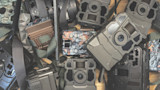
Policy & Legislation
What's the Future of Trail Cameras in the West?

Big changes are on the horizon for trail camera use in the state of Utah, following similar, recent bans in Arizona and Nevada.
In an early January decision that divided the state’s hunting community, the Utah Wildlife Board voted to prohibit the use of all trail cameras during fall big game seasons...
Travis Hall
Jan 20, 2022
Read More
Play Now
Wildlife Management
Annals of Wildlife Management: The Problem with Auction Tags

When auctioneer John Bair finally stomped his cowboy boot on the stage of the 2016 Western Hunting and Conservation Expo and yelled “Sold!” there was a moment of stunned silence in the Salt Lake City ballroom. Then pandemonium as the crowd of hunters cheered, whistled, hooted and high-fived. They...
Andrew McKean
Mar 18, 2019
Read More
Play Now
Save this episode
Conversation