Popular searches
Articles
Series
Topics
Shop
Recipes
The MeatEater Podcast
Ep. 910: Steve Eats Narwhal, Wetlands in Distress, and Wag Bags!
Play Episode
1h31m
The MeatEater Crew discuss: Steve’s News Flash from the Arctic; Open Fields case in Pennsylvania; pen-raised pheasants in Montana; wolf corrections; pooping in bags; wolf corrections; possible changes to wetlands; and more!
Connect with Steve and The MeatEater Podcast Network
00:00:04
Speaker 1: Welcome to the news show.
00:00:06
Speaker 2: Today, we're gonna make Nate riad a correction on his Wolf coverage. Then we're gonna get into a big change for game wardens in Pennsylvania. Randall is gonna explore people packing out their own poop. Call is here to talk about some big trouble with wetlands.
00:00:22
Speaker 1: And finally we're.
00:00:23
Speaker 2: Gonna hit a possible expansion to a controversial pheasant stocking program here in Montana.
00:00:30
Speaker 1: Well that we're on to the news. Okay, you might have noticed that Steve Ranella is not sitting in his seat. Oh yes, where, We don't know where he is.
00:00:45
Speaker 2: Actually, Steve is off doing a super cool filming project way up north, so he's gonna miss the next couple of shows. But he did send us a video to check in with us and let let us know what's going on up there, up there where he's at.
00:01:00
Speaker 1: You got that video, Yeah.
00:01:01
Speaker 3: Take a look.
00:01:02
Speaker 4: Okay, we have we have a we have a news flash from none of it.
00:01:06
Speaker 5: I'm here with dirt.
00:01:09
Speaker 4: And our friend Avery is cutting off. Can explain, but I'll explain what you're doing. But tell everybody the tell everybody the Inuit words.
00:01:18
Speaker 6: So I'm cutting up a lung wook or doo glic, which is normal. And this was called a couple of days ago in funding lit North Faffin.
00:01:28
Speaker 5: So now, but look at the skin on that thing.
00:01:32
Speaker 4: You would think that was like a made like a like a marble countertop. The skin on that thing, and you're cutting it. Sorry, but I just wanted to comment on the wildness of that skin.
00:01:46
Speaker 6: So now I'm just cutting off the fat the blubber because if you have too much you might get a stomach ache. Oh really yeah, and then I'm cubing it and I prefer to cut smaller. I find it tastes better.
00:02:05
Speaker 7: But everyone hunts their own perfect You're almost cutting through, so I'm.
00:02:12
Speaker 6: Just cutting the hard part.
00:02:20
Speaker 5: People different depths or do you mind telling everybody? Do you mind telling everbody what that is?
00:02:28
Speaker 3: This one's the skin and the blubber and that's just that's a frozen chunk of caribou which you just eat like that.
00:02:36
Speaker 5: Yeah, and they're cooking up. Can you go check off those sealed rips far these plans and that's what I could check.
00:02:45
Speaker 1: Wow, they got it all there.
00:02:51
Speaker 5: Yeah, we're back.
00:02:53
Speaker 4: Oh, this is the only man in the planet who I have ever met who had a king eider for a pet.
00:03:03
Speaker 7: P.
00:03:03
Speaker 4: Now, yeah, that refers to it's it's dried arctic char, But that refers to how it's cute.
00:03:10
Speaker 3: Speaks Spanish the same way.
00:03:11
Speaker 5: Okay, So that doesn't mean that it's cut that way. Smoke. That's a big art charge that.
00:03:20
Speaker 4: And here and this is a crazy one right here.
00:03:26
Speaker 5: Get look at that. That's broccoli.
00:03:30
Speaker 8: See right there they have they walk down our our our host here, they can walk down and they run a net across that little bay, that little inlet right there and catch char out of the little gill net.
00:03:45
Speaker 5: We were down there last night and they had.
00:03:47
Speaker 8: Six char, which is that's the ones you have right from that from that net there.
00:03:54
Speaker 5: Okay, right dirt, let's go already try it? Already tried it.
00:03:58
Speaker 1: I haven't tried it.
00:04:01
Speaker 8: What is it?
00:04:03
Speaker 9: Narwal?
00:04:05
Speaker 3: Well there, it's not the most adventurous eater either.
00:04:07
Speaker 8: Yeah, really not expectant, but really good.
00:04:16
Speaker 5: It's good. Can I try just a pure chunk of that fat? How bad could it be?
00:04:23
Speaker 6: Yeah?
00:04:26
Speaker 2: Anybody ignoring the warnings of locals to not do it, he's gonna put his chance.
00:04:33
Speaker 5: I mean, what would be something bad? Would happened to be.
00:04:36
Speaker 6: Going to get a stomachache.
00:04:37
Speaker 10: Well, I can make sure that that is good, sounds better straight up?
00:04:45
Speaker 5: Try that man, hagu a little sliver, that's good.
00:04:49
Speaker 11: Dirt is gonna try just the pure fat, which I think is the is the good way to go.
00:04:54
Speaker 5: Narwhale whiskey was good. If it's better than that hot.
00:04:57
Speaker 11: Dog, what do you mind while we're making this news segment, if we try to blue a little piece of blue, this is breaking news.
00:05:09
Speaker 5: He's right, that is delicious.
00:05:12
Speaker 10: Dipping in.
00:05:14
Speaker 4: Well, no, but that's just like like melts, melts in the mouth.
00:05:19
Speaker 5: Chad was saying, it's it's good thought out man.
00:05:23
Speaker 1: I feel that.
00:05:25
Speaker 3: You like it.
00:05:27
Speaker 5: Look at that.
00:05:30
Speaker 3: Ball.
00:05:33
Speaker 5: You like the same cutting method? Do people like?
00:05:43
Speaker 4: Is it generally accepted that narwal is better, blooga is better?
00:05:49
Speaker 5: Or is it just up to you up to the person.
00:05:55
Speaker 7: Growing up, I love the beluga more than narwal, But now I prefer narmal more than.
00:06:01
Speaker 5: Because what happened.
00:06:03
Speaker 6: I like the taste.
00:06:04
Speaker 5: Better with normal.
00:06:06
Speaker 8: OK.
00:06:07
Speaker 7: For me, I like more because in my hometown we have deeper waters and we don't really get the lugas, so it's like different when you're used to Narwal like you become proud of it. It's like, oh, that's from our home. And so like last a few summers ago, they had a bunch of Belugas come into our bay, which is rare, and hunters caught them, but they were like of the meat, so they sent it all here because they're.
00:06:34
Speaker 5: Used to Narwal.
00:06:36
Speaker 6: It's just what they're used to.
00:06:46
Speaker 1: We're getting a whole dang meat eater episode.
00:06:48
Speaker 5: Here, big time.
00:06:53
Speaker 6: It's big.
00:06:55
Speaker 10: Yeah, if you're listening to this, you should just hop on YouTube and watch.
00:06:58
Speaker 12: It while you're driving.
00:07:02
Speaker 5: Are very good? Then, am I right?
00:07:05
Speaker 8: The blue to soft?
00:07:08
Speaker 6: Well, this one is softer because it's not an adult, so.
00:07:12
Speaker 5: There's variability from age. What are you working on that?
00:07:18
Speaker 4: This is.
00:07:20
Speaker 3: The hold up?
00:07:22
Speaker 7: So I'm just gonna light it to welcome you guys.
00:07:27
Speaker 3: And so this was our main.
00:07:31
Speaker 6: Source of heat and.
00:07:35
Speaker 2: Light.
00:07:40
Speaker 6: Also to dry the men's clothing.
00:07:45
Speaker 5: Oil.
00:07:46
Speaker 2: Yeah, traditionally it would be with steel oil or beluga you would.
00:07:50
Speaker 3: Render it down.
00:07:56
Speaker 6: And then.
00:08:00
Speaker 3: Yeah, so.
00:08:04
Speaker 13: Now we just use whatever oil is available because it's sea beer and.
00:08:09
Speaker 6: It's less stinky.
00:08:11
Speaker 14: Yeah, fladies and gentlemen, where that's the news flash from none of it And and can can you guys teach us how to say so long suckers or goodbye?
00:08:25
Speaker 3: And there's no real word for goodbye.
00:08:31
Speaker 6: There's like you see you later, like or you in the future, in.
00:08:41
Speaker 5: The future, all right, in the future. That's good.
00:08:48
Speaker 8: Okay, woman, this is a second and this is a long goodbye.
00:08:51
Speaker 5: It's a long goodbye. I was trying to understand, like I'm trying to understand how to say how to name the language.
00:09:02
Speaker 14: Yeah, okay, so to say goodbye and one more time to say goodbye, and the nook to.
00:09:13
Speaker 6: Goodbye was the one.
00:09:24
Speaker 1: Goodbye see you later. All right, there you go.
00:09:30
Speaker 2: There's the news from the Great White North, from from old Steve Vanilla.
00:09:35
Speaker 3: Cal Brody.
00:09:38
Speaker 1: You've been a dad for a couple of months. Now, what's that like? You got some advice for a soon to be dad? Nate over there?
00:09:44
Speaker 3: Oh, yes, you know. Today is a good day to do it because my morning started at three forty five my day. I'm well into my day from three forty five am. And my biggest so everybody's wealth and knowledge, right, and they're always like, oh yeah, here's all the things.
00:10:03
Speaker 2: But for baby stuff, I don't I can't remember any of them. Phil, can you remember any of the baby stuff?
00:10:09
Speaker 3: Oh? No, wiped it from my mind. My thing that nobody mentioned and I was not prepared for. But this is all like, well, of course that's the way it is. Stuff. But like I've run into many people who are like baby crazy right now and they're like, well, this is how it's going to be, and I'm like, oh, that's funny. The thing that you need to have, like just be mentally prepared for, Nate, is the fact that you are going to be fully consumed with this little parasite and it is demanding and you have very little grace as to when this thing needs what it needs, and you'll be consumed with like satiating those needs. There will be zero recognition of you whatsoever. So it's not like you're not being thanked. It's like you you're just a non You're just a thing that shows up and does the thing, and there is no recognition of you at all.
00:11:21
Speaker 10: Not at all by the wife, by the baby.
00:11:26
Speaker 3: There's no recognition of mom from the baby, right and and like we're full breastfeeding, so you would think that there would be like some recognition and there's just not.
00:11:37
Speaker 15: Like the kid does not and say like appreciate you.
00:11:40
Speaker 2: Yeah, imagine there's something going on in there that the baby is not capable of communicating as well.
00:11:49
Speaker 3: But I see, but there's no like they can't even hardly see, right. They're like not really, they're seeing like shapes and some colors and things, but they're not seeing it.
00:11:58
Speaker 1: They're not going to give you an odd dad, you're the man.
00:12:01
Speaker 3: And which, right, is like, oh, of course they're not going to do that, but like being able to be like, oh you would kind of be nice, right, And all the all the girls that are all like twitter painted with having babies, they're like, oh, well we read that there's this bond that's established. And I'm like, cool, you can't see it, you can't smell it, but if that book tells you it's there, you better hang on because this thing is gonna like.
00:12:32
Speaker 15: It's it's going to chew you up and spit you out.
00:12:34
Speaker 3: Yep. And then about nine days ago it was like almost like a call and response, like the kids like, oh, I'm tracking you, and here's a smile that is not related to the kid taking a poop and you're like, oh, I needed that.
00:12:55
Speaker 2: And and it's like it is there is a human in there.
00:13:00
Speaker 3: Exactly exactly because I'm fully like, never had anything against kids, right, but like the whole good thing. I'm like, I'm like, I'm just not impressed with the human child, right, I'm like, Antelope can get up and sprint in you know, twelve hours, Like like this thing is so helpless, helpless. Like the only thing that's got going for it is it is portable and packable. Like that's how we got to where we are today, is you can pick up, pick it up and.
00:13:34
Speaker 1: Run then anything like that.
00:13:38
Speaker 10: I had not read that yet.
00:13:40
Speaker 3: Yeah, so that is that is the thing. You just need to be mentally prepared. Like there's a lot of like wonderful things about it, but just be prepared for the fact that.
00:13:48
Speaker 15: For the sheer ingratitude, yeah child.
00:13:51
Speaker 3: Yep, there is no recognition totally whatsoever. Yep, yep. Okay, And you're gonna be doing all this, you know, you'll you'll do whatever it takes to like sue that thing, and uh, you know, you get way down the no sleep trail and it's You're like, I'm putting in serious effort here and this thing is only going to respond negatively the next time it needs something, right, yeah, right, and then you get smiles and then eventually, you know, I think we'll get some laughs, which will be super cool. And we were just talking this morning that like, I'm really looking forward to this thing tasting real food.
00:14:31
Speaker 1: Yeah, man, I know it's cliche, but.
00:14:36
Speaker 2: Time flies, like I can't even like I can hardly like remember the details of the baby thing, but like now I got a couple of hunting buddies.
00:14:48
Speaker 1: Yeah, and pretty soon those.
00:14:49
Speaker 2: Hunting buddies will be off to college. Sad man goes fast.
00:14:54
Speaker 3: Yeah. Yeah, So I mean I'm looking forward to like the teaching. Yeah moment. I think it's fantastic to have a puppy at the exact same time, which everybody's like, oh, you guys are stupid, blah blah blah blah blah. Well, the puppy is instant gratification, right. You get that puppy home, you feed it one time, and it is like, oh my god, I love you. You're the best thing ever. You teach the puppy, it's like, oh, this is great. And then there's the baby and you're.
00:15:24
Speaker 15: Like staring at you dead glassy eyes.
00:15:26
Speaker 3: One day this will pay off. So it's instant gratification next to long long term payout.
00:15:32
Speaker 1: That's it.
00:15:32
Speaker 10: That's it's like diversifying. Yes, exactly, exactly, that's great advice, A hot take.
00:15:37
Speaker 12: I like it.
00:15:38
Speaker 2: I knew cow would have a unique situation. All Right, it's time to move on to your news.
00:15:50
Speaker 1: There we go.
00:15:50
Speaker 3: I like that sound pigeon flying into a bar.
00:15:54
Speaker 12: That's what I was so, I was going for the jail door just clanks.
00:15:58
Speaker 2: Your news brought to you by these here banished suppressors. Know we talked a little bit about these in the last show. Maybe these things speaking of kids, like, these things are awesome if you've got if you've got some youngsters shooting big game rifles, the noise, the recoil reduction, it's it just makes life a lot easier, uh.
00:16:23
Speaker 1: For kids shooting shooting a big game rifles.
00:16:25
Speaker 2: So another reason to get one, Nate, you've got some uh, you've got some explaining to.
00:16:32
Speaker 1: Do on your discoverage.
00:16:34
Speaker 10: I do, uh, Phil, if you don't mind pulling up that chart for our listeners. What we're looking at is the Dunning Krueger effect or Dunning Krueger curve, And on the y axis, you've got confidence from low to high and on the right axis or the X axis, you've got competence from knowing nothing to a guru. And essentially what this curve is showing is that when you first start learning about something, you have extremely high confidence. You think you know what you're talking about, but you actually don't. And then you reach this peak, which labeled here is the peak of Mount Stupid, when you realize you don't actually know anything, and you go down that curve to the Valley of Despair and you realize, I don't know anything about this situation, and I'm going to try to learn.
00:17:15
Speaker 3: Now.
00:17:16
Speaker 1: Are we talking about you here?
00:17:17
Speaker 3: Yes, I am on this curve.
00:17:20
Speaker 1: Are you where are you at?
00:17:22
Speaker 10: I would say, based on the listener emails we got on my Wolf coverage, I'm slowly cresting the peak of Mount Stupid, and I'm realizing I don't know anything about this topic.
00:17:32
Speaker 12: I think you're in the Valley of Despair.
00:17:34
Speaker 10: Yes, I entered the Valley of Despair over the last couple of days.
00:17:38
Speaker 1: So not even climbing out of it, just.
00:17:40
Speaker 10: Starting to climb, and it's a tall mount. And so we got a bunch of emails. I think the best one was from Dave, and I'll read it out. Hello there, my name is Dave. My father and I were the first to have wolf depredations in Colorado. I enjoy listening to your podcast, and I believe you do a very good job of being as accurate as possible regarding your conversation about wolves frequently predating on cattle, where a quote credible source claims that the ranchers were baiting. John Smith not his real name.
00:18:07
Speaker 1: Let's be clear. He's talking about baiting wolves.
00:18:10
Speaker 10: And causing intentional conflict, is what I say.
00:18:13
Speaker 1: Say to get a depredation claim on yes, cattle.
00:18:17
Speaker 10: John Smith, not his real name, is who I assume your source is, as he's the one who started that rumor, did a site evaluation on the ranch that he accused of baiting prior to those accusations and said they were taking all necessary steps to avoid conflict. He later changed his opinion when he was unable to reduce conflict, as he was hired by the state to do so. I can say from personal experiences that with that individual that he was only interested in getting us to stop talking to the press and not so much about conflict mitigation. I will admit he was handed an impossible task, but he handled the failure poorly. Furthermore, the Copper Creek pack showed a much larger interest in cattle than other packs in the state. They continue to do so when they were moved to another part of the state. Unless your stance is that the ranchers are only baiting this past everywhere they go and not other packs, it's fair to assume some packs have developed a preference to livestock. Thank you for reading this and for your and despite my disagreement with the statement, please keep up the good work over there. Met Eatter, I think this is a great note.
00:19:15
Speaker 2: All I got to explain disagreement with this statement. What's he disagreeing.
00:19:21
Speaker 10: He's disagreeing with the fact that I said that that certain wolf packs do not seem to develop a taste for cattle. All I know is that the Copper Creek pack, which was brought from Oregon, killed cows in Oregon, and they killed cows in Colorado, and that's all I know about that.
00:19:40
Speaker 1: That's kind of a correction and a kind of an apology. But I don't know.
00:19:44
Speaker 3: I do. I think the curve your graph there is important, right because there's people who will cling to mount stupid and work their butts off to justify they're once previously confident position, instead of going down into despair and digging out through enlightenment and then adjusting their position and saying, hey, here's what I know now.
00:20:20
Speaker 2: Which and and you're beginning the journey towards the plateau sustainability.
00:20:25
Speaker 10: It's so dude, I have no idea what's going on with wolves. I'll keep working.
00:20:29
Speaker 13: On no matter what they eat cows, no matter what we talk about on this podcast, I always know that there's someone out there who knows way more about it than me, and I probably sound dumb unless we're talking about things like.
00:20:44
Speaker 3: Guns, what you personally did last night.
00:20:46
Speaker 15: Yes, what happened to me in the bathroom last night.
00:20:53
Speaker 1: We try to do our best.
00:20:54
Speaker 2: We're going to make some mistakes. We'll do our best to correct them. And if we need to, you know, take a dive down into despair and then climb back out, will do it.
00:21:02
Speaker 12: And just so no one gets the wrong idea.
00:21:05
Speaker 13: There was a momentary scare last night when I thought I might be the latest victim of taco bells line.
00:21:10
Speaker 1: We're gonna get to that.
00:21:11
Speaker 12: Yeah, we'll go to spoiler spoilers.
00:21:14
Speaker 13: I just didn't want I didn't want to be too.
00:21:18
Speaker 3: Thanks for writing in.
00:21:20
Speaker 10: Appreciate the great corrections and keep them brief. You're more likely to get aired if they're brief.
00:21:26
Speaker 1: Yeah, like this, This next one's pretty short.
00:21:32
Speaker 2: So uh, we've got we've got someone who he's got some concerns about hunting and c w c w D zones, which is there's not many places that aren't cw D zones these days, he writes. My family does all of our own butchering and processing. That's great, and over the years we've invested a lot of time, money, and effort in becoming efficient hunters and processors. Between the cost of a lease, equipment, fuel, processing supply, and the added risk of cw D, I've started asking myself whether hunting is still the most practical and economical way to.
00:22:07
Speaker 1: Fill the freezer Financially.
00:22:10
Speaker 2: It almost seems like it would be cheaper to buy quality meat from a local butcher. So here's my question, how would you approach hunting economically if you lived in an area where CWD is an endemic, meaning it's like high prevalence rates you got to get if you kill a deer get it tested. There's a decent chance that's going to come back positive for CWD. Would you start traveling to hunting areas with lower CWD prevalence even if it means spending more on fuel and time? And at what point does traveling become the more economical option, both financially and in terms of confidence that the meat you're bringing home will actually fill the freezer that comes from Kyle God, if.
00:22:56
Speaker 3: You're hunting economically, you're doing something different than I've ever don.
00:23:00
Speaker 1: Y honest or someone actually did this came up.
00:23:04
Speaker 2: This economically like sustainably hunting thing came up in a recent episode. I think it might have been Honest was covering something. But basically, like the only way you're gonna like like save money or break even is by hunting in your backyard right like like hardly any driving, processing your own meat like this guy's doing so that's kind of.
00:23:25
Speaker 12: Like not investing in new gear.
00:23:27
Speaker 1: Yeah, it's kind of like.
00:23:29
Speaker 2: The whole like saving money thing, as much as much as it gets talked about, it's not really a thing.
00:23:34
Speaker 1: It's just like you're choosing.
00:23:36
Speaker 2: To eat wild game over domestic meat is basically what it comes to.
00:23:41
Speaker 3: I think the other thing too, right, is like this is my entertainment dollar, like that we had an offline conversation about things the lady wants to do for entertainment, and I'm like, well, that's not where my entertainment dollar goes, right. It also goes into hunting. Yeah, as does my mental health dollar, my physical fitness.
00:24:03
Speaker 2: Some people spend money on going to the beach or disney World or whatever. We spend a little money on going hunt. Like I get the like the debate over like should I even bother?
00:24:17
Speaker 1: Because of CWD.
00:24:19
Speaker 2: There are some areas where like you know, in Doug Dern's zone of Wisconsin, like your rolling dice if you shoot a deer right, and it can start to feel frustrating when you get that test result back and it's positive and you can't eat the thing. You got to make a choice, like if it's worth it to you or not. I would hate to see people like deciding just to hang it up because of chronic wasting disease.
00:24:45
Speaker 1: We've got it here in the valley.
00:24:47
Speaker 2: It's it's maybe not as high prevalence as some areas, but it's concerning. You know, I shoot deer here. It's a it's actually a very cheap economical way for me to kill a couple of those close to home.
00:25:01
Speaker 1: I get them tested. I've been lucky and haven't had any positive results, and I'm gonna keep doing it.
00:25:07
Speaker 2: Like, I don't know if you've got anything more for this guy. Like, I just think it's it's like a reality for hunters that all hunters get, like kind of got.
00:25:17
Speaker 1: To confront how they're gonna approach it these days.
00:25:19
Speaker 13: Yeah, And I think there's not really enough if we're actually running the numbers and trying to figure out if it makes sense financially to travel more two areas with lower prevalence. Does that mean driving an hour or does that mean driving.
00:25:35
Speaker 1: Five hours exactly.
00:25:36
Speaker 12: There's not really.
00:25:37
Speaker 13: Anything to go on there, but I guess, like, and also the comparative rates of infection in those two places, Yeah, do you have a one in three chance if you drive an hour or one?
00:25:51
Speaker 12: You know it's but I don't know.
00:25:53
Speaker 13: I I think, like your larger point that you'd hate to see people hang it up because they're frustrated by not being able to eat what they kill. That's that is just the reality of where we are right now.
00:26:06
Speaker 2: Yeah, And it might people might not like it, but you are kind of still helping out by shooting deer that are CWD.
00:26:17
Speaker 3: Tags and licenses.
00:26:18
Speaker 12: Yeah.
00:26:18
Speaker 2: Yeah, and Cal, you made a good point that maybe what wouldn't be here or it wouldn't be quite as bad if.
00:26:25
Speaker 3: If people were actually out there harvesting dose.
00:26:28
Speaker 13: Yeah, it's not going to get any better if people who live in the high CWD areas all decide.
00:26:33
Speaker 12: To heart hunt.
00:26:34
Speaker 1: Yeah, exactly.
00:26:35
Speaker 12: Outside of those area you're.
00:26:36
Speaker 2: Just gonna get higher and higher prevalence rate. So I don't know if we answered this guy's questions or not keep hunting.
00:26:44
Speaker 3: Keep keep hunting. Yeah, and yeah, I mean i'd be great if Doug published all of his data because I think they're at like an eighty percent prevalence rate. So it's like, yeah, it's I mean, you are far more likely to kill a deer with c to BE'D even not yep, yep, but they are are still getting uh, non positive deer out there, and the population in Richland County or.
00:27:12
Speaker 1: Is I think that's it?
00:27:13
Speaker 3: Yeah, like does not seem to be going.
00:27:16
Speaker 2: Down right, So there you go, Kyle, Uh, keep shooting those deer.
00:27:22
Speaker 1: Thanks beating those deer all right, We're ready for the news. That's it. That's all you got filmed.
00:27:34
Speaker 12: What happened at the end?
00:27:35
Speaker 9: I got eaten by some sort of animal, presumably a cat of some kind.
00:27:39
Speaker 3: Yeah, and the dude doing doing morrise code. We don't know what happened to him, A mystery.
00:27:46
Speaker 15: He probably died forty years ago.
00:27:50
Speaker 2: All right, we're gonna talk about this big Pennsylvania Supreme Court decision that rejects opened the opens field doctrine for game wardens. Okay, before I get into that, I'm gonna explain open fields in the Fourth Amendment real quick for people who aren't familiar.
00:28:10
Speaker 1: Uh, we've talked about.
00:28:12
Speaker 2: Open fields before, but I'll give you the quick rundown. It's an open fields doctrine is a legal principle established by the US Supreme Court that allows law enforcement officers to enter and search privately owned open land without.
00:28:26
Speaker 1: A search warrant.
00:28:28
Speaker 2: Applies to fields for its pastures, and undeveloped land, even if the property is posted with a no trespassing sign. It does not apply to a home's courtlage, meaning the mediate area surrounding a residence, like outbuildings things like that. They remain protected by the Fourth Amendment. The Fourth Amendment protects people from unfair and unreasonable searches and seizures by the government. It also states that, with certain exceptions, police need a warrant to search or search your property or take take things. So Pennsylvania got rid of it recently. There's a lawsuit. And before we get into that, game wardens and states that operate under the open fields doctrine, they typically have more leeway. They operate with more leeway than other law enforcement personnel might. That's like open to interpretation, but it's I think that's a generally like correct statement. If you think I'm wrong, you can write in about it, or these guys will correct me if I'm wrong. Basically, what it means is like, let's say a game wardens driving down a country road thirty minutes before shooting light. Here's some gunshots before or after legal shooting light. Here's some gunshots. Sounds like a rattat tat kind of shotgun shooting thing.
00:30:01
Speaker 1: Waterfowl seasons open. He knows there's a pond next to a cornfield on this piece of.
00:30:07
Speaker 2: Property he's driving by. He could then walk in there and see what's going on. Correct, Like is that fair to say.
00:30:16
Speaker 3: Just from the sound, I thought it wasn't. I thought they had to see stuff going on. Yeah, that's a tough one.
00:30:27
Speaker 2: Anyway, Maybe I've already screwed this up, but okay, let's say, well.
00:30:32
Speaker 3: So the thing that I know to absolutely be true is if your state operates with the open fields doctrine, it's still up to your game agency or and law enforcement agency to say how that's going to be interpreted in your state. And so there are states that have a more liberal interpretation of how they're going to operate. And then you know the crazy thing like Idaho just open fields and they had a very narrow Yeah, it's like unless it is like egregious in your face, that law enforcement officer is not going to walk across the property without Yeah, we'll talk a little more about that.
00:31:14
Speaker 13: But not to not to yep, further confused things. But I've often heard when examples are given about open fields, I've often heard the sound of a gunshot as.
00:31:25
Speaker 15: Being no no, sort of no no, like being.
00:31:27
Speaker 13: The instigating fast That's what I've heard. That's I would agree with you that that's.
00:31:31
Speaker 2: Another example might be like game wardens driving down the road, sees a deer hanging in a garage deer seasons not open, yes, something like that, yep.
00:31:40
Speaker 3: Or a bull elk in the case of Montana, sure yep.
00:31:43
Speaker 13: Yeah, he doesn't need to go to a judge and get a search warrant to go investigate that.
00:31:49
Speaker 2: Now, before we get into this Pennsylvania thing, I want to make something really clear and covering this story where like, in no way trying to portray game wardens or conservation officers as the enemy, because they're they're not.
00:32:02
Speaker 1: They're doing a vitally.
00:32:03
Speaker 2: Important job protecting people in wildlife, and they're also performing difficult, sometimes dangerous law enforcement duties like catching poachers that are stealing wildlife from you and me. And I'm willing to go way out on the limb to say that, Like when it comes to like private property rights, most game wardens in most places like Buy Necessity have worked really hard to cultivate a good working relationship with the private landowners in the area they patrol. Like it's just like they're not operating in a way where they're going to have these antagonistic relationships with landowners.
00:32:45
Speaker 1: It's just going to make their job impossible. So I just want to.
00:32:49
Speaker 2: Like get that out there first before we get into the particulars of this case. We'll get into the the actual case and then get into the like the pros and cons of it after I talk about what happened in Pennsylvania. Pennsylvania Supreme Court decision just this month game wardens was must generally obtain a warrant before entering posted, private posted private property. A Supreme Court decision rejected the open fields doctrine. The federal open fields doctrine still exists under the US Constitution, but in Pennsylvania it was a seven zero Supreme Court decision Punksatani Hunting Club Incorporated versus Pennsylvania Game Commission, So it significantly spans private property protections in the state of Pennsylvania.
00:33:47
Speaker 1: The court ruled.
00:33:50
Speaker 2: Officers again must generally obtain a search warrant before entering clearly posted, fence gated, or otherwise marked private property to investigate wildlife violations. The decision overturns Pennsylvania Supreme Courts two thousand and seven ruling Commonwealth versus Russo, which had allowed game wardens to enter open.
00:34:13
Speaker 1: Fields on private land without a warrant.
00:34:16
Speaker 2: Now, the case background is there's a couple of hunting clubs in Pennsylvania, the Punkstani Hunting Club and the pitch Pine Hunting Club that challenged the Game Commission's authority to enter posted lands.
00:34:28
Speaker 1: There's some history here.
00:34:30
Speaker 2: The clubs alleged that Pennsylvania Game warns entered their posted private posted property dozens of times over several years without permission or a search warrant. According to court filings, they hid in camouflage on club property, conducted surveillance with binoculars, installed trail cameras on the club's land without without the owner's knowledge or consent. Now this is this is like more recent happenings. This all goes back to a twenty thirteen incident after a game warden confronted a member of the pitch Pine Hunting Club over allegedly feeding bears. The member later learned that the officer had been secretly observing activity activity on the club's property for several days. No citation was issued, but the club members objected to you know, the the activity that was going on since twenty thirteen, Game Commission officers entered the club's posted private property fifteen to twenty two times. I'm not sure about the why there's a number that that number is not exact. I'm sure if you got into the details of the court case you'd understand.
00:35:45
Speaker 1: Why it's not exact.
00:35:46
Speaker 2: But enough times that they viewed it as a major problem, again without consent a warrant or probable cause. During some of those entries, game warden Mark Gritzer issued citations to individual hunters or club members for alleged violations of the game Code. This Supreme Court opinion doesn't specify how many citations were issued, or whether people were convicted or anything like that. The club's lawsuit was not an appeal of those those violations or citations. It just it's trying to get Their goal was to get a declaration that the Game Commission can't just like come onto their property whenever they want. So obviously they they they won the argument. Pennsylvania Supreme Court ultimately agreed that the state constitution. State constitution provides greater privacy protections than the federal Open Fields Doctrine and requires warrants. So that's that's where we're at right now. What wardens can still do, uh, they can still enter unposted, unmarked private land without a warrant. In some circums stances, observe violations occurring in plane view from lawful locations, rely on recognized exceptions to the warrant requirements such as consent or exigent circumstances. So that explains like how they can still get on private property, like yeah.
00:37:18
Speaker 3: There's like an emergency, yeah, sitution situation, so like they're they're compelled to go help in a medical situation that they observe or you know, an active crime obs from the county road YEP.
00:37:37
Speaker 2: So, largest expansion of private property rights in Pennsylvania wildlife law in decades. It's going to require, uh, some adjustment for how game wardens and conservation officers do their work investigating suspected hunting and wildlife violations, and it could influence similar legal challenges in other states. Supporters of the decision like are generally like very much in favor of Fourth Amendment constitutional private property and privacy rights.
00:38:16
Speaker 1: That's basically what it comes down to.
00:38:20
Speaker 2: Getting rid of opens fields treats conservation officers more like other law enforcement officers that when conducting searches. So it's like there's a Fourth Amendment rights argument the people that are supporting the decision. Critics say the ruling can make it a lot more difficult for game wardens to do their job. Requiring warrants slows things down, especially in remote areas where a game warden knows there's a violation going on, he's trying to investigate it, but he can't, so he's got to drive all the way back into town and track down the district attorney, a judge, get a warm go back, and by the time he's gone back, you know, any evidence of a crime or or the actual crime is just like.
00:39:07
Speaker 1: Not happening by the time they get back.
00:39:10
Speaker 2: So that's that's what critics argue, you know, for the open fields doctrine. I did some research on other states. I kind of like, I didn't I guess I thought this was almost like a.
00:39:24
Speaker 1: First time thing with Pennsylvania.
00:39:26
Speaker 2: But there are at least nine to ten other states that have rejected the open fields doctrine. Mississippi, Montana, New York, Oregon, Idaho, Tennessee, Vermont, Washington, Pennsylvania.
00:39:42
Speaker 1: South Dakota.
00:39:45
Speaker 2: They recognize and operate under open fields with very strict limits on what the conservation officers can actually do and cal you kind of alluded to that.
00:39:53
Speaker 1: And that's the way it is in Idaho to.
00:39:56
Speaker 3: Yeah, I mean it was prior to this. Yeah, and that's like what was interesting about I mean the other interesting thing that the new Court decisions are all being litigated pro bono by Institute for Justice. I would really I don't And this is something that I don't understand, is what's their stake in this?
00:40:24
Speaker 7: Yeah?
00:40:24
Speaker 10: Actually I spoke with that that litigator. Okay, he reached out after he saw Ste's video and he is purely a Fourth Amendment guy like this, it just happens to be the game wardens are at the crosshairs of this thing. And he's like, if there was a if there's a DA agent who was using open fields doctrine to do something with a drug bust, I would litigate that because I think the Fourth Amendments so important and who doesn't have a bone to pick with hunters or game warnings. These are just the situations that are arising.
00:40:52
Speaker 3: Yeah.
00:40:52
Speaker 10: So he was the one who litigated rain waters in Tennessee.
00:40:56
Speaker 3: Yeah. Yeah, and there are yeah, there's all sorts of instances, right, It's kind of like when we talk about individual animals. I named this mountain lion, So it's really important and now it's emblematic of the entire population. Yeah, there's certain instances where I think most people would all agree like, oh my god, that is a gross overstep of authority and abuse of power. But the other thing that we have to balance this is it is all public wildlife. And just like a super quick story Idaho, that one was brutal for me because it is such. It is the most serious migratory state I have ever hunted. Like you see, you're like, oh my god, this is what a migration looks like. Yeah, and you know, a state known for big, awesome mule deer. One time I got permission to hunt on this place. The guy's like, oh, you like mule deer. Look in the shop and there's this row of dusty almost forgotten, truly giant muley racks like like things today that would just blow blow people's mind. And it was, you know, generations, and they were like, nobody knows about them. It is safe to say nobody knows about them. There's a whole Robbie Denning's book on like big Bucks Idaho that these things aren't in there, right, But it's because.
00:42:26
Speaker 1: This rack your blood boiling. I bet this ranch.
00:42:30
Speaker 3: Is in and I was hunting birds right this rash, this ranch is in like when it was the heavy snows forever. This is where all the big bucks end up. And it is feasible with the state of mule deer and muldier genetics right now, that if you had bad actors, yep, they could, they could literally eliminate the ability for those types of g is to be passed on.
00:43:01
Speaker 2: Or at least make some serious bucks killing bucks like allowing.
00:43:06
Speaker 3: Oh you know what I mean, Yeah, I mean that that too. But if it's like, you know, and I was hunting turkeys onto place this year, just for instance. It was awesome. It's huge, and I was driving out and you know, it's like calving season during turkey season, so all the ranch activities on one place. Nobody's on the whole rest of the ranch. And I was like, God, you could just live out here and nobody know about it. And sure enough, I get stopped on the way out, They're like, what are you doing. I was like, I was hunting turkeys. They're like, oh, okay, great, didn't know. I was like, yeah, Like you get lost back there, right, So there are many instances where this isn't just like a crazy theory, right, And part of law enforcement on the landscape is wildlife management, which is a public So if it is not your buddy at Western Justice or Institute for Justice, right, this isn't a solve for anything. In my mind, this is like ripping open this can of worms, and we need the ability to regulate the take and management of public wildlife. It is a public resource in the United States. Yeah, so if this isn't the answer, what is it?
00:44:28
Speaker 1: Yeah, I mean that that's the question.
00:44:30
Speaker 2: Is enforcement becomes kind of impossible in certain situations.
00:44:36
Speaker 6: And.
00:44:38
Speaker 1: Like part of the the Like this kind of gets away from what we're talking about, but part.
00:44:45
Speaker 2: Of the the effectiveness of game wardens is is knowing they could just show up at any time, knowing that maybe they won't show up, but knowing that they could be glass and you from a county road and you're.
00:45:01
Speaker 1: Two miles up the hillside or whatever.
00:45:03
Speaker 2: Like, knowing that they're out there doing their job like makes them effective even when they're not around.
00:45:10
Speaker 3: It's part of the deterrent puzzle. Yes, high or whatever.
00:45:14
Speaker 2: If you're you know, completely hidden from view on private property. Look, most hunters aren't bad actors, but there are bad actors out there who would take advantage.
00:45:26
Speaker 1: Of this situation, I feel like unfortunately.
00:45:32
Speaker 10: I think one other piece he raised that was interesting is the difference between state and federal enforcement. Sure like because of the supremacy clause the Constitution, the Fourth Amendment, when when federal officers are enforcing federal statutes, they can still use open fields throughout the US, but state officers cannot unless they're cross deputized. And that is another thing that's going to get real muddy here now.
00:45:54
Speaker 1: Yeah.
00:45:55
Speaker 2: Yeah, And there are situations where hunters would have to deal with with federal officers for sure, on wildlife refugees and things like that, but uh, private land, you know, I'm not sure how that would play out.
00:46:09
Speaker 1: So there you go.
00:46:10
Speaker 2: I think if I had a crystal ball like Steve would, I would say probably more states are gonna go this direction if I if I had to make a prediction.
00:46:24
Speaker 1: So we're done with that crap. Let's move on to Randall's crap.
00:46:29
Speaker 15: Thanks Brody.
00:46:33
Speaker 1: Man.
00:46:33
Speaker 13: I came across this story and I just couldn't look away. There was a coverage of a dissertation that was just completed at Penn State by a doctoral researcher named Jack Edleson or Adelson, and they they looked at public This this dissertation was touted as perhaps the most in depth coverage of public study of public land pooping habits.
00:47:04
Speaker 12: And I didn't need to know any more at that point. I knew it needed to be sure hooked.
00:47:08
Speaker 13: Yeah, So what this study encompassed was the researcher went to three different sites. Most of the coverage in the press has focused on what they did at Colorado. At Mount Albert, which is one of the fourteen ers. I believe it's the tallest.
00:47:28
Speaker 1: Super busy close to Denver. Gets a lot of trap.
00:47:31
Speaker 12: Yeah, it gets.
00:47:31
Speaker 13: It gets fifteen to twenty thousand hikers a year, and it's an eight hour round trip with no bathroom once you leave the trailhead.
00:47:40
Speaker 15: So obviously, how do people survive?
00:47:42
Speaker 13: Well, that's I mean, people survive, but they also duke along the way. In fact, what eleven percent of the people that were contacted during this study, which involved reaching out to people at the trailhead, asking them about their hike and I'll get to this in a minute, encouraging them to adopt new habits when it comes to pooping in the wild eleven percent of the people they contacted reported defecating during their hike.
00:48:12
Speaker 12: That's a lot of that's a lot of feasts.
00:48:15
Speaker 13: Yeah, and so what the what the focus of this was. Was there trying to encourage people or understand how receptive people would be to packing out their own waste. We're all familiar with the doggy doodoo bag and humans, you don't necessarily use that. Use what's called a wag bag. And here's where I learned something very new to myself.
00:48:42
Speaker 3: She's a little overlap with new dad advice. Do we do use the dog poop bags for the kid poop diapers?
00:48:48
Speaker 12: Do you know what a wag bag would? It's an acronym.
00:48:51
Speaker 3: It's way big.
00:48:52
Speaker 12: Do you know what I stand for?
00:48:53
Speaker 10: I used them back in the past life, and I don't know what they stand for.
00:48:57
Speaker 13: I'd never I always thought it was like a slang term. It's a waste aggregation and gelling bag.
00:49:03
Speaker 1: Huh oh powder in there.
00:49:06
Speaker 12: Yeah, it's a.
00:49:06
Speaker 13: Little puncture resistant bag that usually has a gelling powder with end resistance and theoretically puncture resistant that the purpose of the jelling powder is to neutralize odor. And then it's you can use this just throw it in the trash. So long story short, there's a lot of people duking on on Mount Albert and this researcher set up at the trailhead and they gave out wag bags to people and they tracked who used it. They asked people, They asked hikers what would get what would get them to use wag bags because and this was especially I think prominent during COVID, was the amount of there's certain parts of our public lands that are just so heavily trafficked that it's inescapable that there's going to be you know, it's like you go to some place around Bozman and it's covered in dogshit. Like there's places like Mount Elbert where it's it's also an escapable Yeah.
00:50:08
Speaker 2: I mean you come across places where there's just toilet paper scattered all over the ground.
00:50:14
Speaker 12: Yeah, I mean.
00:50:16
Speaker 13: So, so what they found was that people were actually very receptive to using wag bags. The big thing was cost and how hard it was to get your hands on a wag bag. So eighty percent of hikers said they would try a free wag bag. They said it was easy, they said, And so essentially they provided people with wag bags, and they had a receptacle at the trailhead, and people adopted this, I think surprisingly well.
00:50:49
Speaker 1: So they just had like a kiosk where you could just grab one before you.
00:50:52
Speaker 13: Exactly, yeah, exactly, And the other The other thing that's interesting about this is that.
00:50:59
Speaker 12: Putting in a vault toilet at.
00:51:00
Speaker 13: A trailhead is huge, Like, it's a huge expense, and there's obviously maintenance and up keep required with that. But if you can provide people with wag bags at a trailhead and a receptacle to dispose of them, there's probably gonna be a lot less toilet paper scattered around that trailhead if it's a toiletless trailhead, and there's gonna be a lot less toilet paper and.
00:51:24
Speaker 12: Crap along the trail. So you know, it's not it's this.
00:51:29
Speaker 3: This isn't a I would say that's a trend though, right Like most if you give people a reasonable option, there's going to be a high adaptation rate because most people just don't know, they haven't taken the time to figure it out, right yeah, or it's just out of the realm of things that they think about, right.
00:51:48
Speaker 2: Well, yeah, I can see like I can see it being promising and I can see it working.
00:51:54
Speaker 1: Like back when I was guiding, we used to use a couple of really busy.
00:52:00
Speaker 2: Rams on on the Colorado River and they were on BLM, like there's campgrounds and and like it was developed sites and the BLM took the trash cans away as soon as they did that. There was no never any trash laying around.
00:52:16
Speaker 1: At those sites.
00:52:17
Speaker 2: So I could see like a similar thing if you'd get rid of the vault toilets and they give the maybe give the the wag bags away, that it would work better as far as like large scale use without having access to that free kios, I'm not I don't know.
00:52:36
Speaker 3: Yeah, well, I mean the dog poop equivalent, right, Like why isn't the adaptation rate higher?
00:52:44
Speaker 1: Yeah? Right?
00:52:46
Speaker 3: Like I was at a local boat launch throwing for the dog the other day and she took off with the with the bumper into the woods and then came back without it and did that reached even Yeah? And I'm like, where the hell is the thing. This is the puppy, you know, And I was like, oh my god, the poop per per square foot yeah here is oh yeah, horrifying.
00:53:11
Speaker 1: Yeah.
00:53:12
Speaker 13: And I guess you know, this is one of those things where the fact that there's a dissertation, I feel like there's often when something like this makes the news, there's people laughing like, Oh, you can get a doctorate for studying poop, but you need this data in this research to get agencies or nonprofits or whatever to spend money to try this out, because what the data shows is that the assumption that hikers won't do this, Yeah, that assumption is wrong, and it's great. Great making an incremental change in the way that people impact public lands is going to add up in the long run.
00:53:51
Speaker 1: Yeah, for sure.
00:53:53
Speaker 2: I think there's like I think there's also like just a lack of awareness, especially on the part of you know, I don't want to put hikers in the crossair, but like kind of day hikers that don't spend a lot of a lot of you know, as much time outside as us. Let's say, just like a lack of awareness that that's even an option. You know, maybe a lack of awareness that you should if you do, if you wag bags, aren't an option that you should get one hundred.
00:54:22
Speaker 1: Yards or more off the trail and bury it. Just you know, I think it's kind of like, oh, I got to go, so I'm gonna go.
00:54:28
Speaker 13: You know, we're just just even just pack out, like bury it and pack out the paper.
00:54:32
Speaker 1: Yeah.
00:54:33
Speaker 12: That's one thing I've been doing a lot more.
00:54:34
Speaker 13: Yeah, is I always have like my day snacks in a big gallon baggie, dump all my snacks, my pack, stuff all that paper in there, and then forget about it and leave your pack in the bed of your truck for four days and then open it up the next time you need to go out and you realize that there's multiple day old feast smear on all that, on all that cotton.
00:54:57
Speaker 12: Now, so back to you, brody, back to me.
00:55:01
Speaker 2: Actually, actually we're moving on to cal and wetlands, aren't we.
00:55:05
Speaker 3: All right?
00:55:07
Speaker 16: This is good timing because I I'm down to just a handful of fatty ducks in the freezer and we had two widgeon and two teal last night, and.
00:55:19
Speaker 3: My god, just so good, so good. The US Fish and Wildlife Service has opened a fourteen day public comment period on a Request for Information that's r f I government speak about drain tile setbacks. Drain tile is a chunk of PVC with holes in it. You put it sub surface, and it expedites the drainage of water. And you can do this on large landscapes and drain whole wetlands if you wanted to.
00:55:56
Speaker 2: If you're let's say a developer and you want to build some stuff, but there's a there's a pesky wetlands in the way, this is how you might.
00:56:07
Speaker 3: This is This would be a tool that you could use if you are a farmer that doesn't like to make turns around things and loves those straight lines, which is the efficiency of farming argument. This would be a tool that you could have in your quiver. And we have some visuals here, Phil, would you mind pulling up the topographic map so it doesn't look like much on the map here, So uh, there's there's your wetland obviously in the middle. This is very emblematic of the prairie pothole region. This is the snapshot of South Dakota, and this is like retreating glacier country. So there's a bunch of little holes out there. A lot of those holes sometimes got deeper because the bison would use them to wallow, and those fill up with rain intermittently and they boom with life because little grass grasses and stuff.
00:57:09
Speaker 1: This is like the breeding duck factory of North America.
00:57:12
Speaker 3: It is the breeding duck factory. And then it is how these fledgling ducks get all their little invertebrates to become big ducks that I shoot and snort retrieves. It's a circle of life thing, right. But it's the intermittent nature of these things, the thing that means that they they're dry, sometimes they're wet sometimes often multiple times throughout the year. That give people the idea that they don't matter, but that in fact is how disease issues are mitigated naturally bacteria, and you get these little bumper crops of zoplankton and phytoplankton that create the invert invertebrates. And then the birds.
00:57:55
Speaker 1: And way more like important, way beyond just waterfowl.
00:58:00
Speaker 3: Yes, pollinators, all sorts of migratory birds that we don't consider huntable, and they're magnets for big game. Back when I was doing a lot of spot and stock mule the er hunting, these little intermint wetlands and most of these are under half an acre that we're talking about today are magnets for big bucks laying laying it out because they can see forever around them, and then Phil, let's slip over to the satellite image here, please, then you can see, oh my gosh, the real worldview is there's a lot more potential habitat out there than what's on the map. So there's different types of intermint wetlands and what we're coming down to and what they want. And this request for information is to weigh in on if there needs to be any changes, and the change would be converting US Fish and Wildlife Service wetland conservation easements to the language of possibly NRCS wetland conservation easements. And the reason that these two different definitions exist is not because of oh my god, government ineptitude. It's because you want to give people options out there. And the NRCS version you can put drain tile a lot closer, and if you flip back over to our topo map, you can see it's obviously a lot easier to affect some of these smaller wetlands than the bigger wetlands. So the closer you get with that drain tile, the faster that water moves out out and that's no longer an intermittent wetland.
00:59:54
Speaker 2: Does wotis or the clean water at come into play at all in this stuff, or no, well.
01:00:02
Speaker 3: Yeah, it's a it's a big suit here because Lotus and the Clean Water Act of Bolsene revisions here that that helped grease the wheels with with some of this. The big thing for people to understand is, even with the the broader protections of the fringe in the your US Fish and Wildlife Service wetland conservation isma, your your farmer or your rancher out there has the ability to plant grass in there. They can hay it, they can graze cattle depending on what agreement you have. You can also do road crops in there if you if you want to, but you can't burn it or plow it under. And you know, so there's this tapestry of things that you can do, and you're paid upfront in a willing buyer, willing seller agreement, and everybody in this room has paid into it, even old Phil over there. So Phil, your duck stamp dollars go to conservation esments, wetland conservation easements, as do Pittman Robertson dollars. And if you've ever bought a state waterfowl stamp voluntarily, that's that's where this cash goes a lot of times too. So by converting this to a lesser i would say lesser requirement, we stand to lose hundreds of thousands of acres of intermittent wetlands that we've already paid for, and these are supposed to be perpetual. And we've lost somewhere in the neighborhood of about eighty percent of our wetlands throughout the Prairie Pothole region already. Montana has lost over thirty percent, Minnesota fifty percent, Wisconsin fifty percent, and then in the Dakotas it's somewhere in there between thirty and fifty percent of of preexisting wetlands. So this is a big deal. And if you like hunting ducks and you like biodiversity out there on the prairie, which by the way, is one of the biggest factors in having kids come back and work on the farm, is if there's actual pretty things to look at and it's not just a flat landscape, is biodiversity, then you got a couple of days left here to right in We have an action alert out at the Backcountry Hunters dot Org website Ducks Unlimited Delta Waterfowl. Will all give you the tools to just kind of click. We'll give you the language. You can make up your own mind on whether or not this is a good thing or a bad thing, and then you can really really easily weigh in to our buddy old Brian Neswick there at use US Fish and Wildlife Service.
01:03:19
Speaker 2: Speaking of Brian Nesbit, what like did the US Fish and Wildlife Service just kind of come up on this on their own? Like where did the impetus for this come from? Who did it come from?
01:03:32
Speaker 3: Well, that is a great question, Brody, because many people have asked, Hey, cal I've read this and read this, and I can't see the problem that they're trying to fix because it seems like there's a lot of options out there, including whether or not you would enter into one of these agreements at all is a choice that you can make. And there's there's drain tile companies out there that are pushing this pretty heavy. There's been some some statements and some media out there as to why this is a good thing and it's it's coming from that industry.
01:04:13
Speaker 2: Is there any congressman, senators, et cetera attached to.
01:04:20
Speaker 1: That this at all or.
01:04:23
Speaker 3: Yet John Thune in North Dakota, who is also the I want to say Speaker of the House. That's not right, he is the Senate. Yeah, Majority Senatority leader. Thank you, there you go.
01:04:36
Speaker 1: Yeah.
01:04:37
Speaker 3: So landowners who sold these months agreed not to drain, burn level or fill wetlands, but are otherwise able to work, farm, hay and graze any that dry up or drain naturally. In addition, some some good neighbor policies were adapted I think back in twenty twenty four to address this idea that you might be unfairly prosecuted if you adhere to the guidelines and you install drain tile outside of the fringe under either your NRCS or US Fish and Wildlife Service contract, and you do it to the letter of the law. It's called safe harbor. That you are protected if there's for whatever reason that thing drains anyway, just basically giving the nod to the farmer saying like, you're not a geomarphologist a hydrologist, you're a farmer, and mistakes can be made. So it's a big one and a big question that we're asking around back country hunters and anglers a lot these days is Oh my god, what is the impact and what happens to the back country if the front country goes away? Yep, And this is a good way to make the rent country go away. So you're on X, has all these intermnt wetlands out there, look at the TAPO layer and then just do some driving around and you can do it very easily in the next seven days. Do some driving around and go, Okay, I'm gonna go see this thing on the map. And it is wild how much of the time you pull up and you're like, oh, there is nothing there, so we save there. You're there at the wrong time of the year, or it's in production, or it just does not exist anymore.
01:06:39
Speaker 10: I might just I might have missed this or just don't understand because I don't know anything about farming and ranching. But what's the what's the advantage of moving those drain tiles closer? Like that just makes more like arable land exactly. Yeah, yep, yeah, it's something that you don't have to drive slightly around. Again, most of these things everybody thinks. So like these big wetland complexes, which are very important too, oftentimes for different reasons and different species of of huntable waterfowl. But it's these little tiny pockets and puddles and one of the coolest things like in Montana because we have, you know, a lot of really shallow wetlands and when those rains come through, it is so cool in the spring to see lots and lots of pintail, lots of blueing and green wing tea.
01:07:31
Speaker 2: I was just gonna say, when I was trained for the marathon in May, I was doing a lot of running, you know, north of town, out in that farm country here, and all those little puddles and seeps and stuff like full of nesting teal like cinnamon teal, which you don't.
01:07:49
Speaker 3: Have the cinnamon teal, yes exactly.
01:07:51
Speaker 2: Y it was super cool and just these tiny little spots, like you're talking.
01:07:54
Speaker 3: And you get to see behavior that you don't see during hunting seas, which is really really neat. So yeah, just quick recap. Montana has lost between twenty seven and thirty three percent of its wetland South Dakota thirty five, North Dakota, fifty, Minnesota fifty, Iowa between ninety and ninety seven percent. Brutal yep, yep, yep. And you know this is one of the things that is like keystone into the recovery of waterfowl and the ability for hunters to get back out in the field. Yeah, if you want to go back to the economics argument of hunting, you know, it's like one of the reasons that we got into this pit is developing nesting and resting habitat along the migration corridors, not understanding that everything's connected. Pre anti market hunting days, there would be state imposed waterfowl restrictions of one hundred birds a day, fifty birds a day. And you know, eventually we started connecting the dots and we came up with programs like this, and this WPA program didn't come in until nineteen fifty seven, right, and so we're not that far removed from getting our act together and then something like this comes down the pipe and you're like, well, wait a minute. We we just saw the good things start.
01:09:28
Speaker 2: To happen, not that far removed from both sides being into like fixing things and doing the right thing. For a while, it was cool for both sides to do it, not necessarily that way. Now you know what, Nate, you know what else you can shoot around wetlands.
01:09:46
Speaker 10: Peasants, big pheasant guys transition. That was good, so Montana pheasants. Before we get into that quick story, I like to tell people I'm an adult on set hunter. That's not totally true. My only hunting experience before the age of two twenty two was at Miller Ranch Game and Preserve right over the border in Spokane, Washington, which is a pheasant stocking operation. I was eleven ish I hadn't hunted before. I asked my grandpa, who had if he'd take me hunting, and that's what we chose to do. And as an eleven year old without any hunting background, I really didn't understand what was going on. I didn't understand stocking wild birds pen raised. But even so it felt a little off to me, like I saw the guy drive out with birds in his ATV. Sure he told us when we were getting close to birds. We did get to see some cool dog work and we did end up shooting some of those birds, but it just it felt weird as an eleven year old, But I was with my grandpa and I didn't really know what's going on, so didn't say anything. But I hate to admit it, we didn't even end up eating those birds.
01:10:54
Speaker 3: I don't know what happened to him.
01:10:55
Speaker 10: I think they got eaten by some freezer somewhere. And after that whole experience, it took me eleven more years to try hunting again. So it's fair to say this didn't exactly light my fire, which is why an article by Jordan Hansen at the Daily Montana caught my eye as Montana FWP seeks permission to increase pheasant stocking by over four hundred percent, all in the name of young hunter recruitment. So brief history on pheasant stocking in Montana. In nineteen thirty, the Warm Springs Pheasant Farm opens and that's over near Deer Lodge here here in southeast or sorry, southwest Montana, and the intent was specifically to bolster pheasant populations. I don't know what was going on at the time. The information is not very clear, but.
01:11:38
Speaker 2: That's back when they thought stocking would gotcha, and you know they quickly learned that it doesn't help wild populations.
01:11:46
Speaker 3: Well, there has to be an overlap of management, right, There's got to be predator management, there's got to be habitat management and a stocking program in order for those birds to have enough time to adapt and even then the mortality rate is like staggeringly high.
01:12:07
Speaker 10: Oh we'll get into it, yes please, And so at its peak that operation, again which was the intent was population stocking, was fifteen thousand birds annually. So that runs for fifty two years. And although we might have learned the lesson quickly, it took them fifty two years to turn it off. That pheasant farm closes, which was it released about a total of four hundred and fifty thousand birds over the fifty year life, which again is about fifty two or fifteen thousand annually, and it was cited to be too expensive, very inefficient, and that FWP themselves found that habitat improvement was a far better use of funds for some stuff we're going to go into. Nineteen eighty seven, they codify the habitat improvement in the Upland Bird Game Enhancement Program, which we'll call UGBIP, which is one point five million dollars specifically for habitat for Upland birds, and that's through cost share projects where you have a rancher plant, a shelter belt, or habitat leases and a few other a few other habitat improvement options. If you guys know anything more about those habitat improvements, that'd be great. But that's all I found, as like quoted by f WP is yeah.
01:13:17
Speaker 3: And then I mean, then there's some federal's that's where your hip comes in just now under NRCS habitat improvement projects.
01:13:28
Speaker 10: So fast forward to twenty twenty one, and we're going to take a quick detour to the commercial or I shouldn't say commercial, the prison system.
01:13:35
Speaker 3: I guess we could lump in CRP two yep, which is more of a resting thing but does provide a lot of habitat.
01:13:43
Speaker 10: Go ahead, sorry, but fast forward twenty twenty one and we'll take a detour to the prisons. And that year a thirty year commercial contract with dairy Gold ends. Basically Costco stopped buying prison milk, if you want to call it that. But the Deer Lodge Penitentiary had a large dairy herd that they used for that. Inmates ran and they created a bunch of milk, and then dairy Gold bought that and then sold it to Costco. But the cancelation of that resulted in a one million budget deficit for the prison system. Why is that important? You ask, Well, That same year, right after that cancelation, the Montana legislature passes House Bill six three seven, which authorizes funny enough one million dollars annually for farm raised pheasants with the stated goal of young hunter recruitment. Those farm raised pheasants would be raised by the same inmates that were just milking cows for dairy gold. The specifics of that legislation is that half the licensed dollars, or half of that one million dollars, would be license dollars and half would be matching Pittman Robertson funds, which was made eligible by the twenty nineteen R three expansion to Pittman Robertson. Those pheasants that are raised would be planted primarily before the youth opener and the only they were only allowed to release on state land, no federal or private. Do you guys have any experience do that youth season in the stock pheasants?
01:15:12
Speaker 2: Not with the youth season, but I feel like I've definitely run into some of those stock birds, some like fishing actors.
01:15:18
Speaker 3: Yeah, that's why I've heard. What's that like, Phil?
01:15:21
Speaker 12: They run under your tires.
01:15:23
Speaker 3: Phil had an amazing shot on a stocked bird. He really did.
01:15:28
Speaker 1: Yeah, he did it take us back. Oh.
01:15:31
Speaker 9: I think I told you when I was at your house the other day, Randall, that like, I haven't gun hunting a lot, but most of it's been with Cal, and my experiences have been wonderful and that was one of them. Yeah, I don't really have a lot of memories. I'm glad Cal remembers it because I I felt good about the shot, So it was it was a great shot, the second time I had shot a shotgun in my life. But I mean that is right there, second time he shot a shotgun in his life. Got to see some some great dog work. The area that we were in has like really wonderful habitat.
01:16:05
Speaker 12: And clearly it lit a fire under your film.
01:16:07
Speaker 10: Yeah, it really really activated a hunter back there.
01:16:12
Speaker 3: And you know, I got to go home with with some pheasants. We we helped clean them and and get them ready to roll and through some some recipe suggestions out of them. And I think that really is like the R three argument.
01:16:30
Speaker 2: That's the R three argument. But I would argue the pheasant was only a small.
01:16:37
Speaker 1: Part of that. You were the larger part.
01:16:40
Speaker 12: Yeah, you know.
01:16:42
Speaker 3: Yeah, So here's the the Idaho runs this in a in a different way where it's like the hunter has the choice to opt in, and it's basically a state match for outside funding to run this R three program where these are the areas the WMAs where're going to release birds and if you want to hunt pheasants here, you have to buy this stamp YEP and they're I love the way that they put it because they will often say like this programs for young kids and old dogs or old dogs and young kids type of thing, And I think that's a better way of doing it because you also, as we covered in the wetland Conservation easements, you get all these other benefits from good habitat, right that aren't going to disappear.
01:17:39
Speaker 1: Then let's get to that and circle back to so so Nate can finish up this.
01:17:44
Speaker 10: Yeah, we'll finish up the history here. So that that was in twenty twenty one when they authorized that. Concurrent to this UGGBEP, the Habitat program is still running, but in twenty twenty three, f WP themselves asked to eliminate a provision that five percent of UGBEP funds were held for private land stocking of pen raised birds, mainly because there was no interest from landowners in stocking those pen raised birds. So it's like it's kind of you they're talking about of both sides of their mouth right now, because ultimately what the request is is to increase the the stocking locations from just state land to federal and private.
01:18:24
Speaker 1: And increasing the number of words.
01:18:26
Speaker 10: See that's that's what's interesting is in twenty twenty one, so twenty twenty one to twenty twenty five, there is about two point five million dollars that go into the program. So instead of that one million per year that's authorized, only about five hundred thousand, or half of the allocated funds went into the program. That resulted in ten thousand pen raised birds being released per year. And so the question that they're kind of raising through this is we're not limited by the number of pheasants that we can produce. We're not limited by the dollar amount at this point, we're limited by the amount of the land that we can put it on. And so we're then we're now we're asking to go out there and put it on private and federal land so that we can fill ostensibly to have more hunter recruitment, but really what it seems to be like, is to fill that entire one million dollar budget shortfall that the prison has.
01:19:14
Speaker 1: Sure, and it ain't hard to do.
01:19:16
Speaker 2: I'm no mathematician, but five hundred k budget and you kick out ten thousand pen raised birds, that's fifty bucks a bird.
01:19:25
Speaker 10: Fifty bucks a bird, which we'll talk about. So I want to give them benefit of doubt. And I called FWP Greg Lemon over. There is great And what he clarified is this isn't a request for additional money, and it's been reported on is we're requesting an increase from ten thousand to fifty thousand birds. That's not actually what's the changes. The change is where those birds can go. And so I asked them, is there going to be some sort of quid pro quill where if we put state funded birds on private land, is that can result in more access? Because that sounds like a great deal for me, at least a silver lining. And he said that is the intent, but they're not in conversations with any specific landowners at this point.
01:20:06
Speaker 3: Not a great track record today.
01:20:08
Speaker 1: What about stocking those suckers on federal land?
01:20:11
Speaker 12: Federal land?
01:20:12
Speaker 10: He didn't adjust specifically, He just said that's part of the request, but it I then called a few senators who had written a local or state senators who had written a letter against this, and they just find it unlikely that the four point five million acres of state grassland we have is not suitable enough for even fifty thousand pheasants.
01:20:31
Speaker 3: It's like, what, why.
01:20:32
Speaker 10: Do we need to go get more land? Like what's going on here? And that's an open question. I don't know what the decision is or the decision making process, Okay.
01:20:40
Speaker 3: I mean timing here is not great. With like drought conditions across the West, We're probably going to see open grazing on our state WMAs again this year, like reducing that habitat. That's if if we don't get more more rain here in August.
01:20:58
Speaker 2: There's that And is there evidence that this results in youth hunting?
01:21:04
Speaker 10: Yep, So that's what I asked the FWP spokesman. I said, well, if this is a whole you know, youth hunter recruitment, how are we measuring that? Are there stats that have brought have borne this out? Is there a great hunter recruitment? And he said that they're they're diligently trying to get better stats. But there's not a vehicle in places.
01:21:22
Speaker 3: I mean since that twenty nineteen and the everybody was screaming about R three, R three, R three are three R three And obviously there's a lot of people who scream about AR three today. But it is a failure. It just is a failure. Like R three is just not as it is, as like a federal driven program to the states is just not the thing that is producing more hunters having this type of opportunity. I know several people Ronnie Bank being won, He's like, if it weren't for pen raise pheasants, I wouldn't be a bird hunt.
01:22:03
Speaker 2: I mean that's the way it was when I was growing up in Pennsylvania. But you can you can say that all you want. He didn't grow up in Montana. Montana has wild birds, and they got quite a few of them.
01:22:17
Speaker 3: Okay, so here's the wild bird argument, right, and this is this is South Dakota, who is like, yeah a pinnacle. Yeah. And if South like South Dakota would be like the most aggressive lover at the bar because they solicit hunters like.
01:22:38
Speaker 1: No other state I've ever seen.
01:22:42
Speaker 3: Their argument to releasing pen raise birds is after that first week of the season. Most people, if they're having success out there, they're knocking down pen raise birds and it takes the pressure off of those wild birds that are going to winter over and have successful broods. And that's why they have their program of like supplementation, right, and so they you know, you have those preserved licenses out there where the private landowners are releasing tons and tons of birds, and that's what the idea is, like, there's tons of suitable habitat, and so the birds they're they're planning on the pen raise birds to die.
01:23:28
Speaker 2: Yeah, it's like we know they're gonna get killed, so we're protecting.
01:23:33
Speaker 1: The wild birds kind of thing.
01:23:34
Speaker 3: When you go out with a bunch of new hunters and they slam their truck doors and you're watching birds fly out the end, you're like, well, there go the wild birds. Yeah, and the ones that.
01:23:44
Speaker 1: Went right there. I kind of look at.
01:23:48
Speaker 2: It, you know, I obviously there's there's some decent arguments for both sides, but I kind of in Montana, I look at it the way I look at how mya decided to manage wild trout. So fifty odd years ago, Montana made the decision that if there's an established wild trout population in a river or a stream, We're not going to stalk. There's no reason to stock trout in those streams, right Like, you have a self sustaining wild population, leave it alone, let its do its thing.
01:24:26
Speaker 1: Like we may stock like.
01:24:27
Speaker 2: Lakes for put and take fisheries, but for wild trout populations that are self sustaining, leave them alone.
01:24:35
Speaker 1: That's kind of where I'm at with this pheasant thing, you know.
01:24:38
Speaker 3: With the exception of improving habitat.
01:24:40
Speaker 10: Well, that's like, yeah, And I think I think generally like I'm not anti stocking. I just I think that this program could use some tweaking when you get into the the issues with pheasant stocking kind of across the board, but also here specifically, some stats from pheasants forever is that forty percent die within a week, seventy five percent die with an a month, and ninety five percent die before the spring. And so you you know, your your comments about shooting the pen raise birds, those those stand. But then when you get in the deal for the actual taxpayer and the tradeoff versus habitat improvement, we are paying, like the between Pittman and Robertson and License sales fifty dollars a pheasant. Five hundred thousand dollars a year at ten thousand pheasants is fifty dollars a pheasant.
01:25:25
Speaker 2: I you can go buy like a fifteen pound organic turkey for fifty bucks.
01:25:29
Speaker 10: You can go to a pheasant farm. You can go to Miller ranch and buy one for forty five bucks if you want.
01:25:35
Speaker 3: And I do there there was there's one really good study out there, and that's where they talk about like, here's what happens if you just stock pheasants. Here's what happens if you stock pheasants and do like a heavy predator management program. Here's what happens if you do the full management you know. And I, yeah, I think there's a significant die off of birds regardles us in the first thirty six hours.
01:26:03
Speaker 2: But isn't it also fair to say that if you've got good habitat, like you're already good habitat already in some ways mitigates the impact of predators on wild besant populations.
01:26:17
Speaker 1: Yes, right, yep, it's kind of doing some of the predator management work for you.
01:26:22
Speaker 3: Yep. Yeah, And you know I've joked many many times, right, if if a Montana. Pheasant knew about South Dakota or Kansas Iowa state. Yeah, they just wouldn't be here, ye, because the like Kansas. What Kansas does on on their WMA properties, I can't remember what their acronym is is unreal. There's there's holdover food crops that they plant. There's all sorts of stuff and it is gorgeous.
01:26:55
Speaker 1: To be fair, there are some wildlife management areas in my Tanna and fishing access sites in Montana where there's fantastic habitat.
01:27:04
Speaker 3: Yeah, and they're pumping in the cash. Yeah yeah, yeah, but we could certainly see a lot more of it because there's there's some places.
01:27:13
Speaker 1: Yeah. And that's the thing.
01:27:14
Speaker 2: It's like, do you want to play the instant gratification game with that what is it two point five million?
01:27:22
Speaker 10: Yeah, I mean it's one million a year?
01:27:23
Speaker 2: One okay, the instant gratification game with one million? Or do you want to play the long game with that one million and do what cal suggests and invest in habitat?
01:27:33
Speaker 3: Yep?
01:27:33
Speaker 10: And I think that's just just to hit the kind of the pro to give it a fair shake, the pro stockers, the youth hunter activation, I mean just in the room. You know we had we had Phil, not a youth hunter, but shot a pheasant that's probably stocked. The inmate skills program. That's not pointless. You know, that's a valuable thing that can that can increase quality of life for people there is a prison budget deficit and feeling that is a good thing. I think you should go to the g All Fund and ask for it that way. But this is a method. And then also like those that farm is compliant with all of USDA's health health like the USDA's Natural Poultry Improvement Plan. They they have very strict testing, they have very strict protocols, they go above and beyond, and so there is a disease risk for sure, but they're doing what they can to mitigate it. And so it's not like this is just a flippant program where if they're going to release bird flu into the local pheasant population. I think we've kind of talked about the anti but you know, habitat improvement instead of I'm not sure it's a zero sum game, but if I could put those million dollars that are currently going towards stocking into habitat, I think every hunter would take that every day of the week.
01:28:44
Speaker 3: Yeah, because it's like the byproduct is like big white tails, big mule deer. Sure, sure, it's not just.
01:28:56
Speaker 2: Yeah, and you can keep cranking out you can keep cranking out stocked pheasants as long as you want and spending that money, but like you can't keep cranking out good habitat right, Like there's only so much land out there, so you know, you can pay for stock pheasants or you can pay for land that'll be around for the next generation.
01:29:19
Speaker 1: It's kind of the way I look at it.
01:29:21
Speaker 10: Yeah, And I think ultimately there's there's like decent bones here. I think the intent could be good And to your comment about Idaho CaAl that that might be a good tweak to this program. I just think as it's being currently executed, it's not very well thought out.
01:29:36
Speaker 3: But the cool.
01:29:37
Speaker 10: Thing was just this is kind of my first experience with like local government and calling my you know, you're always telling people to call your local senator. And Pat Flowers, my my represent or, my senator here in Belgrade, had his phone number online.
01:29:51
Speaker 3: I texted him.
01:29:51
Speaker 10: He called me right back and gave me his two cents on it. Greg Lemon at FWP, he called me right back and gave me their their take on it, and it was super helpful. So go do the same thing in this case. Public comments open July first, August nineteenth, so have at it.
01:30:05
Speaker 2: Heck, yeah, nice work, Nate, Randall. You're gonna be hosted next week. Yes, Steve's gonna be out for a couple more weeks.
01:30:15
Speaker 13: You're hosting, Yes, I am hosting the news show next week.
01:30:21
Speaker 12: I think we have you.
01:30:22
Speaker 1: Got any juicy like Teasershow.
01:30:24
Speaker 12: I haven't given any thought to what I'm gonna do?
01:30:27
Speaker 1: Actually, and send Randall an idea for what we.
01:30:29
Speaker 13: Yeah, yeah, no, that's coming up. Very exciting, very exciting. I wish I were up where Steve is right now, having the adventure of a lifetime. But we must carry on in his absence, and so rest assured that we'll do our level best to give you once again another great news show.
01:30:49
Speaker 8: Hey.
01:30:49
Speaker 2: Yeah, and Steve will be making an appearance, correct, Nate, He's gonna He's gonna cover the Grizzly management thing that's going on where the fans would like to hand over management of Grizzlies to the States. Steve is gonna weigh in on that via video for our next show, so tune in for that.
01:31:10
Speaker 15: Thanks a lot, guys, Nice job, Brod.
Presented By
Featured Gear
While you're listening
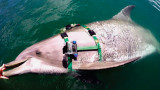
Wildlife Management
Video: Dolphin Hunts and Eats Venomous Sea Snakes

Dolphin researchers in California discovered a unique addition to the diet of the aquatic mammal in August. What was originally a study to discover the capabilities of captive dolphins feeding in the wild resulted in the unforeseen discovery of a dolphin eating not one, but eight venomous sea snakes...
Aidan Morton
Sep 8, 2022
Read More
Play Now

Fishing
Vermont Man Catches Potential Record Smallmouth…And Eats It.

There’s a long history of record fish being eaten by the angler who caught it. The world record walleye, coho salmon, northern pike, and several others were all consumed after being weighed and measured, including the world record largemouth bass, which was famously eaten for three straight days by...
Kubie Brown
Oct 9, 2025
Read More
Play Now
Policy & Legislation
EPA Removes Clean Water Act Protections from Many Wetlands and Streams

This article was originally published in September, 2019, and has been updated to reflected current events.
On Jan. 23, the Trump Administration’s EPA and Army Corps announced new, weaker regulations regarding enforcement of the 1972 Clean Water Act. The federal agencies say it was necessary to...
Sam Lungren
Feb 5, 2020
Read More
Play Now
Save this episode
Conversation