
I’d been having a back-and-forth with a bird since he flew down from the roost. I would stroke a few whispered yelps on my pot call, and he’d thunder back a response that echoed off the hardwoods. He was working his way toward me, but it was slow going. It was obvious he wanted the hen he thought I was to come to him. He didn’t want to step a single toe into the little clearing where I set up.
I set a hen decoy just at the edge of the brush where I sat, hoping it might be enough to coax that wary gobbler off the neighbor’s property and into my lap. After a solid 20 minutes of small talk, I finally caught a bob of red, white, and blue just inside the neighbor’s tree line. Then he threw up a fan. I yelped a few more times, striker against glass. He dropped the fan, and I thought the jig was up. But then he let loose one more gobble before making a beeline for my decoy. I squeezed the trigger on the 20-gauge before he closed half the distance.
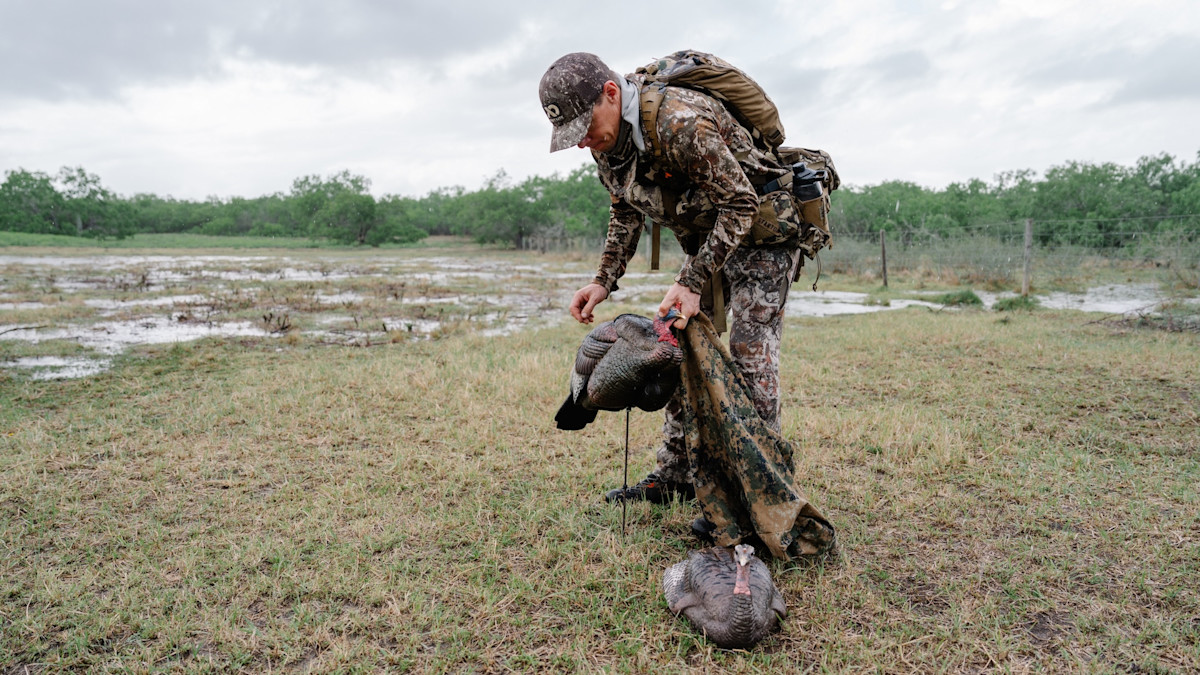
Decoys aren’t magic. For every successful decoy hunt, there are probably five busts. Done right, they can turn a wary gobbler into dinner. Done wrong, they can send him running. But getting the placement, posture, and timing right can help tip the odds in your favor. Decoys aren’t a failsafe. There are times when you’re better off without them. Here are a few things to consider before you lug that full decoy spread into the woods.
Seeing Isn’t Always Believing
There’s plenty of debate in the turkey hunting world about a turkey’s intelligence. A lot of that comes from the fact that these birds, with brains the size of a walnut, regularly outsmart even the most experienced turkey hunters.
Here’s the truth. Wild turkeys aren’t solving complex equations or writing poetry. They don’t need to. What they have is a survival instinct that’s been sharpened over millennia as a prey species, and it shows up in ways that regularly frustrate turkey hunters.
Part of that edge is their eyesight, which borders on unfair. They can see about three times sharper than a hunter with 20/20 vision, and they catch movement at distances that don’t seem possible until you witness it.
Turkeys know what a turkey is supposed to look like. Their eyesight is sharp enough to pick apart the details, and those details matter. Think about how you react to a department store mannequin. For a split second, it might pass as a person. Then the cracks show. No movement. Stiff posture. Skin that looks wrong. It only takes a heartbeat to realize it isn’t real. A gobbler does the same thing with a decoy.
Realism Matters
A decoy doesn’t have to be perfect, but it needs to be convincing long enough to stall that moment of doubt. Sometimes that’s lifelike paint. Sometimes it’s a little natural movement. Either way, you’re buying time.
And not all birds react the same. Young gobblers are easier to fool. I’ve had jakes stick around strutting at a hen decoy with their buddy lying dead a few feet away. They come in curious and reckless. Longbeards and seasoned old hens are a different story. They’ve seen enough to be suspicious. They rarely rush in.
I’ve watched a good decoy pull a bird those last few yards when calling alone wouldn’t get it done. I’ve also watched a gobbler hit the brakes, stare holes through a setup, and disappear like he’d seen a ghost. Same hunter. Same gear. Different bird.
When to Leave the Decoys in the Truck
Certain situations make decoys more trouble than they’re worth. Birds that have been pressured, whether through a long season or on public land, have survived close calls and probably seen some unnatural setups. They are more likely to give your decoys the side-eye and a wide berth than to come in close.
Hunting public land with decoys, where they are as likely to draw the attention of another hunter as they are a gobbler, can put your safety at risk. You might not have a problem with this in the plains states, but toting decoys east of the Mississippi on public land can be risky. If you’re hunting thicker vegetation, the risk might not be worth the reward.
It’s also a smart move to skip the decoys in the fall, when gobblers are more interested in feeding and moving through the woods than they are with chasing the ladies.
And if you’re running and gunning, moving quickly to cut off birds, decoys can slow you down.
These are all situations where it’s better to just leave the decoys in the truck.
Final Thoughts
Decoys can pull a hesitant bird in or make a cautious bird suspicious. The key isn’t just knowing how to use them. It’s just as important to know when not to use them. Sometimes the best setup is no setup at all.
Shop
Sign In or Create a Free Account
Related
Turkey
When to Use or Ditch Your Turkey Decoys

Turkey
How to Develop a Season-Long Turkey Decoy Strategy


Conversation