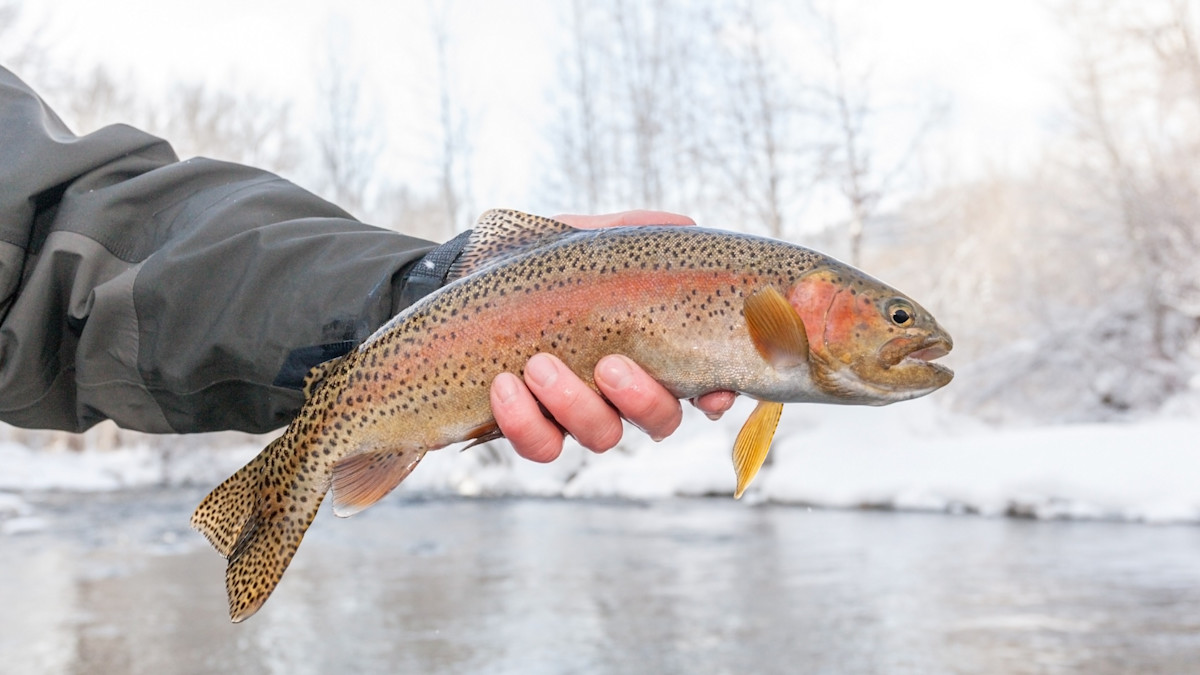

Winter is a hard time to be an angler. Unless you’re super into ice fishing or can afford a guided trip to a tropical climate, for the most part, we look at the coldest season of the year as something that must simply be endured. Locked in a cold, gray haze that reflects the weather, we sit and wait for spring by staring longingly out the window like a dog waiting for its master to come home because it desperately needs to be let out. It doesn’t have to be this way, because even in the darkest part of winter, you can still go trout fishing.
While warmwater species like bass, catfish, and walleye are extremely sluggish and can be tough to get ahold of during the winter, coldwater species like trout remain fairly active and willing to feed. However, just because trout are active during the winter, it doesn’t mean that the same baits, lures, and flies, and the same fishing techniques you use during the spring and summer are going to work. Catching trout during the winter is a unique but worthwhile challenge where you can catch a hell of a lot of fish, so long as you keep a few specific things in mind.
Choose The Right Day
Going fishing on the right day is absolutely vital to winter trout fishing success. Although the fish will feed and remain active in cold weather, there are still days and even times of day when they are more willing to play. In fact, when the weather is too cold or when conditions are too rough, trout will lock up their jaws and lie on the bottom without eating anything until conditions improve. So, to be consistently successful with winter trout, you’ve got to keep your eye on the weather channel and learn to pick your battles.
During the winter, trout will be most active on warmer, blue sky days when their prey is more active and available. This not only includes insects like midges and stoneflies, but also baitfish, which will be moving and feeding on microorganisms brought to the surface by the sunlight. Try to go fishing on clear, bright days when air temperatures are in the mid-30s or warmer, and you’ll have a much better chance of hooking up with winter trout.
Low-pressure systems and weather like snow and rain can also cause trout to shut down during the winter. However, right before these systems move in and right after they move out, trout will often gorge themselves on any food source they can find, so fishing right before a weather system moves in or right after it moves out can dramatically increase your chances of catching a ton of winter trout.
In the winter, trout also tend to be more active during the warmest part of the day. So, while rising early and staying late can catch you more fish during the spring and summer, sleeping in during the winter and fishing in the late morning and afternoon is often the better bet. Winter trout tend to have short bursts of feeding activity during these times, so if you’re fishing for several days in a row, you can figure out the windows when the fish are more active and fish accordingly.
Shrink Your Baits
While we all believe in the theory of big baits catching big fish, during the winter when trout are sluggish, it’s often the smaller baits, lures, and flies that draw the most attention. This is due to the trout’s metabolism slowing down during the winter, meaning that they require less food to meet their caloric needs. Of course, this doesn’t mean that they’ll absolutely refuse to eat a large meal, but generally winter trout prefer to eat large amounts of smaller, easy-to-catch prey.
If you’re a bait angler, try using small chunks of worms or even maggots like you would when ice fishing for panfish. These smaller baits will better imitate the food winter trout are actually targeting, rather than trying to trigger them to feed on something larger. Small minnows can also be a good choice during the winter, especially if you’re targeting larger, more predatory trout.
Lures for winter trout fishing should also be small and easy for a trout to catch. Instead of fishing the larger in-line spinners, jerkbaits, and spoons you would during spring or summer, try using smaller, more subtle lures like ACME Phoebe and Panther Martin, and you’re almost guaranteed to get into more fish. Small, soft-plastic lures designed for panfish like crappie and bluegill are also great options. Some of my favorites include the Cajun Critter and the Pan Candy, as well as insect imitations like the Clam Maki and the Z-Man Larvae.
Winter fly anglers should likewise choose some of the smallest fly patterns they can find. If you’re nymphing, patterns like the Zebre Midge and the Lightening Bug make for excellent options, while dry fly anglers should use petite patterns like Griffiths Gnat and CDC Midge. Streamers can also catch a lot of winter trout, but try and stick to smaller patterns like the Woolly Bugger, Muddler Minnow, and Flash Zonker, rather than the larger articulated streamer patterns you’d use in the spring and fall.
Get The Drift
Successful winter trout fishing often means making your baits and lures look as natural as possible. While this includes not using baits in gaudy colors or of outlandish sizes, it also means fishing them at natural speeds and depths. While there are several ways to do this, the easiest and most efficient way to make your baits, lures, and flies look natural is to drift them along in the current.
Drift fishing is always an efficient way to catch trout, but is especially effective during the winter. In cold water, trout are incredibly sluggish and usually hold in calm areas, waiting for food to drift by in the main current. You can imitate this natural food by drifting your baits, lures, or flies beneath a bobber or strike indicator so that they move through the water at the same speed as the current.
If you’re using bait or lures, you can set up a drift fishing rig quite easily using a pencil float, a couple of split shots, and a barrel swivel. Simply attach the barrel swivel to your line and then tie a second length of fishing line to the other end that’s long enough to allow your bait to drift a few inches above the bottom. Next, attach a pencil float or bobber to the line above the swivel and then add a small split shot 3 to 6 inches to the line below the bobber, which will help keep your line completely vertical in the water. Finally, add your bait or lure to the bottom of the line along with a second small split shot 2 to 4 inches above the bait to help keep everything near the bottom.
Drift fishing with a spinning or baitcasting rod is best done by casting your rig into the water and then opening the bait or setting the reel to free spool so that the current can freely take line. Allow the bait to drift along with the current for as long as you can and then quickly close the bail or turn the handle and set the hook anytime you see the bobber vanish, dunk, or hesitate.
Fly anglers can also be incredibly efficient at drift fishing by using a strike indicator and a longer leader that is half again the length of the depth of water. Attach your fly to the bottom of the leader and your indicator to the top where the leader meets the fly line. Then cast the rig into the current and make a sharp upstream mend to allow your flies to sink towards the bottom. Once this is done, allow the fly to drift and add distance by pulling excess line off the reel and mending it back into the drift until you’ve drifted the fly through all the water that you can reach.
Fish Deep and Shallow
Just like in the summer when trout are concentrating in deeper holes and springs as they seek colder water, winter trout will also gather in specific areas of the river where water temps are comfortable for them. Generally, this means trout will gather in areas with warmer water, concentrating in deeper areas with more consistent temperatures or in shallower areas where light penetration will warm the water much faster. Both these deeper and shallower areas are fantastic spots to find winter trout, so long as you fish them during the right times and under the right conditions.
During cold snaps or on darker, cloudier days, trout will move into deeper water where currents are moving at or slower than a walking pace. They’ll hold in these spots either near the very center of the pool, or in the deepest water they can find that’s immediately adjacent to logs, rocks, and other structures that provide easy breaks in the current. These spots are ideal for drift fishing as well as soaking bait on the bottom, as the trout will hug the bottom and only feed on baits presented right off their noses.
Shallow, slightly faster water makes for ideal spots during bright sunny days or extended warm fronts where water temperatures have risen dramatically. Look for trout in these shallow areas around the bases of rapids and riffles where the water is highly oxygenated, and food items like insect larvae and baitfish are often caught up in the current. You can also find fish along the shallow edges of deep holes as the more active trout move in and out of the shallows to feed.
Take It Slow
With their metabolisms running on idle in the cold water, winter trout are looking for prey that moves slowly and is easy to catch. While this makes drift fishing an ideal technique, if you’re an angler who likes a bit more action, you can still catch a lot of winter trout by casting and retrieving lures and flies as you would in the spring, summer, and fall—you just have to be willing to slow things down.
The perfect lures for winter trout fishing are any that can be paused or completely stopped in the current without sinking to the bottom. Additionally, as winter trout are often in search of an easy meal, lures that imitate wounded or dying baitfish are also especially effective. This makes jerkbaits like the Husky Jerk or Flicker Shad ideal winter trout lures as they can be paused and jerked in the current while still being fished on an incredibly slow retrieve. Other effective winter trout lures include soft plastics like the Super Fluke and Slug-Go, which can be fished without weight on a simple hook and then drifted and twitched through the current.
Fly anglers using streamers can also have a lot of luck so long as they fish with unweighted, neutrally buoyant patterns. This can include small streamers like the Zonker and Black Ghost, as well as larger patterns like the Deceiver and Yard Sale. You can fish these flies for winter trout by casting them upstream and then allowing them to drift with the current, adding in small jerks and quick pulsing strips as you retrieve them back towards you.
In addition to stripping, you can also swing these streamers slowly across the current as if you were Spey fishing. Cast your streamers down and across the river at a 45-degree angle and then make a steep upstream mend, which will add slack to your line and allow your flies to sink. Once the line tightens again, you can guide the flies across the current with your rod tip, maintaining a slow, continuous speed until they come to rest directly downstream or are struck by a hungry fish.
Fishing In A Winter Wonderland
The way I see it, anglers have two options for winter. We can either endure it and wait for spring, or we can enjoy the unique and challenging fishing opportunities that come along with the cold. Winter trout fishing is more than just a way to catch a fish when other species aren’t available; it’s a way to experience the river and fishing on a whole new level.
When you’re trout fishing during the winter, you get to experience all the calm, serene beauty of the river in a way you may not have ever noticed in the rolling chaos of summer. The water flows in an almost silent dance in the sun, reflecting the still and muffled beauty of the coldest season. It’s a calm and healing experience that takes all the pent-up feelings and caged desire you have just waiting for spring inside the house and releases them into a world of sparkling water and bright, beautiful trout, known only to those brave enough to hit the water and enjoy the season for what it is.
Stay in the loop with The MeatEater Newsletter
Related
Fishing
How to Catch Still-Water Trout
Fishing
How to Catch Trout in Fall