

Duration
2 hours
Serves
2 to 6 (depending on animal)
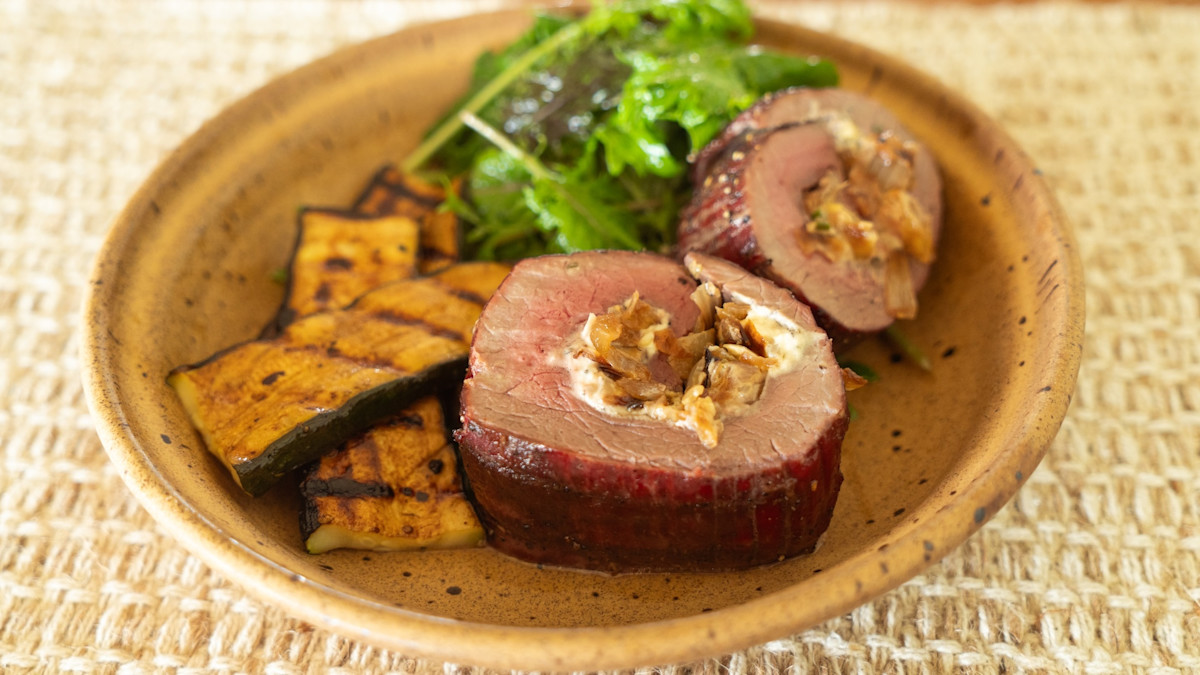
This is the recipe I bring out when I’m having folks over and want to serve up an impressive main protein. The eye of round is one of my favorite cuts—it’s tender, flavorful, and unique. If you’re unfamiliar with the long, cylindrical muscle from the hindquarter, check out this helpful guide from Danielle Prewett to identify it while butchering your harvest.
I typically have an elk or two in my freezer, so the muscle group is quite large and can easily serve six people. If you’re using something smaller like a deer or antelope, it will likely only feed two to four people, depending on the size of the animal and your guests' appetites.

I’ve tried making this with bleu and goat cheese, but both overpowered the flavor of the meat a bit. I find Boursin to be a mild but flavorful alternative. The garlic and fine herbs variety is my go-to, but any savory flavor should work.
I like to slice into the side of the muscle and “unravel” it into a flat sheet. I then pound it flat before stuffing, rolling up, and trussing it in a similar style to Jesse Griffiths’ venison belly rouladen. Slicing it into thick pinwheels to serve makes for a really simple yet stunning presentation.
The unraveling of the roast is the only real tricky part of this recipe, so check out the video below to help understand how to prepare the meat.
Ingredients
- 1 eye of round roast
- 1 package Boursin cheese
- 1 yellow onion, small dice
- 1 serrano pepper, small dice (optional)
- High-heat cooking oil
- Salt and pepper
- Butcher’s twine
Special equipment
Preparation
- First, take a moment to clear off any excess silverskin from the outside of your roast before you start the unraveling process, but don’t be too precious about it. To unravel your roast, hold a long, sharp knife parallel to the meat. The first incision should make about a ¾-inch flap. Hold on to that while taking the knife further into the cut, rolling the intact roast away from you when necessary to continue the cut. Try to maintain that same thickness as you’re cutting through the steak. Since the roast tapers a bit, you’ll have to accommodate for the smaller end. Do your best to not poke any holes through the meat and create a mostly even, square-ish shape.
- Once your roast is unrolled, you need to flatten it out a bit more. Cover the meat in a sheet of parchment paper and pound with a mallet, frying pan, or rolling pin. Do this to both sides a few times, flipping the meat over periodically until that lumpy outer layer becomes more uniform and flat. Place the flattened roast on a wire rack, season with salt and pepper on both sides, and allow to rest while you caramelize the onions.
- To caramelize the onions, start with a pan on medium-high heat. Place enough cooking oil in the bottom to coat the pan and place the onions in. Turn the heat down to medium-low and cook, stirring occasionally until the onions become evenly brown and sweet. If you’d like to add some spice, you can sauté in a diced hot pepper at this point as well.
- Preheat an oven or smoker to 200°F.
- Dab off any moisture from the surface of the meat. With the cut side up, crumble the cheese all over the surface, but leave an inch margin around the edges for rolling. Top the cheese with the caramelized onions (and pepper, if added), maintaining that inch gap on edges.
- Get a long piece of butcher's twine cut and ready before rolling. Methodically roll the meat up as tight as possible without squishing the filling out the sides. Once the meat is in a shape that resembles the original roast, use butcher’s twine to truss it.
- Place the roast on a wire rack on a sheet tray and cook at 200°F for 30 minutes to 1 hour or until the internal temperature registers at 110°F.
- Once you’ve reached 110°F, pull the meat out and allow it to rest while you start your grill. You want a high temperature of at least 450°F to sear the outside of the roast.
- Brush the outside of the roast with a thin coating of high-heat cooking oil. Once your grill is hot enough, sear the sides of the roast until evenly browned all around. The temperature should register around 125°F once you’re done.
- Allow the meat to rest for at least 10 minutes before slicing into it. Since your grill is already hot, it’s a great time to throw on some vegetables for a side.
Stay in the loop with The MeatEater Newsletter
Related
Recipes
Mushroom Stuffed Venison Roast
(1)
Recipes
Herb Crusted Eye of Round with Red Wine Reduction
(1)
Recipes
Chicken of the Woods Tacos
(3)
This is the recipe I bring out when I’m having folks over and want to serve up an impressive main protein. The eye of round is one of my favorite cuts—it’s tender, flavorful, and unique. If you’re unfamiliar with the long, cylindrical muscle from the hindquarter, check out this helpful guide from Danielle Prewett to identify it while butchering your harvest.
I typically have an elk or two in my freezer, so the muscle group is quite large and can easily serve six people. If you’re using something smaller like a deer or antelope, it will likely only feed two to four people, depending on the size of the animal and your guests' appetites.
I’ve tried making this with bleu and goat cheese, but both overpowered the flavor of the meat a bit. I find Boursin to be a mild but flavorful alternative. The garlic and fine herbs variety is my go-to, but any savory flavor should work.
I like to slice into the side of the muscle and “unravel” it into a flat sheet. I then pound it flat before stuffing, rolling up, and trussing it in a similar style to Jesse Griffiths’ venison belly rouladen. Slicing it into thick pinwheels to serve makes for a really simple yet stunning presentation.
The unraveling of the roast is the only real tricky part of this recipe, so check out the video below to help understand how to prepare the meat.
Ingredients
- 1 eye of round roast
- 1 package Boursin cheese
- 1 yellow onion, small dice
- 1 serrano pepper, small dice (optional)
- High-heat cooking oil
- Salt and pepper
- Butcher’s twine
Special equipment
Preparation
- First, take a moment to clear off any excess silverskin from the outside of your roast before you start the unraveling process, but don’t be too precious about it. To unravel your roast, hold a long, sharp knife parallel to the meat. The first incision should make about a ¾-inch flap. Hold on to that while taking the knife further into the cut, rolling the intact roast away from you when necessary to continue the cut. Try to maintain that same thickness as you’re cutting through the steak. Since the roast tapers a bit, you’ll have to accommodate for the smaller end. Do your best to not poke any holes through the meat and create a mostly even, square-ish shape.
- Once your roast is unrolled, you need to flatten it out a bit more. Cover the meat in a sheet of parchment paper and pound with a mallet, frying pan, or rolling pin. Do this to both sides a few times, flipping the meat over periodically until that lumpy outer layer becomes more uniform and flat. Place the flattened roast on a wire rack, season with salt and pepper on both sides, and allow to rest while you caramelize the onions.
- To caramelize the onions, start with a pan on medium-high heat. Place enough cooking oil in the bottom to coat the pan and place the onions in. Turn the heat down to medium-low and cook, stirring occasionally until the onions become evenly brown and sweet. If you’d like to add some spice, you can sauté in a diced hot pepper at this point as well.
- Preheat an oven or smoker to 200°F.
- Dab off any moisture from the surface of the meat. With the cut side up, crumble the cheese all over the surface, but leave an inch margin around the edges for rolling. Top the cheese with the caramelized onions (and pepper, if added), maintaining that inch gap on edges.
- Get a long piece of butcher's twine cut and ready before rolling. Methodically roll the meat up as tight as possible without squishing the filling out the sides. Once the meat is in a shape that resembles the original roast, use butcher’s twine to truss it.
- Place the roast on a wire rack on a sheet tray and cook at 200°F for 30 minutes to 1 hour or until the internal temperature registers at 110°F.
- Once you’ve reached 110°F, pull the meat out and allow it to rest while you start your grill. You want a high temperature of at least 450°F to sear the outside of the roast.
- Brush the outside of the roast with a thin coating of high-heat cooking oil. Once your grill is hot enough, sear the sides of the roast until evenly browned all around. The temperature should register around 125°F once you’re done.
- Allow the meat to rest for at least 10 minutes before slicing into it. Since your grill is already hot, it’s a great time to throw on some vegetables for a side.
Reviews