
I’m a lifelong conservative, passionate hunter, and conservationist who believes in straightforward truths. One of those truths is that modern life depends on natural resources. Nearly everything we rely on—from pickup trucks, farm equipment, and roads to cell phones, medical devices, and energy infrastructure—exists because someone grew it, mined it, or logged it. Mining is not something to apologize for. It is foundational to a functioning economy and a strong nation.
If the United States is serious about manufacturing, energy independence, and competing with adversarial nations, then domestic mineral production matters. It matters for jobs. It matters for supply chains. It matters for national security.
But another truth is just as important: not every place is appropriate for every kind of development. Supporting mining does not mean supporting mining anywhere, at any cost, under any circumstances. Responsible development requires judgment, restraint, and an understanding of risk. That is especially true when water is involved.
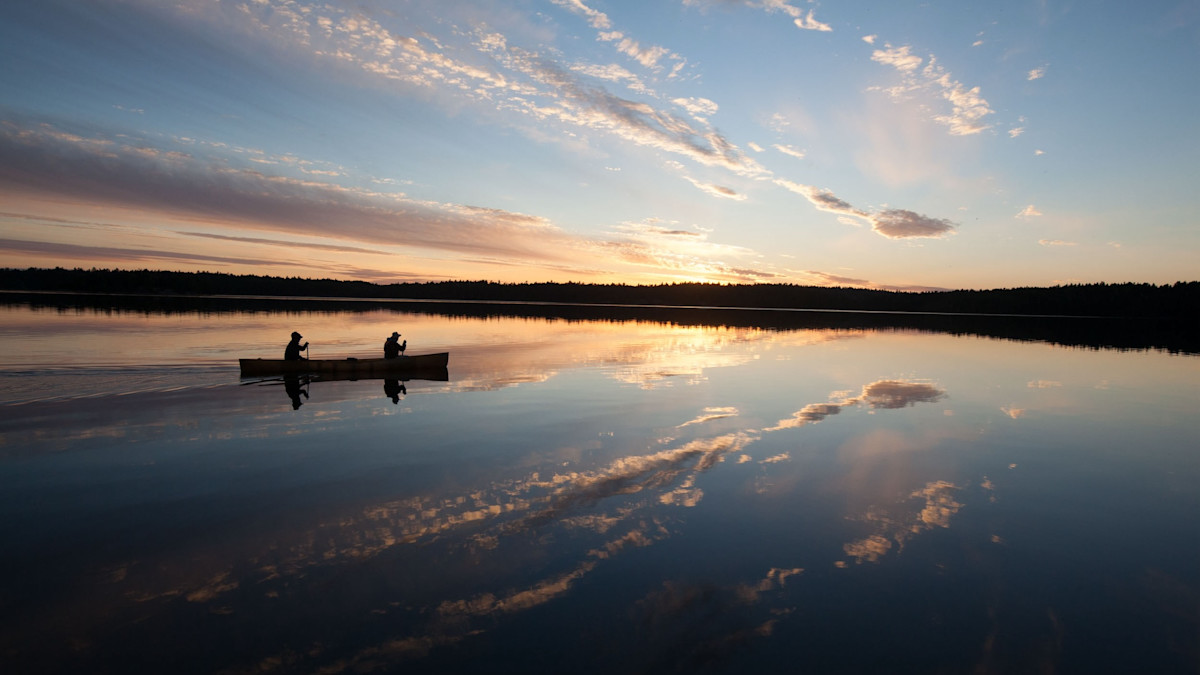
That reality is now directly before the United States Senate. Congress is currently considering a resolution under the Congressional Review Act (CRA) to repeal a 20-year mineral withdrawal covering roughly 225,000 acres of public land and water near the most visited wilderness in the United States—Boundary Waters Canoe Area Wilderness in northern Minnesota. That withdrawal currently prevents sulfide mining in the headwaters of one of the most important and special freshwater systems in North America.
If this resolution passes, it would do more than overturn the existing withdrawal. Under the CRA, it would also prevent any future administration from issuing a substantially similar protection without new authorization from Congress. In practical terms, it would move a proposed mine known as the Twin Metals sulfide copper project significantly closer to reality.
This is not an abstract policy debate. It is a decision with long-term consequences for water, communities, and public lands. This is why the proposed Twin Metals sulfide copper mine deserves serious concern from conservatives, sportsmen, and rural communities alike.
To be blunt—you can support mining and still oppose this mine. In fact, if you care about responsible stewardship, fiscal conservatism, and long-term national interest, you should.
Why Sulfide Copper Mining Is Different
Not all mining presents the same environmental risks. In the case of copper, the difference between oxide ores and sulfide ores is critical.
Oxide copper ores generally pose lower long-term water contamination risks. Sulfide ores are different. They contain sulfur-bearing minerals that, when exposed to air and water during mining, crushing, and waste disposal, undergo chemical reactions that produce sulfuric acid.
That acid dissolves heavy metals like copper, arsenic, cadmium, and zinc and carries them into streams, lakes, and groundwater. This process, known as acid mine drainage, is well documented. It is not theoretical. It is basic chemistry.
Once it starts, it is extremely difficult to stop. This is the defining environmental challenge of sulfide mining, and it has shaped the history of copper development across North America.
Sulfide Mining Pollution: What Actually Happens
Over the past sixty years, major sulfide copper mines in the United States and Canada have a consistent record: nearly 100% of them contaminated surface or groundwater. This happens even using the most advanced technology and prudent regulations of today.
In Montana, California, Vermont, Idaho, and British Columbia, former and current mining sites have produced acidic, metal-laden water that contaminated rivers, streams, and groundwater. Some of these sites, such as the Berkeley Pit in Montana or Iron Mountain in California, require continuous water treatment and will likely do so forever. This perpetual treatment occurs at great taxpayer expense.
In many cases, these problems did not emerge immediately. They developed gradually, sometimes years after operations began or even after mines closed. Waste rock piles weathered. Tailings seeped. Collection systems failed. Pipes broke.
Across different companies, different regulatory regimes, and different decades, the outcome has been as consistent as gravity. Water contamination follows sulfide mining. This is not a condemnation of individual operators. It reflects the inherent difficulty of managing sulfide waste over long periods of time in real-world conditions.
Dry Stacking: Progress, Not a Cure
Supporters of the Twin Metals project often emphasize that it will use dry stacking, or “flat stacking,” rather than traditional wet tailings ponds. This is presented as evidence that the project is fundamentally safer.
Dry stacking is an improvement. It reduces the risk of catastrophic dam failures, which have caused serious environmental disasters around the world. Removing large volumes of standing water from tailings facilities lowers certain types of risk. But it does not eliminate the central problem of sulfide mining.
Dry-stacked tailings still contain sulfide minerals. Those minerals still react with oxygen and water. Rain and snowmelt still pass through the piles. Acid and metals are still generated. That contaminated water must still be captured, treated, and managed—forever.
Instead of a dramatic failure, the risk is quieter and slower: seepage, leakage, gradual migration into groundwater and nearby lakes. Many mines using dry stacking that currently operate in wet environments similar to northern Minnesota have resulted in water contamination. It’s not a matter of if, it’s when.
A Landscape That Cannot Absorb Mistakes
The Boundary Waters region is uniquely vulnerable to water pollution. It is defined by interconnected lakes, shallow soils, fractured bedrock, and abundant surface water. Pollutants do not remain isolated. They move. So, contamination in one place will almost certainly affect water miles away.
This interconnectedness of the water is a reason that the area supports such productive fisheries and high-quality habitat. It is also why contamination would be so difficult to contain. Hunters and anglers understand this instinctively. When a headwater stream is damaged, downstream fishing suffers. When spawning habitat is contaminated, populations decline. When water quality drops, so does the outdoor economy that depends on it. It also irreparably harms those that depend on the resource for drinking water.
Ownership, Exports, and National Interest
Twin Metals Minnesota is owned by Antofagasta, a Chile-based mining company. It is one of the largest foreign mining conglomerates in the world. This means that corporate control, profit, and strategic decision-making are overseas. The copper produced would likely head to China for processing before entering global markets. It would not be reserved for American markets.
In effect, the United States would be assuming long-term environmental risk so that a foreign corporation can export a strategic resource. From a conservative, national-interest perspective, that deserves scrutiny. But, even if Twin Metals were owned by a U.S. company, and all of the copper stayed here, the risks outweigh the reward.
Using the Congressional Review Act
Many conservatives are understandably uneasy with presidents unilaterally withdrawing land from development. There is a strong argument that major land-use decisions like this should be made through congressional action or formal resource management planning with deep public engagement, not executive fiat.
That concern is legitimate. But it is important to understand that the Boundary Waters mineral withdrawal was not created out of thin air. It was authorized under the Federal Land Policy and Management Act of 1976 (FLPMA). That law was passed by Congress with strong bipartisan support—approved by overwhelming majorities in both the House and Senate, including large numbers of Republicans.
Congress deliberately gave the executive branch authority to make up to twenty-year withdrawals when warranted for resource protection concerns. If members of Congress now believe that authority is too broad, the appropriate response is to amend FLPMA through legislation.
Using the Congressional Review Act to permanently block future protections is a blunt instrument that should be used sparingly to rectify egregious overreach by the executive branch. A president using express authority granted to him by Congress to prevent irreversible resource damage to a pillar of our public land system hardly qualifies as egregious overreach.
Stewardship Is Strength
This is not an argument against mining. It is an argument for pragmatism. We can support domestic resource production and still say no to bad projects in bad places. We can believe in economic development and still protect the things that cannot be replaced. We can value jobs and also value clean water.
That balance is not a weakness. It is responsible leadership. For hunters, anglers, outdoor recreationists, rural families, and freedom loving Americans, the Boundary Waters represents something more than scenery. It represents opportunity. It represents a place where people still connect with land and water in meaningful ways. It represents a shared heritage, and a freedom to roam in ways that connect us to the generations that came before and those that will come after us.
Risking all of that for a foreign-owned sulfide mine with potential permanent water-treatment needs at the expense of taxpayers everywhere is short sighted, not conservative stewardship. It is an unnecessary risk.
Mining matters. So does water. And in this case, protecting the water and standing up for the freedom and security that our public lands represent is the conservative choice. Now is the time to let your Senators know you want them to stand up for the Boundary Waters area, and vote no on the CRA Resolution, HJ Res. 140.
Feature image via Steve Piragis.
Stay in the loop with The MeatEater Newsletter
Shop
Related
Public Lands & Waters
Senate Votes Against Protecting Boundary Waters

Public Lands & Waters
Legislation Would Protect the Boundary Waters from Sulfide Mining

